Summary (for busy buyers):
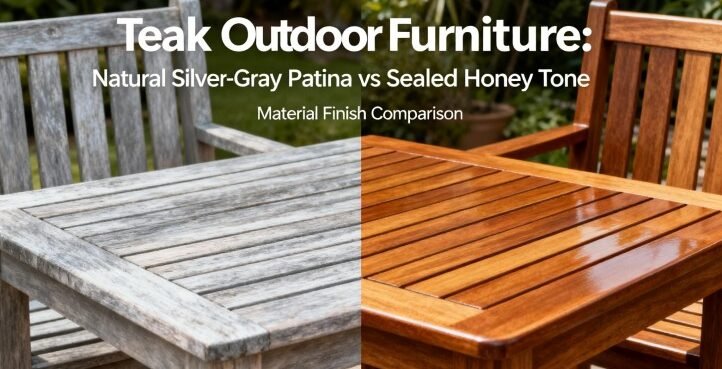
For premium teak outdoor furniture, decide your visual target first. If you want minimal labor and bullet-proof field consistency, let teak weather naturally to a silver-gray patina and clean it seasonally. If brand standards demand the “new-teak” honey tone, use a UV-inhibiting sealer/protector (not routine “teak oil”) and follow a disciplined re-seal calendar. Both paths protect structural life when executed correctly; the difference is aesthetics, labor, and total cost of ownership (TCO).
Why this decision matters for ROI (and warranties)
Procurement and operations teams choose teak outdoor furniture for hospitality, multifamily, and amenity decks because teak’s natural extractives and density deliver exceptional durability outdoors. You don’t need oil to “feed” teak-its performance is inherent to the species. For a concise technical primer, see Teak (Tectona grandis) at The Wood Database. The persistent question is visual: preserve the golden tone or embrace silver-gray patina? That choice drives annual labor hours, product selection, textile risks, and even warranty conversations. [For more information, please read: What is Grade-A Teak?]

The two main paths (plus a third you should avoid)
Path A – Natural Weathering (low-maintenance program)
- Look: Honey brown transitions to a uniform silver-gray as UV light breaks down lignin in the topmost surface.
- Labor: 1-2 deep cleans per year; occasional light sanding to refine hand-feel.
- Risk: Low-provided you avoid pressure washing and harsh chemicals.
- Best for: Coastal properties, large fleets, lean maintenance teams.
Weathering is a surface phenomenon, not structural decay. For the mechanics, see the USDA Forest Products Laboratory chapter “Weathering of Wood”.
Path B – Maintain the Golden Tone with a UV Sealer/Protector
- Look: Retains “new-teak” color longer using UV inhibitors and light pigments.
- Labor: Scheduled re-sealing (often annually; follow label) after thorough cleaning and full dry-down.
- Risk: Blotch/peel if applied over dirt or moisture; migration risk to textiles if reinstalled too soon.
- Best for: Branded hospitality, model homes, front-of-house areas.
For brand guidance and product-specific instructions, see Gloster: Teak Care & Maintenance (PDF) and the Gloster materials page (which also explicitly warns never to use a power washer on teak).
Path C – Routine “Teak Oil” Outdoors (generally not recommended)
Most premium manufacturers advise against oiling teak used outdoors: it adds little to structural longevity, can darken unevenly, promote mildew, and stain cushions. See Kingsley Bate’s FAQ and their care sheets. If color retention is required, prefer a protector/sealer system (e.g., Gloster product care index).
Quick comparison: aesthetics, labor, risk, and cost
| Option | Aesthetics over time | Typical service frequency | Labor per 10 dining chairs (annual) | Common risks | Best-fit use cases |
|---|---|---|---|---|---|
| Natural weathering | Uniform silver-gray patina | 1-2 deep cleans/year | ~4-6 crew-hours | Surface roughness, if neglected, can cause damage from pressure washers | Coastal sites, large portfolios |
| UV sealer/protector | Honey tone retention | Prep + re-seal per label (often yearly) | ~10-16 crew-hours | Blotch/peel if substrate isn’t clean/dry; textile staining if not cured | Brand-standard hospitality, model spaces |
| Routine “teak oil” | Initially warm tone; can blotch & darken | Multiple re-coats/season | ~12-20 crew-hours | Mildew, cushion stains, warranty friction | Generally avoid outdoors |
Note: Avoid pressure washers. Gloster explicitly states, “Under no circumstances should a power washer be used.” See Gloster materials guidance.
The science (one page, no jargon)
- Why teak lasts: Teak’s density and natural oils give it outstanding resistance to decay and dimensional movement. It doesn’t need oiling to survive. See The Wood Database on teak.
- Why teak turns silver-gray: UV photons break down lignin in the top microns; rain removes degraded compounds, leaving a cellulose-rich gray surface. It’s largely cosmetic and doesn’t imply structural failure. See USDA FPL “Weathering of Wood” and USDA Wood Handbook index.
Scenario-based decision tree (text version)
- Is a uniform golden color a brand requirement? → Yes → Choose a UV sealer/protector program and budget annual re-seals. → No → Go to (2).
- Is the site coastal/high-UV with limited staff? → Yes → Choose natural weathering + seasonal cleaning. → No → Either path works; pick based on visual target and staffing.
- Does the installation use mixed metals in a marine environment? → Yes → Specify 316 stainless hardware to limit pitting and tee-joint staining. See UPMET datasheet: 316/316L vs 304.
Two field-ready SOPs you can hand to the team
SOP 1 – Low-maintenance “Natural Weathering” program
Goal: Achieve a uniform silver-gray patina with minimal labor.
- Quarterly inspection: Check for food oils, sunscreen, sap, and black spots.
- Seasonal clean (1-2×/year)
- Mix mild detergent with warm water; scrub with the grain using a soft/medium nylon brush; rinse thoroughly.
- For heavy soils or black spotting, use a branded teak cleaner per label. Guidance and how-to videos: Barlow Tyrie Furniture Care.
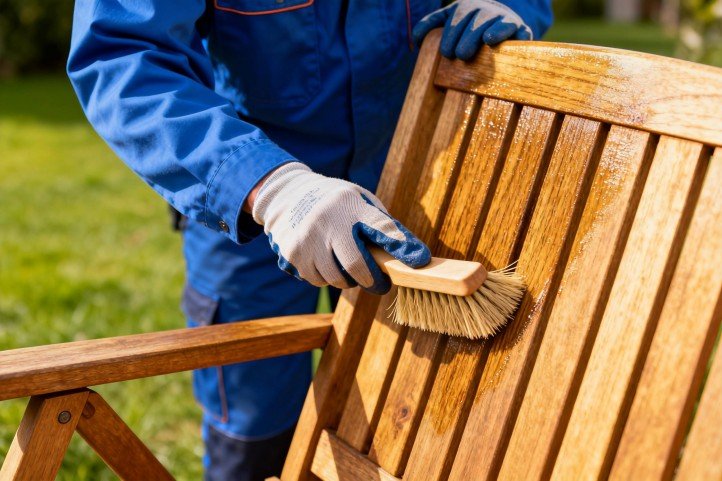
- Light sanding (as needed): 180-220 grit to remove raised grain; dust off.
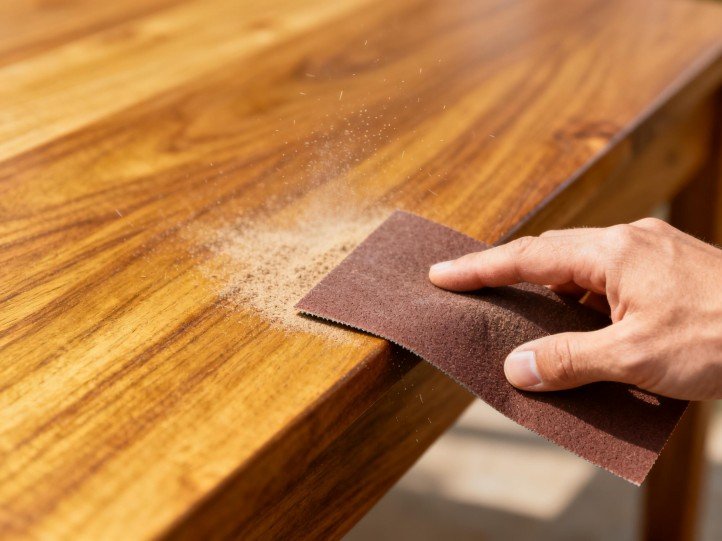
- Dry-down: Allow full dry-down before re-installing cushions to avoid water marks.
- Hardware check: Tighten fasteners; in salty or de-icing environments, prefer 316 stainless (see 316/316L data sheet).
Avoid power washing. It erodes earlywood and leaves a fuzzy surface, which soils faster-see Gloster materials guidance. 2-minute training video (optional for staff): How to Correctly Clean Teak Garden Furniture (Barlow Tyrie).
SOP 2 – Keep the golden color (Sealer/Protector program – not routine oil)
Goal: Maintain the honey tone while controlling blotch and textile risks.
- Prep clean: Use a dedicated teak cleaner to remove grime and surface oils so the sealer can bond uniformly (e.g., procedure sheets within Gloster Teak Care PDF or Barlow Tyrie Teak Cleaner IFU).
- Light equalizing sand: 220 grit with the grain; tack-cloth dust.
- Apply sealer/protector: Follow the spread rate; maintain a wet edge; wipe excess; respect ventilation. Many brands publish specific protectors (see Kingsley Bate product guidance via AuthenTEAK).
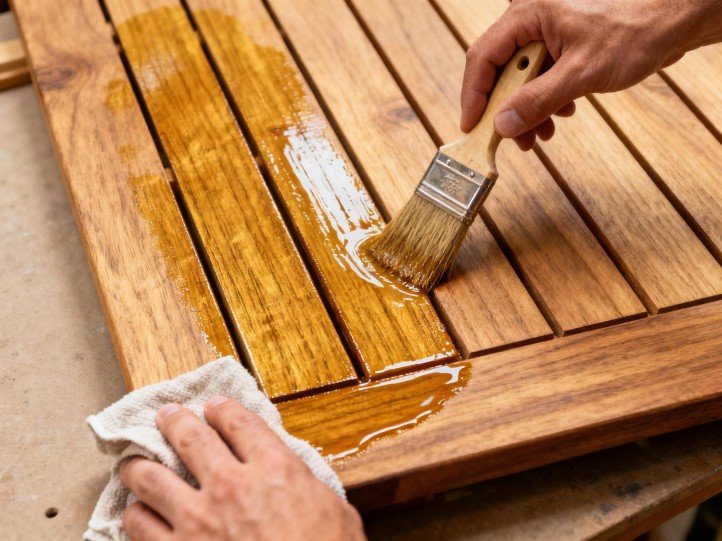
- Cure: Protect from dew/rain per label; confirm “dry-to-textile” before reinstalling cushions.
- Maintenance cycle: Quarterly visual checks; re-seal per label (commonly annually).
- Common pitfalls to avoid:
- Trapping moisture under film → blotching and early failure.
- Reinstalling cushions before full cure → fabric staining (many warranties exclude this; see Kingsley Bate FAQ).
- Using a pressure washer at any stage → surface erosion (see Gloster materials guidance).
Optional video support: A third-party walk-through shows cleaning/brightening workflows: How to Clean & Restore Weathered Teak Furniture.
Sustainability & chain-of-custody notes for specifiers
Where supply allows, specify FSC-certified or equivalent responsibly sourced teak to support ESG goals and client procurement policies. A practical template is here: FSC Wood Sourcing Policy Guide (PDF), and an overview page here: FSC Connect: Wood Sourcing Policy.
Risk watch-outs & quick fixes
- Oil stains on cushions: Keep textiles off freshly treated frames until fully cured; confirm “dry-to-touch” ≠ “safe-for-textiles.” See Kingsley Bate FAQ.
- Uneven darkening/blackening after oiling: Strip with teak cleaner/brightener, light sand, switch to a sealer program-or allow natural weathering. See Barlow Tyrie care resources.
- Surface fuzz from power washing: Sand smooth (180-220), then revert to manual cleaning only. See Gloster materials guidance.
Cost & labor planning (planning ranges for budgeting)
- Natural weathering program: ~4-6 crew-hours per 10 dining chairs annually for cleaning + touch-sand; cleaners/consumables typically <$100/10 chairs/year.
- Sealer program: ~10-16 crew-hours per 10 dining chairs annually, including prep and re-coat; materials $150-$300/10 chairs/year depending on coverage and brand. Actuals vary by exposure, climate, and fleet size. Track your own job-cost history to refine.
Conclusion: Choose once, execute well, and document
For teak outdoor furniture, structural longevity depends on wood quality and joinery-not on routine oiling. Decide the aesthetic standard your brand requires, then pick the program you can execute consistently:
- Prefer low-touch maintenance and timeless resort character? Let it weather and clean seasonally.
- Need the warm honey tone year-round for brand standards? Use a UV sealer/protector and put re-seals on the calendar.
Either route, done right, protects the investment. Routine teak oil outdoors adds labor and risk without extending service life.
FAQ (PAA-optimized)
Q1: Should I oil teak outdoor furniture to make it last longer?
A: No. Oiling is cosmetic and doesn’t extend structural life. Most premium brands advise against routine oiling outdoors due to uneven darkening and mildew risks-see Kingsley Bate FAQ. Choose a UV sealer if you want to keep the golden tone, or let it weather naturally for lower maintenance.
Q2: How often should I clean weathered teak that I’m not sealing?
A: Deep clean 1-2 times per year with mild detergent or a teak cleaner, scrubbing with the grain; avoid pressure washers. Reference: Gloster materials guidance and Barlow Tyrie Furniture Care.
Q3: We’re on the coast-will hardware stain or corrode?
A: Specify Type 316 stainless for fasteners and fittings; it offers better chloride pitting resistance than 304, reducing rust streaks at joints-see UPMET 316/316L datasheet.
Q4: How do I keep cushions from getting stained during finishing?
A: Keep textiles off freshly treated frames until fully cured. Many brands warn that oils and uncured coatings can migrate into fabrics (often excluded from warranty)-see Kingsley Bate FAQ. Q5: Can we switch from oiling to a sealer program mid-life?
A: Yes-strip contaminants with a teak cleaner/brightener, light sand, allow full dry-down, then apply the sealer. Practical steps: Barlow Tyrie Teak Cleaner IFU.
References woven into the article
- Material science & weathering: USDA FPL “Weathering of Wood”, USDA Wood Handbook index, The Wood Database: Teak
- Brand care guidance: Gloster Teak Care PDF, Gloster materials page, Kingsley Bate FAQ, Barlow Tyrie Furniture Care
- Hardware in marine exposure: UPMET 316/316L datasheet
- Sourcing/ESG: FSC Wood Sourcing Policy Guide (PDF), FSC Connect overview
- Video supplement: How to Correctly Clean Teak Garden Furniture (Barlow Tyrie)