Introduction
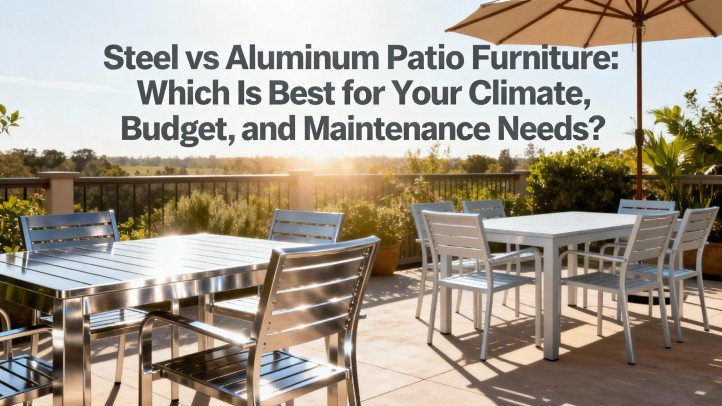
If you’re comparing Steel vs Aluminum Patio Furniture, here’s the short version: choose aluminum for coastal/high‑humidity climates and low‑maintenance living; choose steel when you need extra heft and stability in wind‑exposed spots or commercial settings. Aluminum won’t rust and is easier to move; steel is stronger, feels planted, and needs a bit more coating care. Below, we unpack climate fit, long‑term upkeep, and true total cost of ownership (TCO) so you can buy once and enjoy for years.
Expert Shortcut (HAPPY RATTAN Product Engineer):
- Coastal? Default to powder‑coated aluminum; add periodic rinse‑downs if you’re near salt spray.
- Windy hill or open terrace? Consider steel (or weight‑added aluminum) so chairs don’t walk in a gale.
- Hate maintenance? Aluminum wins; steel needs occasional touch‑ups where the coating chips.
Material Basics
What aluminum actually does outside
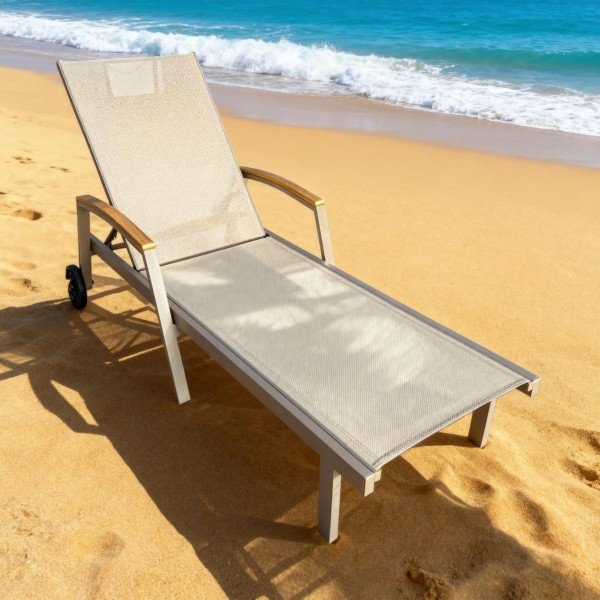
Aluminum doesn’t form reddish rust the way iron or carbon steel do. Instead, it forms a thin, hard aluminum oxide film almost instantly in air (aluminum oxide film explained). That microscopic layer is self‑sealing and protects the metal beneath. In furniture, aluminum frames are typically extruded (for slim, modern profiles) or cast (for ornate, traditional designs). Either way, a powder‑coat finish adds color and extra weather protection. The most common care is a gentle wash and optional light wax a couple of times each season. Pro note: Aluminum can “chalk” (a whitish film) after long UV exposure. It’s cosmetic-clean with mild soap, then apply automotive wax to slow it down.
What steel actually does outside
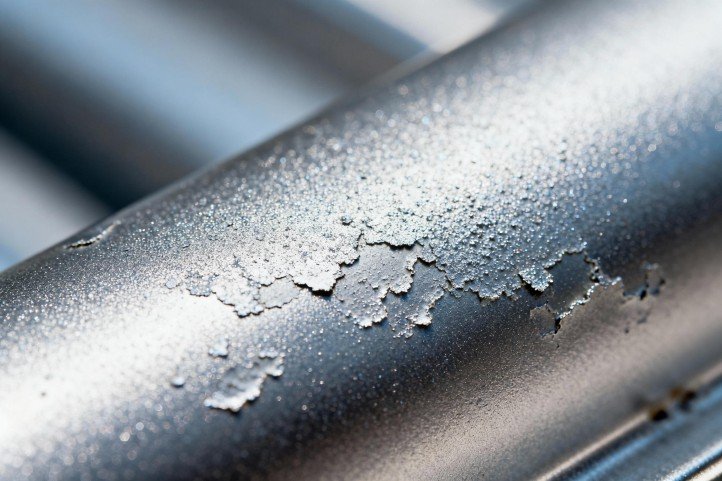
Plain carbon steel is strong and dense-great for stability-but it needs a barrier to resist corrosion. Outdoor frames are usually powder‑coated steel or galvanized (zinc‑coated) steel (HDG in coastal climates-considerations). If a chip exposes bare steel, moisture can creep under the coating and start rust; timely touch‑ups stop it. In salt air, stainless steel (ideally 316 “marine” grade) resists chloride attack better than ordinary steel, but it’s costlier and still benefits from regular rinsing near the ocean.
Pro note: “Wrought iron” in product listings is often heavy mild steel with decorative shapes. Treat it like steel for maintenance.
Climate Fit
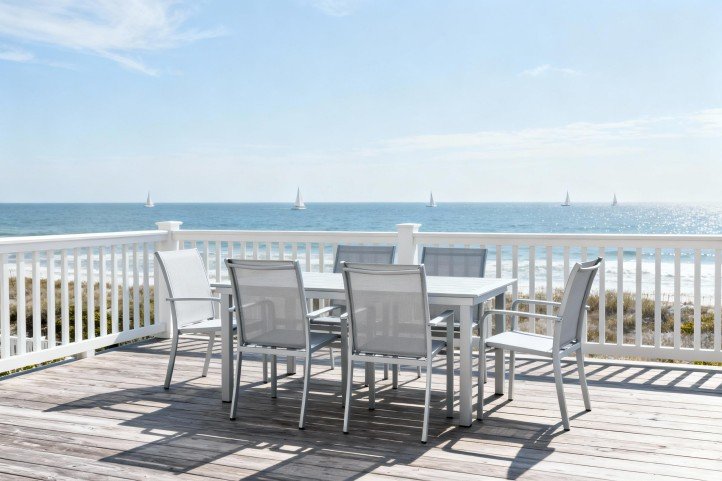
Coastal & high‑humidity zones
- Best default: Powder‑coated aluminum (cast or extruded). It’s naturally corrosion‑resistant and easy to keep clean.
- If you love steel’s look/feel: Pick hot‑dip galvanized or well‑powder‑coated steel and commit to rinsing and touch‑ups.
- Premium option: 316 stainless frames for upscale coastal installs. Rinse periodically to remove salt film.
- Spec you can copy: “Aluminum frame, polyester powder coat for exterior use; stainless hardware; non‑ferrous feet; warranty ≥ 2 years on finish.”
Dry inland & windy zones
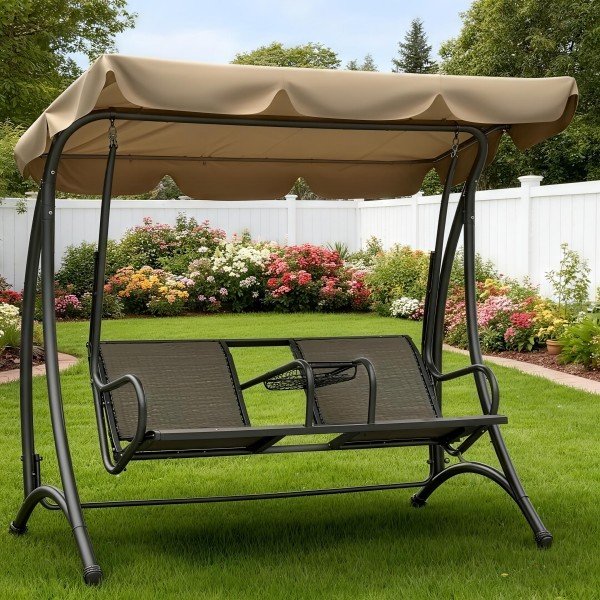
- Best default: Steel for dining tables, benches, and lounge frames that must stay put in gusts.
- Aluminum users here: Consider wider bases, cross‑bracing, or hidden ballast in tables/planters.
- Rental/Airbnb: If frequent re‑arranging matters, aluminum is still attractive-just add weighted bases to umbrellas and use furniture clips between sections.
Freeze‑thaw & desert sun
- Freeze‑thaw: Both metals are fine; avoid water collecting in hollow sections. Use drain holes or end caps.
- Desert sun: UV heat makes any dark metal hot to the touch. Favor lighter colors and breathable cushions; expect aluminum chalking to slowly over the years (cosmetic).
Mini‑case (coast): A vacation rental on the Outer Banks switched from powder‑coated steel dining chairs (rust touch‑ups every season) to extruded aluminum sling chairs. After two years, zero rust concerns, and faster turnovers, the owner logs 15-20 minutes per set for seasonal cleaning.
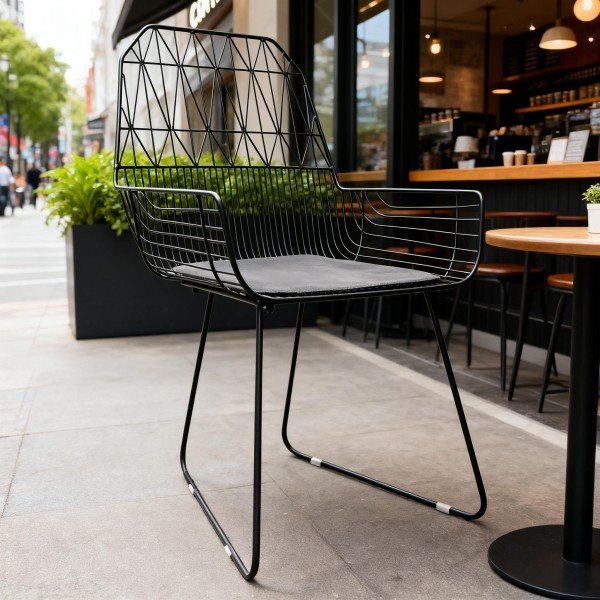
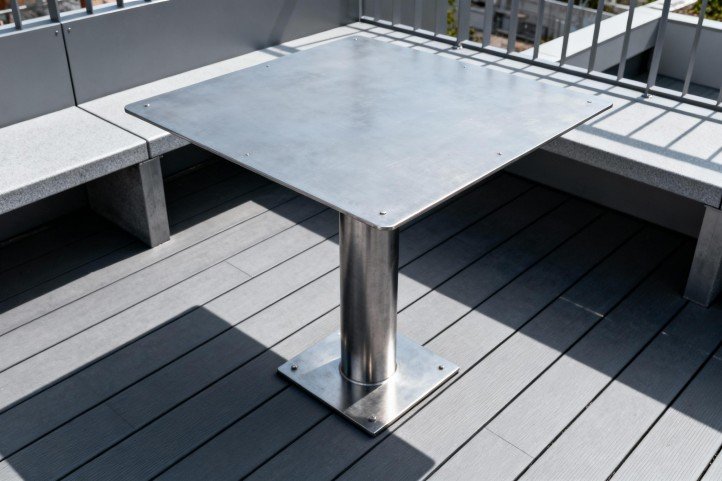
Mini‑case (wind): A hilltop café replaced light aluminum bistro tables with steel pedestals. Tipping complaints dropped; staff now use felt sliders to move tables during closing.
Weight, Stability & Move‑Around Ease
Why density matters
- Aluminum density: roughly 2.7 g/cm³
- Steel density: roughly 7.85 g/cm³ (Reference: Engineering Toolbox – Metals & Alloys Densities)
For similar shapes, steel pieces weigh ~3× more than aluminum. That extra mass resists wind and feels “solid,” but it’s a pain on balconies or when you restage for parties. If you host often or have limited storage, aluminum saves backs and time. Engineer’s quick math: If an aluminum lounge chair frame weighs 14 lb, a similar‑section steel frame could land 30-40 lb. Multiply across a 5‑piece set, and your move effort can double or triple.
Scenario picks
- High‑rise balcony (small footprint, frequent moving): Aluminum.
- Open, gusty backyard (rarely moved): Steel table bases or benches; aluminum chairs if you want to mix and match.
- Event rental/staging: Aluminum (faster setups; less worker fatigue).
Durability & Maintenance
Coatings that keep steel happy
- Powder coat care: Rinse or wipe at least twice per season in typical suburbs; quarterly near industry or coast (Interpon cleaning & maintenance guidance). Use mild soap; avoid abrasives and strong solvents.
- Touch‑ups: Keep a small kit: fine sandpaper, rust‑inhibiting primer, color‑matched enamel or powder‑coat repair pen. Address chips as soon as you see bare metal.
- Galvanized steel: Good base defense. Still topcoat it if you want color and extra life.
- Stainless: Rinse salt film; use non‑chloride cleaners; passivation is a plus.
Annual time budget for steel (per 5‑piece set): 60-90 minutes cleaning; 30-60 minutes spot repairs if needed.
Keeping aluminum looking new
- Wash: Mild soap + soft cloth a few times a season.
- Wax: A light car‑wax coat in spring slows chalking and water spotting.
- Hardware check: Tighten screws; confirm stainless fasteners to avoid bimetallic staining. Annual time budget (per 5‑piece set): 30-45 minutes cleaning; rare spot touch‑ups.
Storage & covers
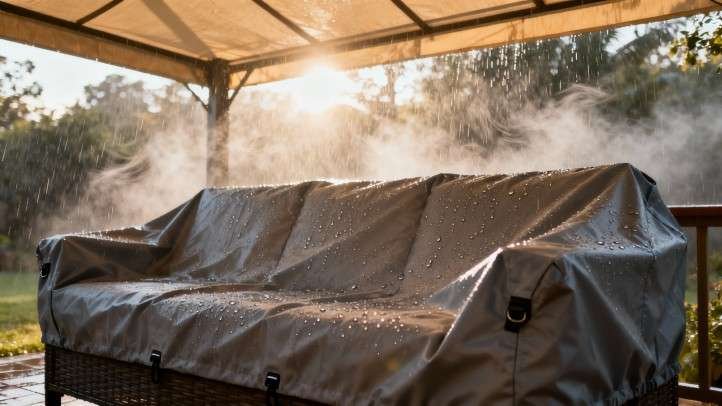
- Covers extend the finish life for both materials-especially cushions and joints.
- Off‑season storage (garage/shed) cuts UV and grime; elevate feet to avoid puddles.
- Commercial sites (cafés, HOAs): build a short maintenance SOP; assign monthly wipe‑downs and semiannual inspections.
Price & Value
Prices vary by brand and complexity, but typical patterns look like this:
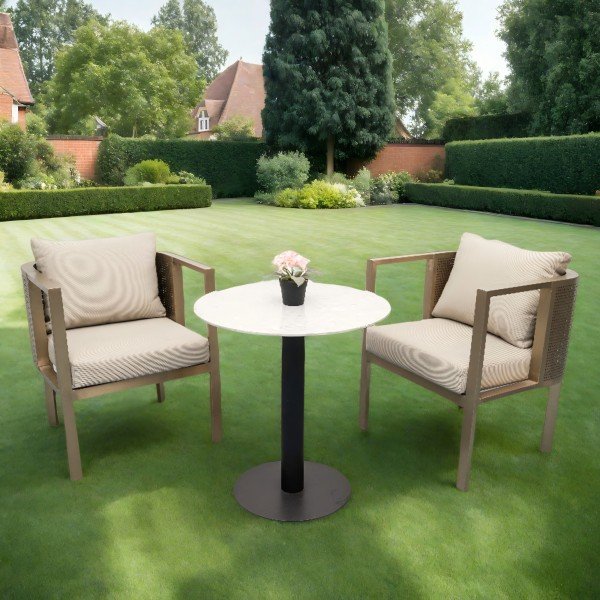
- Aluminum (extruded): $600-$1,500 for a 3‑pc bistro or conversation set; $1,200-$2,500 for a 4-5‑pc dining set.
- Aluminum (cast): adds 10-25% for ornate designs.
- Steel (powder‑coated): $700-$1,800 for a 3‑pc set; $1,300-$2,800 for a 4-5‑pc set.
- Stainless (304/316): often premium‑tier; expect a meaningful jump.
Hidden/ongoing costs: patio covers ($25-$100 per piece), occasional touch‑up supplies ($15-$40), storage or delivery, and heavier bases for umbrellas in windy spots. Value tip: If you live in a corrosion‑prone area, the “extra” you pay for aluminum often comes back as lower maintenance time and fewer finish repairs over 3-5 years.
[More knowledge: Choosing Outdoor Fabrics That Last]
Comparison Tables
Steel vs Aluminum at a Glance
| Factor | Aluminum | Steel |
|---|---|---|
| Rust/corrosion | Won’t rust; forms protective oxide. Powder coat for color. | Needs coating (powder/galvanized); chips must be touched up. |
| Weight & stability | Light → easy to move; may need ballast in wind. | Heavy → planted feel; resists wind movement. |
| Climate fit | Coastal/high humidity favorite; also fine inland. | Wind‑exposed inland sites; OK on coast with vigilant care or stainless/galv. |
| Maintenance | Wash + occasional wax; minimal touch‑ups. | Wash + chip repair; more frequent in salt/industrial areas. |
| Style options | Sleek extrusions; ornate cast aluminum. | Industrial/modern profiles; classic “wrought” look. |
| Price bands | Mid to upper‑mid; cast can be premium. | Mid; stainless is premium. |
| Lifespan (well‑cared) | 7-15+ years | 7-15+ years (more care sensitive) |
Climate/Use Matrix
| Setting | Best default | Why | Notes |
|---|---|---|---|
| Beachside condo balcony | Aluminum | Rust‑proof, light to move | Rinse off salt periodically; choose light colors for heat comfort |
| Inland windy backyard | Steel tables/benches + aluminum chairs | Mass where it matters | Add sliders to steel feet; clip aluminum sectionals |
| Restaurant terrace (high turnover) | Steel or aluminum with ballast | Stability for safety | Specify commercial‑grade powder coat/welds |
| Airbnb near the coast | Aluminum | Lower maint. between guests | Sling chairs = quick dry after rain |
[More knowledge: How to Specify 316L Stainless for Coastal & Poolside Resort Furniture]
Buying Tips
What Lowe’s & Home Depot emphasize
- Aluminum is lightweight and doesn’t rust (Lowe’s guide). Look for powder‑coat finishes and stainless hardware.
- Steel is sturdy/heavier and often more planted in wind (Home Depot guide). Plan on protective finishes and covers.
- Covers extend life regardless of material.
How to read product pages: Scan for frame material, finish type, gauge/section thickness, warranty years (frame & finish), and hardware type (stainless vs zinc). If it’s aluminum, check whether it’s cast (ornate) or extruded (sleek). If it’s steel, look for galvanized base layers and ask about touch‑up options. What to ask a seller:
- What’s the weld quality (smooth, continuous beads)?
- Coating: polyester powder for exterior? Any salt‑spray test data?
- Hardware: stainless fasteners and non‑ferrous feet?
- Spare parts: touch‑up pens, glides, replacement slings available?
Verdict – A Simple Rule You Won’t Regret
For Steel vs Aluminum Patio Furniture, use this rule: If you can see salt water or smell salt in the air, buy aluminum. If wind topples lightweight sets where you live, buy steel (or add weight to aluminum). If you want set‑and‑forget maintenance, aluminum is the safer bet. If you crave that planted, rock‑solid feel-especially for tables and benches-steel satisfies, as long as you’re willing to touch up any chips.
FAQs
Q1. Does aluminum patio furniture rust near the ocean?
A. Aluminum doesn’t rust like steel; it forms a protective oxide film. Near the ocean, a quick rinse and mild‑soap wash every month or two keeps salt from dulling the finish. Wax once a season if you want extra shine.
Q2. Is steel patio furniture OK by the coast if it’s powder‑coated?
A. Yes, you’re disciplined with maintenance. Use quality powder‑coated steel, rinse regularly, and repair chips immediately. For “hands‑off” upkeep, aluminum or 316 stainless is more forgiving.
Q3. Which is heavier-steel or aluminum-and why does it matter?
A. Steel is roughly three times as dense as aluminum. Heavier pieces resist wind and feel solid; lighter aluminum is far easier to move, especially on balconies or when rearranging for guests.
Q4. What’s the real maintenance difference over five years?
A. Expect aluminum to need seasonal washes and maybe a wax; steel needs the same plus occasional chip/primer/paint touch‑ups-more often in salty or industrial air. Covers lower effort for both.
Q5. Cast aluminum vs extruded aluminum-what should I pick?
A. Cast allows ornate, classic shapes and can feel a bit heavier; extruded yields sleek, modern lines and lighter frames. Both resist corrosion well when powder‑coated; choose by style and budget.