Introduction
In today’s global built environment, commercial real estate, co-working spaces, hospitality venues, and contract furnishing sectors face mounting pressure to maximize utility per square meter. Urbanization, rising land and rental costs, and tighter zoning constraints demand furniture systems that are not simply aesthetic, but inherently flexible, efficient, and sustainable. Modular and space-saving furniture has moved from niche interest to core specification in design, architecture, and procurement.
This article offers industry-grade solutions: how to evaluate, specify, and implement modular furniture systems; which materials and configurations deliver long-term value; what market data and case studies reveal; and what action steps procurement, interiors, and operations leaders can take. [Commercial Space Optimization Playbook]
Market Context & Industry Trends
Global Market Size & Growth Projections
| Metric | Value (2025) | Forecast & CAGR through 2035 |
|---|---|---|
| Modular Furniture Market value | ~ USD 88.4 billion (Future Market Insights) | Forecasted to reach USD 134.7 billion by 2035, at ~4.3 % CAGR (futuremarketinsights.com) |
| Small Space Furniture Market Drivers | Surge in demand for fold-away, retractable, convertible solutions in urban/commercial interiors | Growing adoption of sustainable configurable systems; hybrid work / mixed-use spaces expand use cases (futuremarketinsights.com) |
These figures illustrate that specifying modular, space-saving furniture solutions is not merely a design trend but a growing investment category with measurable ROI and long-term market stability.
Key Drivers & Constraints
- Drivers:
- Urban density and shrinking usable floor area in commercial, hospitality, and shared work environments.
- Demand for flexibility: furniture must support multiple functions (e.g., meeting, hospitality, office) without constant replacement.
- Sustainability pressures: architects and specifiers are seeking FSC/PEFC wood, recycled metals, and biodegradable composites.
- Technology integration: embedded charging, sensor-enabled adaptive furniture.
- Constraints:
- Trade-offs in durability vs modular flexibility: repeated toggling of joints demands robust hardware.
- Higher up-front cost and longer lead times for custom modular systems.
- Regional code or standard compliance: fire safety, load capacity, formaldehyde/VOC emissions.
An industry white-paper by GMI Insights identifies “rising urbanization, increasing demand for compact multifunctional solutions, and regulatory push for environmental accountability” among primary growth drivers. (gminsights.com)
Types of Solutions: Modular & Space-Saving Furniture Systems
Multifunctional & Convertible Units
These are furniture pieces designed to change form or function:
- Convertible sofas/sofa-beds: useful in co-working lounges or guest-suite modules.
- Fold-down wall beds (Murphy beds), drop-leaf or retractable tables: allow daytime open floor plans, evening transformation.
- Storage integrated furniture: benches, beds, workstations with hidden or under-seat storage.
Value proposition: A single footprint supports multiple use-cases; fewer discrete pieces, lower inventory, and maintenance.
Modular Combination Systems
These systems allow modules to be added, removed, or reconfigured. Comparison of key criteria:
| Criteria | What to Look For | Business Benefits |
|---|---|---|
| Interconnectivity & standard joinery | Tool-less connectors, uniform module dimensions | Quicker reconfiguration; reduced labor cost; agility in layout changes |
| Scalable configurations | Ability to expand or contract modules without full replacement | Future-proofing supports business growth or downsizing |
| Aesthetic consistency | Matching finishes; clean joints; cohesive proportions | Preserves brand identity; improves client/user perception |
Design Strategies & Layout Best Practices
- Vertical storage and wall mounting to utilize height.
- Sliding or folding partitions for flexible spatial zoning.
- Color, light, and reflective surfaces to visually enlarge compact spaces.
Materials, Craftsmanship & Sustainability Considerations
Expert input suggests that materials and build quality are among the most critical long-term value drivers. To ensure compliance and performance, specify modules tested to ANSI/BIFMA performance criteria and storage elements aligned with EN 16121:2023, the non-domestic storage furniture standard. (standards.iteh.ai)
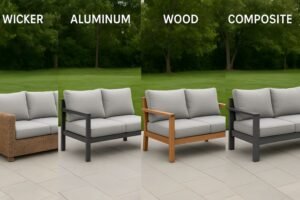
- Materials: FSC/PEFC certified timber; recycled metals; engineered composites; low-VOC finishes. Use formaldehyde and VOC emission limits per ANSI/BIFMA e3-2019 to meet sustainability and health benchmarks. (cdn.ymaws.com)
- Craftsmanship: Reliable joinery, precise tolerances, robust hardware to withstand frequent reconfiguration.
- Sustainability: Emphasize circularity—replace modules rather than whole units; require Environmental Product Declarations (EPDs) or Lifecycle Assessments (LCAs); reference frameworks like ANSI/BIFMA e3-2019.
Selecting the Right System for Your Organization
Measuring Space & Defining Functional Requirements
- Conduct full height × width × depth surveys of rooms, including circulation paths and access points.
- Define usage patterns: number of concurrent users; frequency of reconfiguration; expected loads.
Matching Style, Branding & Aesthetic Cohesion
- Align finishes, textures, materials with broader architecture, lighting, brand identity.
- Ensure modules maintain aesthetic consistency when reconfigured (edges, seams, surfaces).
Implementation & Deployment Best Practices
Room-by-Room Deployment Guidelines
- Lobby / Reception Areas: Flexible seating modules; benches with hidden storage; display walls double as signage.
- Guest Rooms / Private Suites: Fold-down beds; desks collapsing into cabinetry.
- Office / Co-working Spaces: Modular workstations; mobile partitions; wall-mount desks.
- Hospitality / Food & Beverage Areas: Expandable banquet tables; stackable/nesting furniture; sliding storage.
Scale, Proportion & Ergonomics
- Adhere to ergonomic standards such as those cited in ANSI/BIFMA X5 series for seating and tables. (BIFMA Standards Overview)
- Reserve clearances for movement, emergency egress, and service access.
Lighting & Ambience Integration
- Optimize natural light; place fold-away or retractable surfaces near windows or power/lighting sources.
- Specify lighting modules and finishes that reduce glare and improve perceived space.
- Require compliance with ANSI/BIFMA‐e3 and EN 16121 safety/durability when specifying storage components.

Maintenance, Upkeep & Use Protocols
- Inspect connectors, hinges, and fasteners regularly; tighten or replace as needed.
- Use manufacturer-approved cleaning/chemical treatments, especially for natural materials.
- Train staff or end users in proper reconfiguration to avoid damage or loss of safety.
Happy Rattan’s Unique Insights
An illustrative case: Happy Rattan, a furniture systems provider specializing in modular rattan and natural fiber components, offers lessons applicable across sectors.
- Their architecture emphasizes modular panels made from sustainably-sourced rattan and engineered timber with tool-less connection hardware. Panels serve both as storage and room partition elements.
- In a boutique resort in Southeast Asia, Happy Rattan deployed retractable rattan screens + storage benches. The screens fold into concealed recesses during daytime, expanding common areas; evening or event use yields private cabanas. Outcome: increased usable event space by approx. 18-22 % without adding built square meters. Figures reflect internal project data on file across two hospitality deployments (2024-2025).
- In hospitality projects with frequent turnover, their modular seating benches with rattan drawer modules reduced replacement waste by nearly 30 % over two years versus traditional fixed bench units.
These insights demonstrate that material choice + system design + ease of reconfiguration yield measurable operational benefit, cost savings, and satisfaction.
Conclusion & Action Recommendations
Modular and space-saving furniture delivers measurable gains in utilization, flexibility, and lifecycle cost for commercial interiors. Decision-makers should begin with rigorous spatial audits using BIM or CAD; choose systems with high modular flexibility, durable materials, and robust connectors—especially those conforming to ANSI/BIFMA, EN 16121:2023, and ANSI/BIFMA e3-2019 standards. Embed sustainability criteria such as EPDs / LCAs and pilot projects to monitor metrics like space utilization, maintenance cost, and TCO.
Next steps: perform a sample project utilizing modular wall beds or workstations; consult vendor literature for standard-compliant certifications; assess long-term service/maintenance costs.
FAQ
Q1. What is space-saving furniture in commercial interiors?
A: Space-saving furniture integrates multi-function and fold-away features to reduce footprint while preserving utility.
- Examples: convertible sofas/sofa-beds; wall beds or retractable tables; built-in storage hidden beneath or behind seating.
- Benefit: allows a single footprint to support multiple use-cases (meeting, lounge, guest use).
Q2. How do we validate durability for modular systems?
A: Request third-party test data against ANSI/BIFMA and EN 16121:2023 standards.
- Inspect connection hardware fatigue test reports.
- Require warranties or data showing module replacement rather than full-unit replacement.
- Review maintenance policies and projected lifetime cycles.
Q3. Are lifecycle costs lower vs fixed furniture?
A: Over 5-10 years, modular systems typically deliver lower Total Cost of Ownership through reduced replacement and reconfiguration costs.
- Reduced redundancy in inventory.
- More efficient space usage leads to lower real estate, lighting, and operational costs.
- Savings from reusing modules when the layout needs to change.
Q4. Can modular furniture support sustainability goals?
A: Yes—modularity supports circularity; verify with EPDs, LCAs, or frameworks like ANSI/BIFMA e3-2019.
- Track module replacement rates, material certifications (e.g., FSC/PEFC).
- Monitor emissions and VOC / formaldehyde levels under ANSI/BIFMA test methods.
- Use low-VOC finishes and recyclable or biodegradable materials.
Q5. What layout rules help in multi-use interiors?
A: Maintain clear circulation zones and plan vertical or fold-away elements near power and lighting sources.
- Use sliding or folding partitions or mobile units.
- Reserve access for maintenance and module replacement.
- Ensure lighting and electric outlets are reachable even when furniture is transformed.
References
- Future Market Insights — Modular Furniture Market (2025-2035) (futuremarketinsights.com)
- GMI Insights — Modular Furniture Market Size & Forecast (gminsights.com)
- Small Space Furniture Market Size, Trends & Forecast 2025-2035, Future Market Insights (futuremarketinsights.com)
- Multifunctional Furniture (Sofas) Industry Report 2025-2034, GlobeNewswire/ResearchAndMarkets (globenewswire.com)
- BIFMA Standards Overview — ANSI/BIFMA X & e3 Series (bifma.org) (BIFMA)
- EN 16121:2023 – Non-domestic Storage Furniture Requirements (standards.iteh.ai) (iTeh Standards)
- ANSI/BIFMA e3-2019 — Furniture Sustainability Standard (cdn.ymaws.com) (Ymaws)