Introduction:
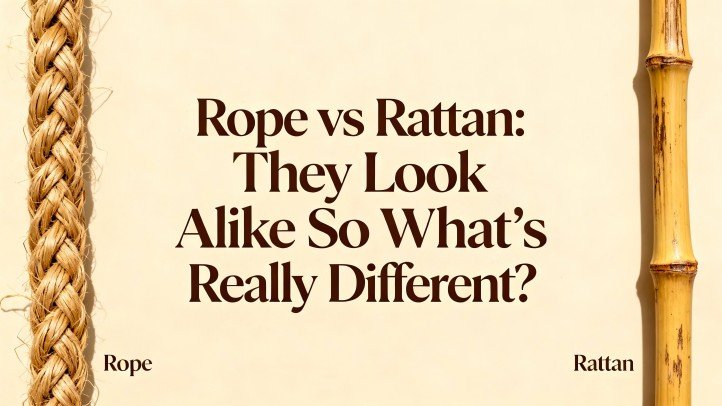
If you’ve ever fallen for a woven outdoor lounge and then wondered whether it was rope or rattan, you’re not alone. They can look similar from a few steps away, yet they’re fundamentally different: rope furniture uses braided textile cords (typically polyester, olefin/polypropylene, or solution-dyed acrylic), while rattan refers to either natural rattan (a plant-based cane) or synthetic/PE rattan (HDPE resin wicker).
This guide breaks down how each behaves outdoors-durability, comfort, maintenance, style-and ends with a practical buying checklist. To anchor recommendations in industry practice, we’ll reference standardized tests like UV/weathering exposure per ASTM G154 and salt-spray/corrosion per ASTM B117. (Q-Lab)
Quick truth: “Wicker” is a weaving method, not a material. You can weave wicker with natural rattan, synthetic resin (PE), or textile rope.
What Is Rattan?
Rattan comes in two very different forms in the outdoor market.
Natural Rattan
- Look & touch. Warm, organic grain with hand-wrapped joints-beloved for artisanal character.
- Where it shines. Covered patios, verandas, sunrooms-spaces with a roof or good shelter.
- Weather caveat. Natural rattan absorbs moisture, and its weave darkens/wears under the elements; direct sun also degrades finishes over time. High-end makers explicitly recommend sheltered use (or very careful protection) for natural rattan outdoors-see Soane Britain’s Care Notes and consumer guidance from Southern Living: “Items You Should Never Put on Your Porch”. (Soane Britain)
- Sustainability note. As a non-timber forest product, responsibly sourced rattan supports craft and livelihoods-choose reputable makers that disclose sourcing.
[More knowledge: Rattan vs Wicker-What’s the Difference?] 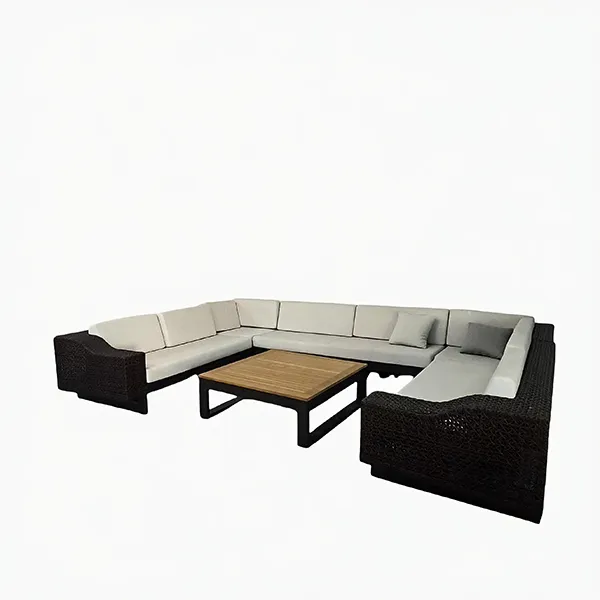
Synthetic Rattan / PE Rattan
- What it is. UV-stabilized HDPE strands woven over a frame; aims to mimic rattan’s look with all-weather practicality. Useful primers: Decor Outdoor’s Resin Wicker Guide and comparisons of HDPE vs. PVC wicker. (Decor Outdoor)
- Why it works outdoors. Engineered for UV, rain, and temperature swings; easy care with mild soap and water.
[More knowledge: PE Rattan Buying Guide]
What Is Rope Outdoor Furniture?
“Rope” refers to furniture woven with textile cords, most often polyester, olefin (polypropylene), or solution-dyed acrylic.
- Polyester rope. Strong UV and abrasion performance; a marine staple. See TEUFELBERGER’s explainer on UV and ropes. (TEUFELBERGER Ges.m.b.H.)
- Olefin/PP rope. Light, quick dry, excellent mildew resistance. Base UV stability is lower than polyester but improves with stabilizers; it is used widely in outdoor textiles. (Industry backgrounders: Trivantage on UV + solution-dyed acrylic and FabricLink on solution-dyed fibers.) (Trivantage)
- Solution-dyed acrylic rope. Color is built into the fiber (think “carrot vs. radish”); outstanding fade resistance in full sun. See Jensen Outdoor × Sunbrella.
How it sits. Rope offers a gently elastic “cradle” with great airflow, “hot seat” effect-making it stellar for loungers and modern silhouettes. 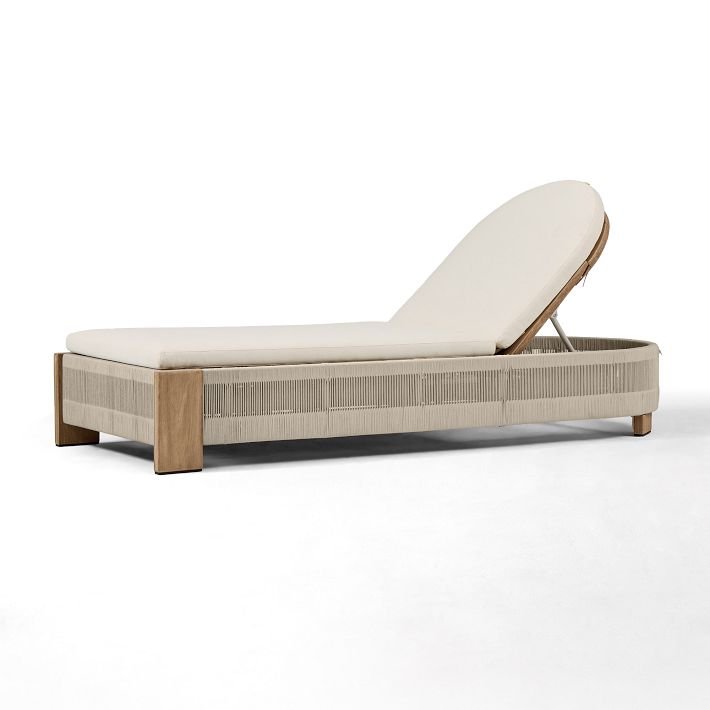
Rope vs Rattan: Five Practical Dimensions
Weather Resistance
- Natural Rattan: Best for sheltered spaces; prolonged sun and moisture lead to wear, darkening, and mold risk. See Soane’s Care Notes and Southern Living’s porch guidance. (Soane Britain)
- PE Rattan (resin wicker): Built for elements; UV-stabilized HDPE strands + corrosion-resistant frames. Good overview of Decor Outdoor. (Decor Outdoor)
- Rope: Strong outdoors when you choose solution-dyed and UV-stabilized fibers; polyester typically retains strength better than polypropylene under UV (see TEUFELBERGER + FabricLink). (TEUFELBERGER Ges.m.b.H.)
To benchmark materials/coatings, brands often cite ASTM G154 UV weathering and ASTM B117 salt-spray for frames/hardware. (Q-Lab)
Structure & Sit Feel
- Rope: A touch of elastic give; cool, breathable seating; excellent for lounge geometry.
- PE Rattan: Visually plush; slightly firmer support-great for sofas and modulars.
- Natural Rattan: Classic springiness and charm, but use under cover to preserve it.
Maintenance & Cleaning
- Rope: Soft brush/vacuum for dust → mild soap + lukewarm water → rinse → air-dry.
- PE Rattan: Brush crevices → mild soap water → gentle hose rinse; avoid harsh solvents.
- Natural Rattan: Keep dry; treat minor mildew promptly and avoid soaking; store during storms/wet seasons. For how-to visuals, add a video like “How to Clean Wicker Furniture (Step by Step)” on YouTube.
- Bonus: Cleaning checklists from publishers (e.g., Better Homes & Gardens care guide) and Southern Living’s wicker cleaning tips.
Longevity & Warranty
Service life is driven by fiber quality, UV package (stabilizers/solution-dyed pigments), and especially frame/coating quality. Look for credible test language (G154/B117) rather than vague “all-weather” claims. ASTM G154 / ASTM B117. (Q-Lab)
Style Language
- Rope: Modern, architectural, and color-forward (solution-dyed palettes).
- PE Rattan: Timeless wicker textures-coastal to boho to resort.
- Natural Rattan: Handcrafted warmth and patina (best under eaves/indoors).
The Frame & Finish Beneath the Weave
Whatever weave you pick, frame, and finish, decide how it ages.
- Powder-coated aluminum is the category’s workhorse: light, corrosion-resistant, low-maintenance. Care guidance from top outdoor brands: Gloster-Powder Coated Aluminium Care & Maintenance (PDF), and coating pros like DGL Powders (PDF). Avoid abrasive cleaners/solvents.
- In coastal environments, corrosion-aware specs and hardware matter; salt-spray references like ASTM B117 indicate a more rigorous QC mindset. (Q-Lab)
Side-by-Side Comparison
| Feature | Rope Outdoor Furniture | PE Rattan (Resin Wicker) | Natural Rattan |
|---|---|---|---|
| Core material | Polyester / Olefin (PP) / Solution-dyed acrylic rope | UV-stabilized HDPE strands | Plant-based rattan cane |
| UV in full sun | High (esp. polyester & solution-dyed) | High (engineered) | Low outdoors (use under cover) |
| Rain/mildew | Quick-dry fibers; low water uptake (olefin) | Non-absorbent; easy rinse | Absorbs moisture; mold risk |
| Frame pairing | Powder-coated aluminum/stainless | Powder-coated aluminum/stainless | Rattan pole/wood (sheltered) |
| Touch & comfort | Elastic cradle, cool and airy | Supportive, slightly firmer | Organic spring with artisan feel |
| Cleaning | Soft brush + mild soap | Soft brush + mild soap | Gentle clean; avoid soaking |
| Best use | High-UV decks, poolside lounges | Most patios year-round | Verandas, sunrooms, covered patios |
Buying Checklist
If you live with intense sun (desert/mountain): Choose polyester or solution-dyed acrylic ropes, or UV-stabilized HDPE resin wicker. Prioritize solution-dyed fabrics for cushions (see FabricLink on solution-dyed UV or Sunbrella overview). (FabricLink) By the coast (salt air): Pick rope or PE rattan on powder-coated aluminum, and check the brand’s corrosion language (e.g., ASTM B117). (Q-Lab) Covered patios/sunrooms: Enjoy natural rattan for its artisanal warmth-keep it under cover and maintain per maker guidance (Soane Care Notes). (Soane Britain) Low-maintenance priority: Favor PE rattan and solution-dyed rope/fabrics; routine soap-and-water cleaning suffices. Style decision: Choose rope for contemporary lines, saturated colors; PE rattan for the perennial wicker look.
Care & Maintenance
Rope (polyester/olefin/acrylic):
- Vacuum/soft-brush dust. 2) Mild dish soap + lukewarm water; soft brush along the weave. 3) Rinse; air-dry. Avoid harsh solvents/abrasives. For fiber longevity concepts, see Trivantage on UV & fabrics. (Trivantage)
PE Rattan:
- Lift debris with a soft brush. 2) Sponge with mild soap; gentle hose rinse. 3) Dry fully before covering. Good primers: Decor Outdoor-Resin Wicker Guide and BHG’s wicker care how-to. (Decor Outdoor)
Natural Rattan (sheltered):
- Keep dry; avoid saturation. 2) Address mildew early; let it dry in airy shade. 3) Store or cover during storms/wet seasons. See Soane Britain-Care Notes and Southern Living’s porch advice. (Soane Britain)
Watch & learn: A straightforward video walkthrough: How to Clean Wicker Furniture (YouTube).
Why Do We Mention “Standards”?
Because they’re how engineers compare apples to apples. ASTM G154 cycles UV + moisture to evaluate colorfastness and surface change in polymers, coatings, textiles; ASTM B117 exposes metals/coatings to salt fog to benchmark corrosion resistance. They don’t replicate a specific climate, but they do create repeatable baselines so better materials and coatings can be specified confidently. (Q-Lab)
Rope vs Rattan-Which Should You Pick?
- Go Rope if you want modern lines, cool-touch comfort, and robust UV performance-especially polyester or solution-dyed acrylic ropes.
- Go, PE Rattan if you love the classic wicker look and want low-maintenance, all-weather practicality.
- Choose Natural Rattan for its organic beauty in covered spaces-treat it like the artisan material it is.
For any weave, pair it with powder-coated aluminum and solution-dyed textiles for the best long-term result. That combo nails durability, comfort, and style across most climates.
FAQ
Q1: Is rope outdoor furniture more durable than rattan in full sun?
A: Generally, when the rope is polyester or solution-dyed acrylic with proper UV stabilizers. PE rattan also performs well in the sun, while natural rattan should be kept under cover. See TEUFELBERGER on UV & ropes and FabricLink on solution-dyed fibers. (TEUFELBERGER Ges.m.b.H.)
Q2: What’s the best frame for woven outdoor pieces near the coast?
A: Powder-coated aluminum. It’s light, corrosion-resistant, and easy to maintain. See Gloster-Powder Coated Aluminium Care (PDF) and salt-spray benchmark ASTM B117.
Q3: How do I clean rope seating without fraying it?
A: Soft brush or vacuum → mild soap solution → gentle rinse → air-dry. Avoid wire brushes/solvents. For a visual, watch this quick How to Clean Wicker Furniture (methods are similar for rope weaves).
Q4: Can I leave natural rattan outside all year?
A: No. Keep natural rattan in covered areas; store or cover during wet seasons. See Soane Britain-Care Notes and Southern Living’s expert advice on porches. (Soane Britain)
Q5: Does “wicker” mean rattan?
A: No-wicker is the weaving technique, not the material. It can be made from rattan, resin/PE, or textile rope.