Introduction
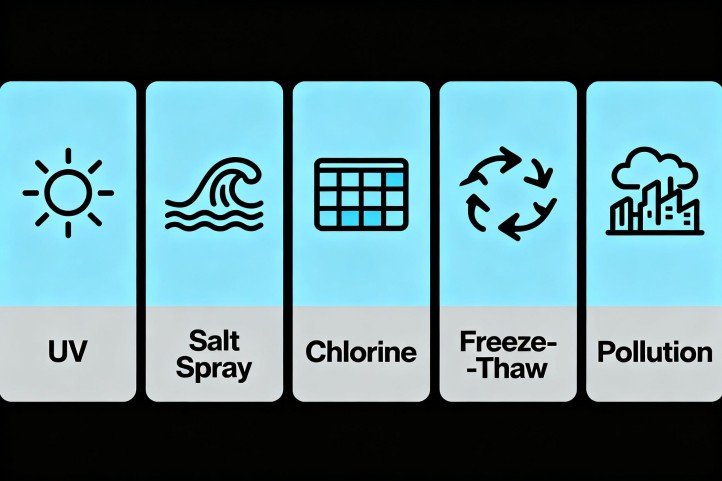
Commercial patios, pool decks, rooftops, and coastal promenades are tough environments. Sun, salt, chlorine, pollution, and freeze-thaw cycles attack frames, fasteners, and fabrics. A proactive outdoor furniture maintenance program preserves appearance, uptime, and warranties-while lowering total cost of ownership (TCO). This guide translates standards and materials science into SOPs your team can actually run, with links to recognized standards bodies and manufacturer care pages for credibility.
Material Matters: choose the right to maintain less
If you select the right substrate + finish for the environment, maintenance becomes predictable (and cheaper).
Aluminum (powder-coated or anodized)
- Why it’s used: light, inherently corrosion-resistant (aluminum forms a passive oxide), and cost-effective.
- Maintenance focus: protect the coating (powder/anodic seal) from chips; rinse salts; avoid harsh alkaline/acidic cleaners that can etch or undercut.
- Where it shines: general hospitality, urban rooftops, most inland sites.
Stainless steel (304 vs 316)
- Why it’s used: strength, sleek aesthetics, stiffness for thin profiles.
- Maintenance focus: prevent “tea staining” (brown discoloration) in chloride environments; schedule freshwater rinses; pick the right grade. Near surf zones, 316’s molybdenum-enhanced pitting resistance outperforms 304. See ASSDA tea staining guidance and ASSDA grade selection: chlorine vs chloride.
Galvanized & e-coated steel
- Why it’s used: high stiffness; cost-efficient for heavy frames and communal furniture.
- Maintenance focus: keep zinc intact; touch up scratches; for complex geometries, an e-coat (electrocoat) primer plus powder topcoat improves edge/recess coverage and corrosion protection. Learn the basics at the Electrocoat Association.
Hardwoods (e.g., teak)
- Why it’s used: natural oils, dimensional stability, premium look.
- Maintenance focus: periodic cleaning, then oil or sealer depending on desired color retention; avoid film-forming varnishes in high-UV zones (peel risk). If you accept a silver-grey patina, cleaning alone is fine.
Synthetics: HDPE/PE wicker, PVC mesh (Textilene®), solution-dyed acrylic/olefin fabrics
- Why they’re used: UV colorfastness, fast dry, low mildew tendency.
- Maintenance focus: routine rinse, mild soap; many solution-dyed acrylics are bleach-cleanable when following brand guidance-see the official Sunbrella care & cleaning and U.S. page for how to clean Sunbrella fabric.
Quick selector (environment × material × effort)
| Environment | Best-fit frame (maintenance effort) | Fabrics & fills | Notes |
|---|---|---|---|
| Coastal (salt spray/onshore wind) | 316 stainless (medium), powder-coated aluminum with frequent rinses (low-medium) | Solution-dyed acrylic + quick-dry foam | Prefer 316; plan weekly freshwater rinses to prevent tea staining (see ASSDA guidance). |
| Pool deck (chlorine splash) | Powder-coated aluminum (low), 316 stainless (medium) | Acrylic/olefin, bleach-cleanable covers | Rinse after splash events; avoid uncoated carbon steel hardware. |
| Urban rooftop (acid rain/particulates) | Powder-coated aluminum (low), galvanized+e-coat steel (medium) | Acrylic/olefin | Pollution film requires monthly washes; e-coat primer helps complex frames. |
| Cold climate (freeze-thaw) | Aluminum (low) | Acrylic/olefin | Avoid water trapping; off-season storage/covers reduce micro-cracking. |
[For more information, please read: Powder coating details] | [For more information, please read: How to choose 316 stainless steel for seaside hotels]
Coatings & Standards that predict real-world durability
Specifications don’t guarantee years in the field-but they are your best predictors for UV, humidity, and corrosion performance.
- AAMA/FGIA 2604 vs 2605 (architectural aluminum coatings).
- 2604: “High Performance” (super-durable polyesters) for strong color/gloss retention.
- 2605: “Superior Performance” (typically PVDF/fluoropolymer) for harsher climates and the longest exterior durability. In relentless sun or coastal rooftops, choose 2605; for many inland projects, 2604 is sufficient. Read official overviews: AAMA 2604 (FGIA) and AAMA 2605 (FGIA).
- Salt spray tests (ASTM B117 / ISO 9227). These lab tests compare coatings and detect finish discontinuities; they are comparative QA tools rather than a direct “years-in-service” predictor. References: ASTM B117 salt spray practice and ISO 9227 salt spray test overview.
- Hardware choices. Favor stainless fasteners (grade aligned to environment), isolation washers between dissimilar metals, and sealed end caps to reduce crevice corrosion.
The Maintenance Calendar: SOPs your staff can follow
Build a calendar your teams can print and check off. Aim for small, repeatable actions with clear ownership.
Weekly (front-of-house ready)
- Rinse & dry: Freshwater rinse on frames, especially coastal/pool areas; low pressure to avoid forcing water into joints.
- Wipe surfaces: pH-neutral soap, soft brush/cloth; rinse and dry.
- Fabrics: Brush off dust; stand cushions on edge to breathe; shake off trapped sand after windy days.
Monthly (preventive pass)
- Hardware check: Tighten fasteners; replace missing glides and end caps.
- Inspect coatings: Log chips/scratches; schedule touch-ups.
- Fabrics: Full soap wash; for acrylics, follow maker guidance. See Sunbrella care & cleaning for day-to-day and bleach-permitted mildew treatment.
Seasonal/quarterly (deep care)
- Woods: Clean, then oil or apply sealer according to look and exposure.
- Frames: Degrease, remove deposits, treat rust spots before winter; confirm powder integrity at edges and welds.
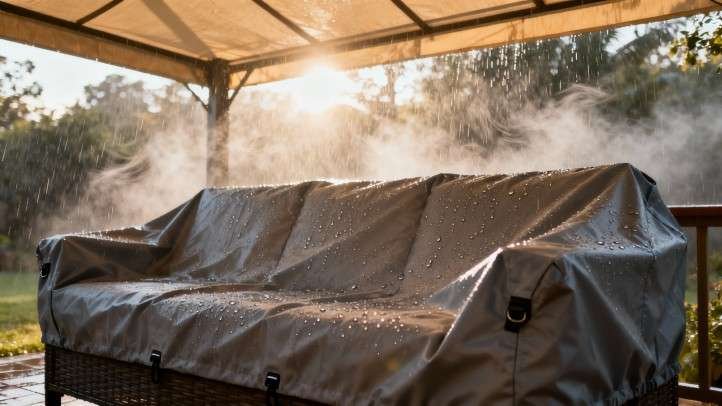
- Storage plan: Breathable covers + spacer blocks; avoid ponding and wicking; label stacks and protect corners.
Video supplement: Finish Repair of Aluminum Patio Furniture (YouTube)
Video supplement: How to Apply SEMCO Teak Sealer (YouTube)
Corrosion & rust remedies that actually work
Powder-coated frames (chip repair sequence)
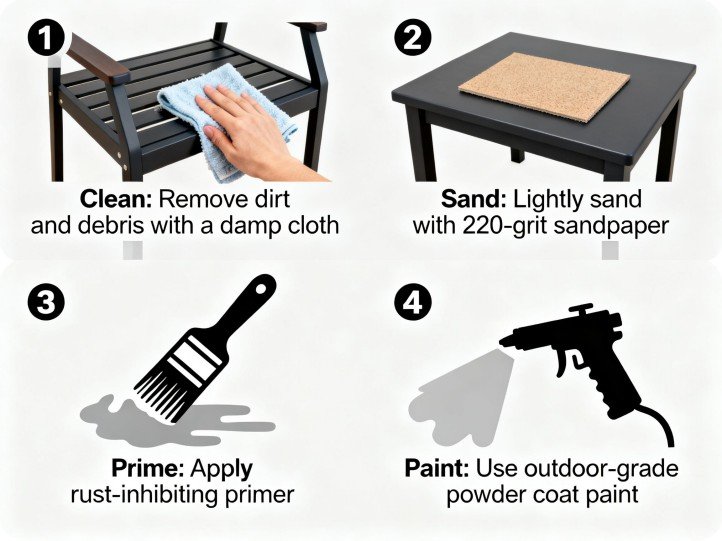
- Clean with mild detergent; dry completely.
- Feather-sand the chip; remove dust.
- Prime any bare metal (zinc-rich or anti-corrosive).
- Color-matched touch-up paint; multiple light coats; cure per product.
- Inspect in 24-48 h before service return.
Stainless “tea staining” (coastal cosmetics)
- What it is: Airborne chloride deposits retain moisture; under-rinsed surfaces discolor (cosmetic, not structural).
- Fix: Detergent wash; for persistent staining, use approved non-scratching pads/cleaners; avoid hydrochloric acid; consider passivation/electropolish for stubborn sites; increase rinse frequency and choose smoother finishes. See ASSDA tea staining guidance.
Mixed metals & galvanic corrosion
- Electrically isolate stainless from aluminum/steel using nylon/EPDM washers, sleeves, and proper primers; keep joints clean/dry; specify compatible hardware in RFQs.
Post-storm salt protocol
- Within 24 h: Hose furniture with low-pressure freshwater, let it dry; wipe standing water.
- By 72 h: Reinspect for deposits or chips; log touch-ups and tighten hardware shaken loose by wind.
UV, colorfastness, and soft goods
Solution-dyed acrylic vs olefin (outdoor cushions)
- Solution-dyed acrylic (e.g., Sunbrella®): excellent UV colorfastness; bleach-cleanable for mildew when following official guidance (see Sunbrella care & cleaning).
- Olefin/PP: good UV, quick dry, slightly different hand; easy to maintain.
Mold & mildew prevention (quick-dry foam + care)
- Use reticulated/quick-dry foam for airflow; stand cushions vertically after rain; keep debris off; avoid leaving cushions in saturated planters or on wet decking.
Approved cleaning basics (example: Sunbrella®)
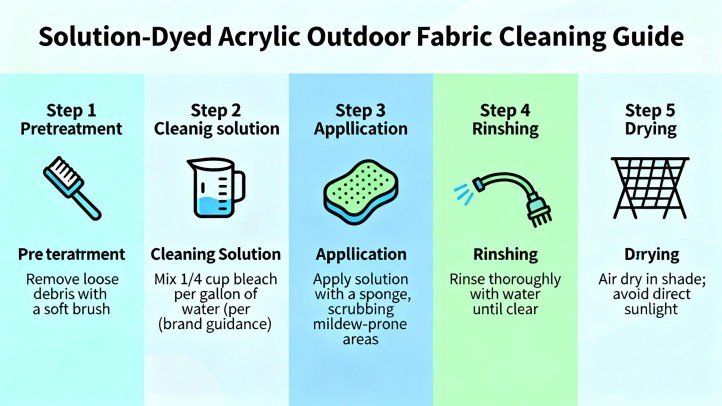
- Brush off loose dirt → mild soap solution → soft brush → rinse thoroughly → air-dry.
- For mildew on acrylics: diluted bleach + mild soap in water, dwell ~15 minutes, then rinse thoroughly and air-dry. Follow the manufacturer’s ratios on how to clean Sunbrella fabric.
[For more information, please read: Selection and maintenance of outdoor seat cushion quick-drying sponge]
Quick fabric comparison
| Attribute | Solution-dyed acrylic | Olefin (PP) | PVC-coated mesh (Textilene®) |
|---|---|---|---|
| UV colorfastness | Excellent | Very good | Very good |
| Cleanability | Soap & water; bleach-OK (brand-specific) | Soap & water | Soap & water |
| Hand/comfort | Soft, textile-like | Slightly stiffer | Mesh/airy |
| Dry speed | Good (faster with quick-dry foam) | Very good | Very fast |
| Typical use | Cushions, umbrellas | Cushions | Slings, screens |
Environment-specific playbooks
Coastal resorts
- Spec: 316 stainless or powder-coated aluminum with frequent rinses; acrylic fabrics.
- SOP: Weekly freshwater rinse of frames; monthly detergent wash; quick removal of wind-blown sand; isolate mixed metals. Guidance: ASSDA tea staining guidance and ASSDA grade selection.
Pool decks
- Spec: Powder-coated aluminum or 316 SS; acrylic or olefin fabrics (bleach-cleanable acrylics).
- SOP: Rinse after splash events; monthly soap wash; avoid acidic cleaners and quats that leave residues on fabrics; follow brand-specific bleach guidance for acrylic.
Urban rooftops
- Spec: Super-durable polyesters (AAMA 2604) or fluoropolymer powders (AAMA 2605) for long gloss/color hold.
- SOP: Monthly wash to remove acidic particulates; check for ponding spots and abrasion points. Official references: AAMA 2604 and AAMA 2605.
Cold climate venues
- Spec: Aluminum frames; breathable covers; non-wicking glides.
- SOP: Deep clean + dry before storage; avoid shrink-wrapping without vents; protect feet from ice bonding.
Accessories & storage: small upgrades, big impact
- Covers: Breathable, sized correctly, with tie-downs that avoid edge abrasion; labeled by set/zone.
- Glides & spacers: Lift legs off wet decks to prevent wicking; replace worn feet; use non-staining materials.
- Layout: Keep pieces off salt-spray “drift lines”; allow airflow behind furniture; use sacrificial bumpers on walls.
- Off-season: Clean → dry → cover → stack with separators; never trap moisture; document condition on exit/return.
TCO: Show the business case
A maintenance-first spec often beats replacement cycles in harsh sites when you account for downtime and labor. Simple TCO model (illustrative):
| Item | Conservative scenario | Maintenance-first scenario |
|---|---|---|
| Upfront frame spec | Standard powder on aluminum | AAMA 2605 powder or 316 SS |
| Annual maintenance kit | $0.00 (reactive only) | $300 (touch-up, cleaners, covers) |
| Deep service call (3 yrs) | $1,500 | $0 (prevented) |
| Replacement cycle | 5-6 yrs | 8-10 yrs |
| 10-yr cost per seat | Higher | Lower (fewer replacements) |
Conclusion: a maintenance-first spec wins
If your site is coastal, poolside, urban, or cold, the best outdoor furniture maintenance program starts at spec (materials, coatings, hardware), then runs on SOPs your team can execute in minutes each week. Align the finish to AAMA 2604/2605, select 316 where chlorides rule, adopt brand-approved acrylic fabric care, and standardize touch-up kits. The result: better guest experience, fewer emergency repairs, and a stronger TCO story. For deeper dives, see official overviews of AAMA 2604/2605, ASTM B117, and ISO 9227.
References (anchored external resources)
- FGIA / AAMA standards: AAMA 2604 (FGIA) ・ AAMA 2605 (FGIA)
- Salt spray overviews: ASTM B117 ・ ISO 9227
- Stainless in coastal/chloride sites: ASSDA tea staining guidance ・ ASSDA grade selection: chlorine vs chloride
- Fabric care: Sunbrella care & cleaning ・ How to clean Sunbrella fabric
- Coating process: Electrocoat Association-What is Electrocoating
- Video supplements: Finish Repair of Aluminum Patio Furniture (YouTube) ・ How to Apply SEMCO Teak Sealer (YouTube)
FAQ (People Also Ask-style)
Q1: How often should we clean furniture at a coastal resort?
A: Rinse frames with freshwater weekly (and after storms), then do a mild-soap wash monthly. For 316 stainless, this reduces tea staining; powder-coated aluminum also benefits. Increase frequency within a few kilometers of surf; see ASSDA tea staining guidance.
Q2: What’s the safest way to remove rust or chips on powder-coated frames?
A: Feather-sand the chip, prime any bare metal, and apply color-matched touch-up paint in thin coats. Clean first, allow proper cure, and consider professional refinish (e-coat + powder) for large failures-see the Electrocoat Association overview.
Q3: Is 304 stainless steel good enough for poolside furniture?
A: In chlorine splash zones, 316 is the safer bet due to better pitting resistance; 304 is more prone to staining/pitting. Maintenance rinses are still required-see ASSDA grade selection guidance.
Q4: Do I need to oil teak every season?
A: Oil preserves a warm tone but needs re-application; sealers keep color longer. If you accept silver-grey patina, routine cleaning alone is fine. Choose one approach and stick to its schedule.
Q5: Which cleaners are safe for solution-dyed acrylic cushions?
A: Follow brand guidance; for Sunbrella-type acrylics, day-to-day soap/water is standard, and diluted bleach is permitted for mildew-see Sunbrella care & cleaning. Rinse thoroughly and air-dry.