
Why Load Testing Defines the Safety Baseline in Hotels & Public Spaces
In high-traffic venues—lobbies, pool decks, terraces, airports, malls—outdoor furniture is repeatedly exposed to heavy loads, dynamic impacts, misuse, and weathering. Failures can cause injuries, downtime, and reputational risk. U.S. surveillance data on instability/tip-over hazards underscores the need for rigorous stability and load testing before procurement and deployment. (U.S. Consumer Product Safety Commission)
This guide clarifies outdoor furniture load testing for hotels and public spaces, from standards to practical acceptance and maintenance.
Explore related solutions: Hospitality outdoor furniture.
Definitions That Align Teams (and Specs)
Rated Load vs. Maximum Allowable Load vs. Safety Factor
- Rated load/load capacity: the declared service load a product is designed to sustain during normal use.
- Maximum allowable load: the upper bound a product may see momentarily without permanent damage.
- Safety factor for public spaces: the design multiplier between rated load and worst-case expected load; it should reflect user population (weight distribution), usage frequency, and abuse potential.
Why it matters: Most furniture standards prescribe loads, directions, and durability cycles rather than a single “capacity” number, so specs must translate population statistics and venue risk into the right tests.
Helpful read: quick brand overview on About Us.
Standards Landscape: Which Path Fits Outdoor Hospitality?
Table 1 — Common standards used for outdoor furniture and public seating
| Standard | Scope (plain English) | Typical focus | Where it’s used |
|---|---|---|---|
| EN 581-1:2017 | General safety for outdoor seating & tables | sharp edges, entrapment, general safety | EU/UK conformity. (ANSI ) |
| EN 581-2:2015 | Mechanical safety & test methods for outdoor seating (adults) | static, impact, durability cycles | EU/UK outdoor seating. (knowledge.bsigroup.com) |
| EN 581-3:2017 | Outdoor tables — mechanical safety | strength, stability, durability | EU/UK outdoor tables. (knowledge.bsigroup.com) |
| EN 1022:2023 | Stability test methods for seating (all types) | forward/back/side stability | EU/UK stability proof. (landingpage.bsigroup.com) |
| ISO 7173:2023 | Strength & durability for all seating | static & fatigue testing | Global baseline. (iso.org) |
| ISO 7174-1/-2 | Stability of upright chairs & fully-reclined/rocking chairs | overturning forces vs. seat height | Global stability reference. (iso.org) |
| ASTM F1561 | Plastic outdoor chairs (Class A/B) | performance requirements | North America. (ASTM International | ASTM) |
| BIFMA X5.4 (R2025) | Public & lounge seating (indoor) | durability, structural adequacy | High-traffic public seating; useful proxy. (bifma.org) |
Internal context: Choosing between EN / ISO / ASTM / BIFMA? See our quality approach on About Us.
Selecting a Safety Factor for Public Spaces
Outdoor hospitality furniture must serve diverse populations, including heavier occupants and dynamic loads (jump-sit, drop-load, group leaning). The latest CDC/NCHS anthropometric reference data (Aug 2021–Aug 2023) provide current weight/size distributions to ground your design basis and safety factor selection. (cdc.gov)
Table 2 — Risk-based safety factor guideline (engineering recommendation, not a standard)
| Venue archetype | Typical usage | Suggested design basis | Suggested safety factor (vs. rated service load) |
|---|---|---|---|
| Hotel lobby/lounge | Frequent sit/stand, luggage leaning | ≥95th-percentile adult + dynamic allowance | 2.0–2.5× |
| Pool deck/resort | Wet surfaces, sunscreen contamination, sun-heat cycling | ≥95th + impact allowance; weathering add-on | 2.25–2.75× |
| Airport/transit hubs | High abuse, crowding | ≥95th–99th + group loads | 2.5–3.0× |
| Food courts/malls | Spill/clean cycles, frequent turnover | ≥95th + edge sits | 2.0–2.5× |
Expert insight : In heavier-user or high-abuse venues, validate against BIFMA X5.41 large-occupant regimes (400 lb / 600 lb) even for outdoor products, before overlaying weathering. See BIFMA standards overview for context. (bifma.org)
Related reading for planners: Space-saving seating for high-traffic venues.
What to Test: From “Holds Once” to “Survives for Years”
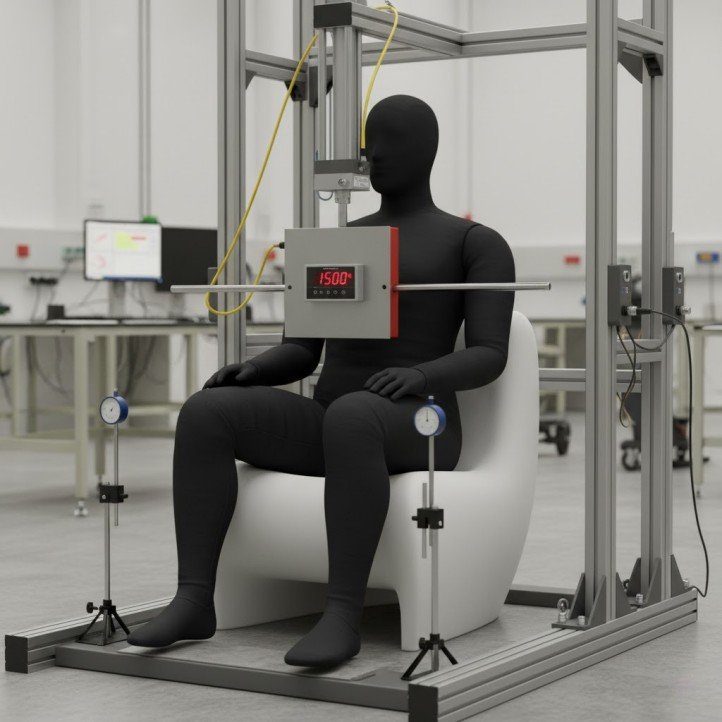
Static Load Tests (strength)
Seat, backrest, armrest, and table top static loads verify structural capacity and joint integrity. Methods and magnitudes are described in ISO 7173 and EN 581-2; ASTM F1561 adds plastic-specific criteria for outdoor chairs. (iso.org)
Impact Tests
Drop-ball/edge impacts simulate jump-sit and object drops in public use—detailed in ISO 7173 and EN 581-2. (iso.org)
Durability / Fatigue Cycles
Cyclic combined seat & back loads and armrest cycling evaluate loosening, creep, and joint wear—core to durability cycles in ISO 7173 and EN 581-2. (iso.org)
Stability (Overturning)
Forward, rearward, and side stability are validated via EN 1022 and ISO 7174-1/-2; overturning thresholds scale with seat height and configuration. (landingpage.bsigroup.com)
Outdoor “Accelerated” Add-Ons
Pair mechanical tests with environmental exposures: ASTM G154 (fluorescent UV, nonmetallics) and ISO 9227:2022 (neutral/acetic/copper salt spray). These quantify the weatherability of plastics and finishes that underpin long-term durability; they don’t, by themselves, certify furniture safety. (ASTM International | ASTM)
See real products for these scenarios:
- Pool decks & resorts → Outdoor chaise lounges.
- Dining terraces → Outdoor dining sets for commercial use.
- Lounge areas → Outdoor sofas.
🎥 Quick visuals: EN 581 testing overview.
Materials & Structure: What Actually Governs Load Capacity
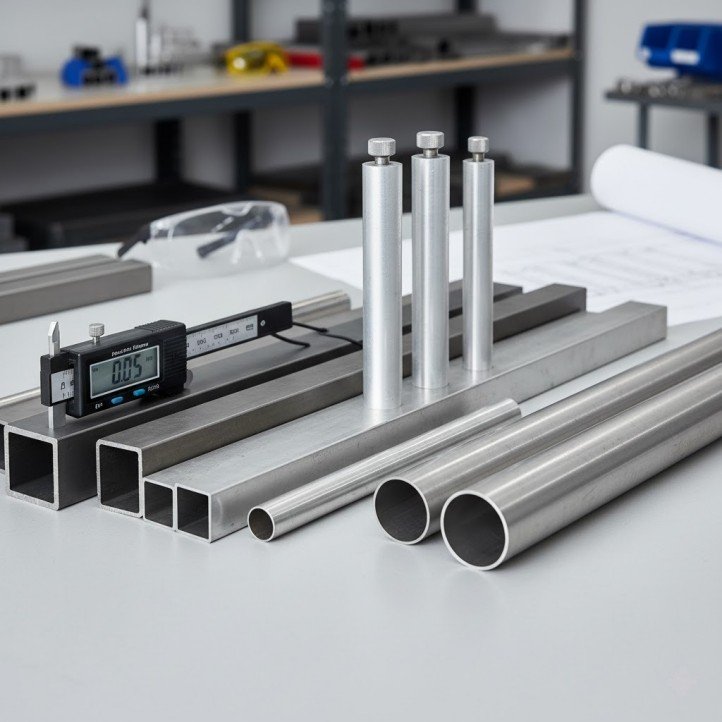
- Metals (aluminum, steel, stainless): section geometry, wall thickness, weld quality, and coating integrity after salt-spray; watch for heat-affected zones at welds and galvanic couples. Validate coatings with ISO 9227 where applicable. (iso.org)
- Wood (teak, merbau): moisture control, joint design, and checking/splitting behavior under cyclic humidity and temperature.
- Plastics/FRP: creep and UV-induced embrittlement; use UV-stabilized formulations validated via ASTM G154 exposure cycles. (ASTM International | ASTM)
- Fasteners & joints: bolt preload retention, adhesive durability, and bimetal corrosion often govern fatigue life more than the tube itself.
Deep dive: Outdoor furniture materials guide and stackable Adirondack chairs & space-saving ideas.
Lab & Compliance Workflow (What Buyers Should Ask For)
- Choose a competent lab (ISO/IEC 17025 accreditation; relevant fixtures).
- Define your test plan: cite EN 581-2/-3, EN 1022, ISO 7173/7174, plus ASTM G154 & ISO 9227 for environmental durability; layer in BIFMA X5.4 where public-use abuse is high. (knowledge.bsigroup.com)
- Report essentials: sample IDs, photos, setups, loads/cycles, acceptance criteria per clause, and a re-test policy after design changes.
- Ongoing assurance: periodically verify products or list models in a public registry (e.g., BIFMA Compliant). (bifma.org)
See how we work: short test & install videos.
From Design Calculation to Pilot to Scale
- Pre-test calculations (beams/columns, buckling checks) to size sections before prototyping.
- Correlate FEA ↔ test: calibrate joint stiffness and boundary conditions to match measured deflection, then freeze the model for iterative design.
- Optimize for TCO: balance light-weighting vs. durability cycles and maintenance frequency in public spaces.
Engineering example: Aluminum outdoor dining set.
Case Studies (What Usually Breaks—and How to Fix It)
- Pool lounger backrest fracture → UV-embrittled polymer brackets. Fix with UV-stabilized material + thicker rib + G154 exposure screening; re-verify combined seat/back durability. (ASTM International | ASTM)
- Lobby sofa arm fatigue → screw-in inserts loosen. Switch to through-bolts + anti-rotation plates; cycles to failure rise significantly under ISO 7173 durability. (iso.org)
- Public bench tip-over → narrow footprint vs. high CG. Widen stance, add anti-tip foot, and re-pass EN 1022 side stability. (landingpage.bsigroup.com)
Shopping help for pool decks: Best pool loungers (2025 buyer’s guide).
Procurement & Incoming Inspection Checklist (Downloadable)
- In RFQ: specify target standards & editions (e.g., EN 581-2:2015, EN 1022:2023, ISO 7173:2023) plus sample size, acceptance criteria, and environmental add-ons. (knowledge.bsigroup.com)
- Upon receipt: random sampling, torque checks on fasteners, wobble/stability spot checks, coating holiday checks (request salt-spray certificates if promised).
- In service: seasonal re-inspection cadence (fastener retightening, sling/webbing stretch, UV-cracking checks).
Handy hub pages: Materials · Outdoor dining sets · Outdoor sofas
Conclusion: A Three-Step Route to Safer Outdoor Seating
- Assess your population and venue risk (weight percentiles, dynamic use, weather). Use current anthropometric data to set a rational safety factor. (cdc.gov)
- Test against fit-for-purpose standards (EN/ISO/ASTM) and stability (EN 1022 / ISO 7174), adding BIFMA large-occupant where abuse risk is high. (landingpage.bsigroup.com)
- Maintain with documented inspections and re-testing after design or supplier changes.
Adopt this outdoor furniture load testing roadmap to cut risk, prove compliance, and extend service life in high-traffic venues.
CTA for hospitality planners: Hotel outdoor seating & swings.
FAQs (with SEO-friendly phrasing)
Q1: What is a safe load capacity for an outdoor chair in hotels?
There’s no universal number; select tests from EN 581-2 / ISO 7173 and set your safety factor by venue risk and population percentiles. Consider large-occupant regimes where relevant. (knowledge.bsigroup.com)
Q2: Does EN 581 cover stability?
EN 581 addresses safety and mechanical tests; stability is verified using EN 1022 (and ISO 7174 internationally). (landingpage.bsigroup.com)
Q3: Static vs. fatigue tests—when to run each?
Use static load tests for ultimate strength and fatigue/durability cycles to simulate years of public use; both appear in ISO 7173 and EN 581-2. (iso.org)
Q4: Do I need weathering tests?
For outdoor furniture, yes—pair mechanical testing with UV exposure (ASTM G154) and salt-spray (ISO 9227) to ensure finishes and plastics survive the environment. (ASTM International | ASTM)
Q5: Any resources to show stakeholders what these tests look like?
Show BIFMA seating durability testing or an EN 581 testing overview for a quick visual briefing.
References & Further Reading (authoritative, external)
- EN 581 series — BSI/ANSI: EN 581-2 (seating); EN 581-3 (tables); EN 581-1 (general). (knowledge.bsigroup.com)
- EN 1022 (2023) stability — BSI landing page. (landingpage.bsigroup.com)
- ISO 7173:2023 — ISO official page. ISO 7174-1/-2 — 7174 1 info, 7174-2 official. (iso.org)
- ASTM — G154 UV exposure (official store); F1561 Plastic chairs for outdoor use. (ASTM International | ASTM)
- BIFMA — Standards overview; X5.4–2020 (R2025) reaffirmed (news); BIFMA Compliant registry info. (bifma.org)
- Population data — CDC/NCHS Series 3, No. 50 (Aug 2021–Aug 2023). (cdc.gov)
- Risk context — CPSC Annual Tip-Over Report (2023). (U.S. Consumer Product Safety Commission)