Introduction
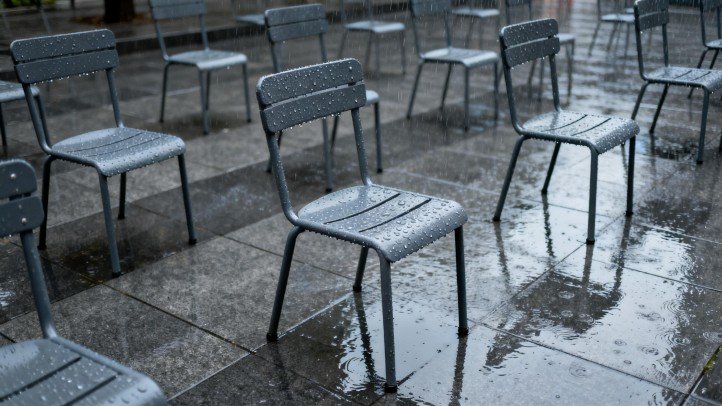
For busy patios, campuses, resorts, and food courts, Outdoor Chairs Structural Durability is a profit lever, not a buzzword. Chairs that bend, tip in gusts, or corrode in salty air create unplanned replacements, safety incidents, and downtime. This guide compresses standards and engineering into a practical framework you can drop into a specification: (1) load-bearing baselines you should require, (2) a napkin-math wind-stability method, and (3) corrosion/UV benchmarks that separate “looks good in Year 1” from “still earns in Year 10.” We compare cast aluminum, powder-coated aluminum alloy, and high-density polypropylene (PP) head-to-head and close with purchase recipes for coastal vs. inland sites.
Load-bearing: specify by standards, not adjectives
What to require: Use furniture standards recognized by independent labs:
- Public/side seating baseline: ANSI/BIFMA X5.1 or X5.4, typically tested with a 275 lb (125 kg) occupant. See the official overview: BIFMA Standards Descriptions.
- Heavy-duty/high-risk zones: require models tested to ANSI/BIFMA X5.11 (Large Occupant, 400 lb / 181 kg) on applicable chair types.
Material-level notes
- Cast aluminum: thick sections and integral geometry handle static/fatigue loads well; quality varies with casting method and porosity control.
- Powder-coated aluminum alloy (wrought, e.g., extruded 6xxx): generally higher tensile/yield than cast; excellent for welded tubular frames with gussets. Material refresher: 6061-T6 Properties (AZoM).
- High-density polypropylene: one-piece shells eliminate joints; capacity depends on fillers (talc/glass) and ribbing. See representative data: MatWeb Polypropylene Index.
Copy-paste spec language “Chairs shall comply with ANSI/BIFMA X5.1/X5.4. For designated heavy-duty zones, chairs shall comply with ANSI/BIFMA X5.11 (400-lb basis).
Wind resistance: stop guessing-estimate it
Chairs blow over not merely because they’re “light,” but because wind pressure acting on the frontal area overcomes resisting weight and base geometry. The physics in one line Drag force: D = 0.5 · ρ · V² · Cd · A (ρ = air density, V = wind speed, Cd = drag coefficient, A = frontal area). Primer: NASA – Drag Equation. A quick “Wind Stability Index (WSI)” defines WSI = Chair weight (kg) / frontal area (m²). Higher is better. It’s not a wind-tunnel, but it lets you compare materials and decide whether to add ballast or anchors. Typical inputs
- Frontal area (A) for armless side chairs: ~0.45-0.55 m².
- Typical weights (market ranges for commercial models):
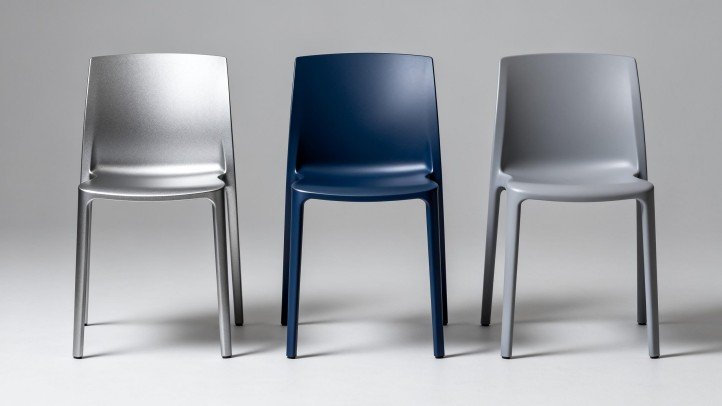
- PP stack chair: ~3.0-4.0 kg
- Powder-coated aluminum chair: ~5.5-7.5 kg
- Cast-aluminum dining armchair: ~8-11 kg
Using A = 0.50 m² and mid-range weights:
- PP: 3.5 kg → WSI ≈ 7
- Powder-coated Al: 6.5 kg → WSI ≈ 13
- Cast aluminum: 9.5 kg → WSI ≈ 19
Relating WSI to wind (rule-of-thumb) With Cd≈1.0 and ρ≈1.225 kg/m³ at sea level, free-standing chairs around WSI ~ 7-10 tend to tip in ~25-35 mph (11-16 m·s⁻¹) gusts, while WSI ~ 15-20 tolerates ~35-45+ mph (16-20 m·s⁻¹) before tip risk rises-assuming flat ground and no tethering. Use this to decide when to add ballast (sandbags/hidden plates), ganging clips, cable-locks, or to specify tie-down points for seasonal wind.
[Guide: Anchoring & Ganging Methods for Wind Season]
Corrosion & UV durability: finishes and polymers that survive Year 10
Aluminum + architectural powder coat
- For coastal or severe UV, specify finishes meeting AAMA/FGIA 2605 (10-year South Florida exposure benchmark; corrosion testing uses cyclic methods aligned with ASTM G85). Industry update: FGIA update on salt-spray to ASTM G85 (Tiger Coatings Blog).
- For inland/moderate UV, AAMA 2604 is typically sufficient (5-year South Florida exposure). Comparison explainer: AAMA 2604 vs 2605 – Professional Powder Coating Knowledge Center.
- Salt fog/corrosion background: ASTM B117 Explained (Q-Lab) and cyclic testing overview: ASTM G85 Overview (Q-Lab).
Why cast vs. wrought aluminum matters. Wrought (extruded) 6xxx alloys (e.g., 6061-T6) generally have higher tensile/yield strength than common cast alloys; castings can show porosity, which affects corrosion initiation if finishing is poor. Primer: 6061-T6 Properties (AZoM). [Deep dive: Cast vs. Wrought Aluminum in Outdoor Frames – internal link placeholder] Polypropylene (PP) reality check: PP is immune to galvanic corrosion and salt, which is excellent for seaside chemistry, but UV is the limiter unless stabilized. Outdoor performance is significantly improved with HALS and UV absorbers. See: UV Stabilizers for Polypropylene Outdoors (MDPI) and representative datasheets: MatWeb Polypropylene Index.
Quantified comparison table (load, wind, corrosion)
Assumptions for wind: frontal area A = 0.50 m²; Cd ≈ 1.0; air density 1.225 kg/m³; “Estimated wind threshold” is the gust band where tip risk becomes significant for a free-standing chair on flat ground. Use site-specific judgment for rooftops, corners, and funneling effects.
| Material | Typical Chair Weight (kg) | Typical Product Load Rating* | Estimated Wind Threshold (gust) | Corrosion / Weathering Benchmark |
|---|---|---|---|---|
| Cast Aluminum | 8-11 | 300-500 lb common; specify BIFMA X5.1/X5.4; heavy-duty zones: X5.11 (400 lb) | ~35-45+ mph (WSI≈19 mid-case) before tip risk elevates; add tie-downs for windier sites | Recommend AAMA 2605 for coastal; 2604 inland; corrosion tests reference ASTM G85/B117 background. |
| Powder-Coated Aluminum Alloy (wrought) | 5.5-7.5 | 300-500 lb, depending on tube gauge; same BIFMA call-outs apply | ~30-40 mph (WSI≈13); specify heavier gauge or ballast for open/windy plazas | AAMA 2604 inland; 2605 for high UV/coastal; demand certified pretreatment/cure. |
| High-Density Polypropylene | 3.0-4.0 | 120-180 kg (265-397 lb) typical for commercial stackables | ~25-35 mph (WSI≈7) unless ballasted or ganged | No metal corrosion; must be UV-stabilized (HALS); request accelerated weathering data (e.g., ASTM G154/G155). |
* Standards & baselines: BIFMA Standards Descriptions. Image/graphic suggestion: a simple WSI diagram showing “weight/area ↓ = higher stability”
Coastal vs. inland: two spec playbooks
Coastal (sea-spray + UV + wind)
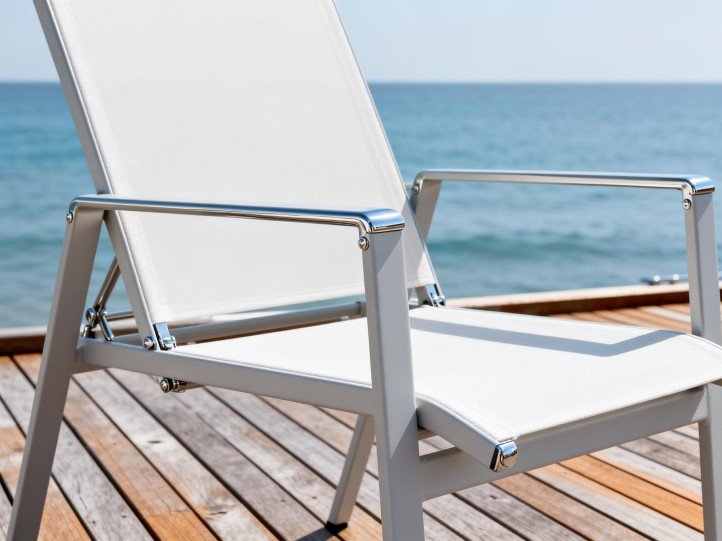
- First choice: Powder-coated aluminum (wrought) with AAMA 2605, welded frames, 316 SS hardware, sealed tube ends; select heavier gauges or provide ballast provisions.
- Alternative: Cast aluminum with AAMA 2605 when style/patterning is desired; verify foundry quality (porosity control, T6 heat-treat where applicable).
- PP chairs: specify UV-stabilized grades; plan ganging/ballast; budget shorter replacement cycles on full-sun decks. Learn more: AAMA 2604 vs 2605 – PPC Knowledge Center and ASTM G85 Overview (Q-Lab). [Spec Template: Coastal Finish Schedule – internal link placeholder]
Inland (moderate UV, low chlorides)
- Balanced choice: Powder-coated aluminum (AAMA 2604)-good color/gloss retention at a better price point.
- Value choice: PP with UV protection for shaded or seasonal use; specify higher wall thickness and ribbing; confirm BIFMA test reports.
- Premium longevity: AAMA 2605 still wins where the sun is intense or warranties matter. [Case Library: Campus vs. Resort Lifecycles – internal link placeholder]
Lifecycle ROI: a 10-year TCO you can defend
Use TCO(10y) = Purchase + Maintenance + Replacements + Downtime. Illustrative scenario (replace with your quotes):
- Cast aluminum / AAMA 2605: Higher day-1 cost; rinse/clean 2×/year; repaint rare; 10-year replacement probability low → strong ROI in coastal resorts.
- Powder-coated aluminum (AAMA 2604): ~80% of 2605 price; light cleaning; 10-year survival good inland; consider refinish in year 8-10.
- PP (UV-stabilized): ~30-50% of aluminum price; clean/rinse; in full sun expect higher attrition from UV/impact; plan 5-7 year refresh in harsh sites.
Copy-paste acceptance matrix (excerpt)
- Load: BIFMA X5.1/X5.4 baseline; heavy-duty zones X5.11.
- Wind: Compute WSI; if WSI < 12 on exposed sites, add ballast/anchors.
- Finish: Inland AAMA 2604; coastal/high-UV AAMA 2605; independent documentation of exposure performance required.
- Hardware: 316 stainless; sealed tube ends; drain holes. [Tool: TCO Calculator Template – internal link placeholder]
Field checklist you can hand to your installer
- Wind: compute WSI; if <12, add ballast or anchors; install ganging clips in windy corridors.
- Standards: attach BIFMA report (X5.1/X5.4; heavy-duty zones X5.11).
- Finish: AAMA 2604/2605 per site; require coater certification + exposure evidence.
- Hardware: 316 SS; cap/seal tube ends; drain holes.
- PP: require written UV-stabilizer declaration + accelerated weathering summary (ASTM G154/G155). [Checklist: Site Inspection & Handover – internal link placeholder]
Video primers (optional embeds)
- Powder Coating Process:
- Aerodynamic drag concepts:
Material-specific notes (engineer-level)
Cast aluminum
- Pros: integral forms; weight aids wind stability; with AAMA 2605 finish, excellent seaside performance.
- Watch-outs: casting porosity; specify foundry quality controls and heat-treat (e.g., T6) where applicable; avoid thin sections that ring under load. [Engineering note: Casting Quality & Porosity – internal link placeholder]
Powder-coated aluminum alloy (wrought)
- Pros: highest strength-to-weight of the three; welded tubular frames, easy to repair; broad finish ecosystem (2604/2605).
- Watch-outs: underspec’d tube gauges in budget lines; demand sealed welds and documented pretreatment/cure. [Fabrication: Weld Quality & Sealing – internal link placeholder]
High-density polypropylene
- Pros: corrosion-proof; stackable logistics; comfortable in temperature swings.
- Watch-outs: UV embrittlement without HALS; lower WSI; specify fillers/ribs if loads are high. [Design: PP Ribbing & Wall-Thickness Guide – internal link placeholder]
Conclusion
Tie your procurement to standards (BIFMA) for load, to physics (WSI + drag) for wind, and to finish chemistry (AAMA/FGIA + ASTM) for weathering. In coastal environments, AAMA 2605 aluminum-cast or wrought typically delivers the strongest Outdoor Chairs Structural Durability and the lowest 10-year cost. Inland, AAMA 2604 aluminum balances price and longevity, while UV-stabilized PP is a budget option for low-wind or shaded areas with planned refresh cycles. Put the numbers and clauses above into your spec, and Outdoor Chairs Structural Durability will show up in your ROI.
[More insights: Writing a Maintenance Plan That Protects Finish Warranties]
FAQ (PAA-friendly)
Q1. How much weight should a commercial outdoor chair handle in a high-traffic venue?
A. Treat 275 lb (125 kg) as the minimum baseline under ANSI/BIFMA X5.1/X5.4. For diverse users and heavier loads, specify 400 lb (181 kg) using ANSI/BIFMA X5.11.
Q2. Are powder-coated aluminum chairs really okay for coastal decks?
A. Yes, you call out AAMA/FGIA 2605 finishes (10-year South Florida benchmark with cyclic corrosion methods).
Q3. My polypropylene stackers keep tipping in spring winds. What should I change?
A. Compute WSI = weight/area. If it’s <12, add under-seat ballast, gang chairs, or pick a heavier aluminum model for exposed plazas.
Q4. Does salt air corrode aluminum frames even with powder coat?
A. Chlorides attack defects and edges; that’s why pretreatment + AAMA 2605 + proper cure matter. Ask for documented exposure performance from an AAMA-experienced coater.
Q5. Will UV-stabilized polypropylene last at the beach?
A. It resists salt, but UV is the limiter. With HALS additives and thicker sections, lifespan improves, yet full-sun waterfront decks still see earlier refresh than 2605-aluminum.
Selected External Resources
- BIFMA Standards Descriptions
- NASA – Drag Equation
- AAMA 2604 vs 2605 – Professional Powder Coating Knowledge Center
- FGIA update on cyclic corrosion / ASTM G85 – Tiger Coatings Blog
- ASTM B117 Explained – Q-Lab
- ASTM G85 Overview – Q-Lab
- UV Stabilizers for Polypropylene Outdoors – MDPI
- 6061-T6 Properties – AZoM
- MatWeb Polypropylene Index