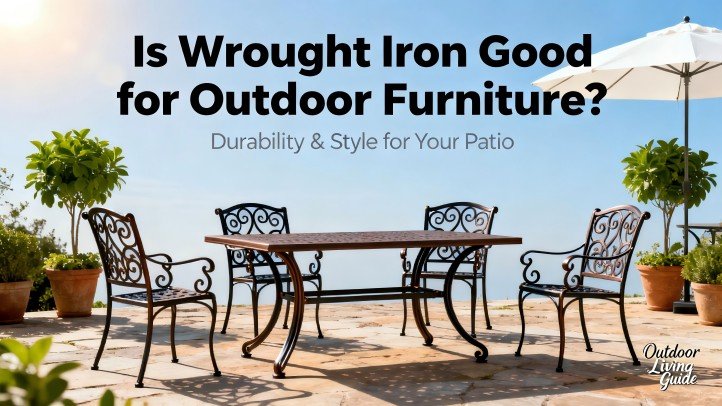
Is Wrought Iron Good for Outdoor Furniture? Short answer:
Yes—if you spec it correctly and you’re prepared for basic maintenance. In everyday retail, “wrought iron” patio sets are typically welded low-carbon steel finished to look hand-forged; true, puddled wrought iron is rarely produced today. That naming nuance matters because uncoated steel will rust, and the long-term performance you experience outdoors depends far more on the finish system (pretreatment + powder coat, and optionally hot-dip galvanizing) than on the “wrought” label. [More: Outdoor Furniture Materials]
What buyers really mean by “wrought iron”
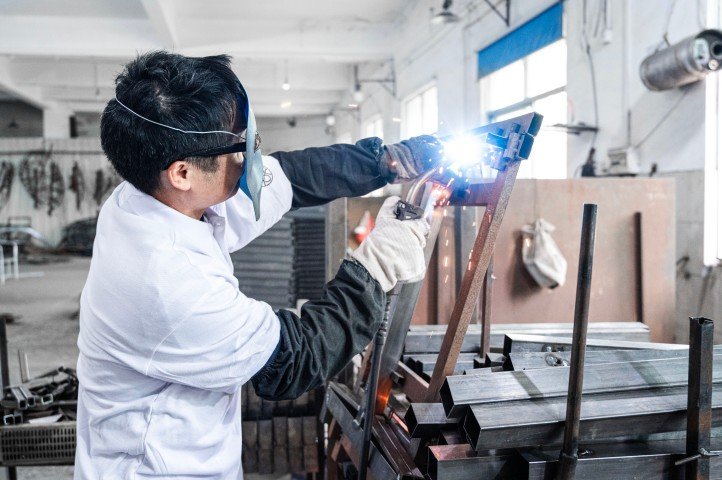
Historically, wrought iron is a low-carbon, slag-containing iron famed for malleability and toughness. Modern outdoor sets marketed as “wrought iron” are mild steel frames with ornamental scrolls—strong and weldable, but corrosion-prone without robust coatings. Buying teams should treat them as steel products and evaluate surface preparation, coating class, and warranty over the marketing term.
Weather durability: coatings make or break the outcome
Powder coating benchmarks you can use in specs
Architectural powder coatings are often referenced against AAMA performance tiers. Although written for aluminum fenestration, many finishers use the same weathering yardsticks for outdoor metal furniture:
- AAMA 2603: basic polyester for interior/light exterior.
- AAMA 2604: enhanced weathering; common reference point for high-quality exterior polyester.
- AAMA 2605: premium fluoropolymer (e.g., 70% PVDF) with the toughest UV/chalk/fade performance.
For patio frames, a quality 2604-level polyester is common; for desert sun or high-UV resorts, stepping up finish chemistry and film build improves color/gloss retention. Always confirm what the warranty actually covers (film integrity vs. chalk/fade). For buyer-side pitfalls, finish choices, and troubleshooting, see Outdoor Furniture Powder Coating — Q&A.
Spec checklist (copy/paste into your PO):
- Substrate: welded low-carbon steel (“wrought iron” style).
- Pretreatment: iron phosphate or zinc phosphate + thorough clean; blast to remove mill scale/weld soot.
- Primer: zinc-rich primer, where possible for chip resistance.
- Topcoat: exterior polyester TGIC powder; target 60–80 μm film build minimum; color: light/medium tones to reduce heat.
- Testing: vendor to demonstrate compliance with 2604-like metrics (salt spray/cyclic corrosion & UV).
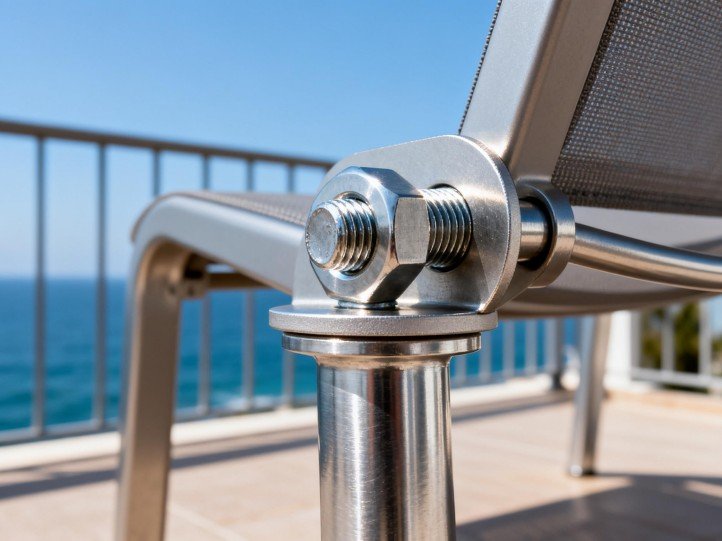
- Hardware: stainless fasteners, 316 in coastal.
- Foot protection: nylon or UHMW glides to avoid coating breach at contact points.
- Documentation: written maintenance guide and touch-up kit included. See Outdoor Furniture Powder Coating — Q&A for buyer checks.
Coastal or harsh environments: specify a duplex system
In chloride or industrial atmospheres, pair hot-dip galvanizing (HDG) with powder coating—a duplex system. HDG’s zinc layer gives barrier + cathodic protection, and when top-coated, the two systems outperform either alone. For patios within a few miles of the coast, this upgrade is often worth the premium and extends repaint cycles materially. Coordinate fabrication details and surface prep (e.g., vent/drain holes, avoiding quenching before powder, and following the coater’s HDG surface-prep SOP).
How “wrought iron” stacks up against other materials (quick comparison)
| Material | Corrosion behavior | Weight & wind stability | Thermal comfort | Maintenance | Best fits |
|---|---|---|---|---|---|
| “Wrought iron” (mild steel) | Rusts if the coating is damaged; with good powder coat (and HDG in coastal areas), it performs well | Heavy, excellent in windy/high-rise decks | Frame gets hot in the sun & cold in winter; cushions help | Seasonal wash; touch-up chips promptly | Restaurants, rooftops (wind), classic aesthetics |
| Aluminum (cast/extruded) | Doesn’t rust; forms protective oxide; may pit in salt if finish is compromised | Light may move in storms unless secured | Heats less; cools faster than steel | Low; wash + occasional wax; check feet | Residential, poolside, coastal (non-stormy) |
| Stainless (304/316) | 316 better vs chlorides; 304 can tea-stain | Medium-heavy | Warm in the sun; less than black steel | Low; rinse salts | Marine/coastal premium installs |
| Teak | No rust; natural oils | Heavy | Comfortable to touch | Clean, oil/seal optional | Luxury residential/commercial |
| HDPE/All-weather wicker | No rust | Light-medium | Comfortable | Low; wash | Family spaces, wet zones |
If your program prioritizes lowest weight and near-zero maintenance, aluminum often wins (6063 alloy strength & corrosion basics). If your site is wind-exposed (rooftops, open decks) or you want heirloom style, wrought-iron-style steel is a strong contender—provided the coating is specified well. To compare long-term ownership costs (finish refresh, movement damage, anchoring).
Fit-for-purpose recommendations
Temperate suburban backyard
- Finish: 2604-level exterior polyester powder over clean steel; zinc-rich primer if budget allows.
- Care: Rinse quarterly; touch up any chips at once.
- Why choose: Classic look, high stability, long service life with minimal annual attention. [More: Outdoor Furniture Materials 101]
Coastal (within ~5–10 km of surf) or de-icing salt exposure
- Upgrade: Duplex—HDG + powder coat.
- Hardware: 316/316L stainless; isolate dissimilar metals (see 316L Stainless Coastal Furniture Spec Guide).
- Care: Rinse monthly in season to remove salts; inspect weld toes/chair feet quarterly.
Wind-exposed rooftops and open decks
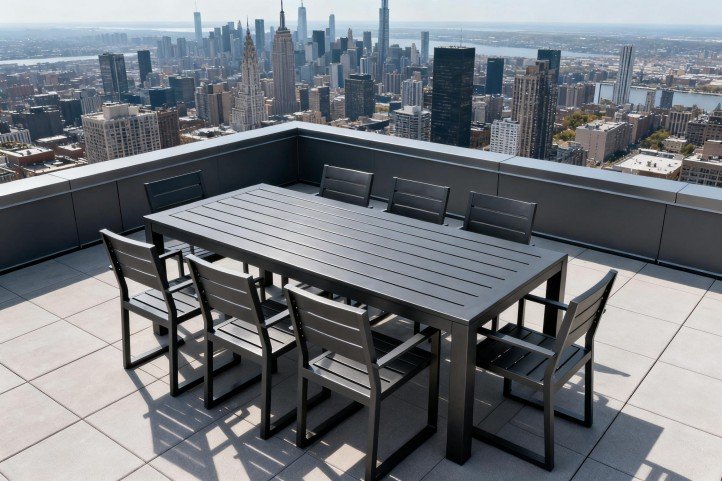
- Benefit: The weight of wrought-iron-style steel improves wind stability; fewer tie-downs are required than in ultralight sets.
- Spec: Add nylon glides, heavier gauge tubing, and wide footprints to reduce point loads on decking.
Maintenance that extends service life (simple, but consistent)
Quarterly: Hose off dust/salts; wash with pH-neutral soap; dry.
After storms: Inspect for chips at edges and welds; touch up with a zinc-rich primer + enamel where powder is breached.
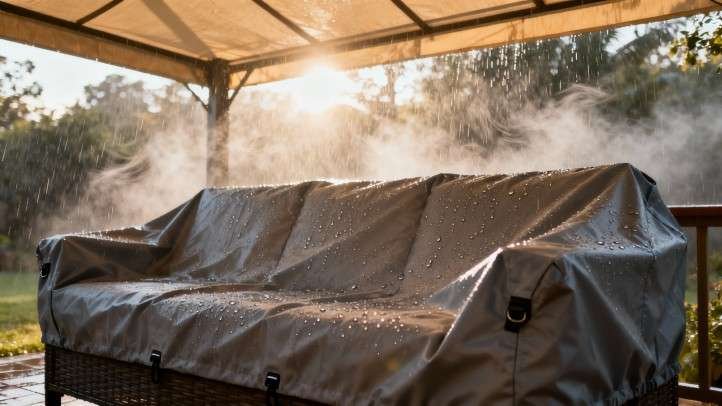
Seasonal storage: Use breathable covers; avoid trapping moisture.
Heat comfort: Favor lighter colors and cushions; deploy umbrellas/overhead shade in south-facing areas.
Pro tip: Keep a small touch-up kit on site (degreaser, fine abrasive pad, zinc-rich primer, color-matched enamel).
Market context: why supply & pricing vary
The global outdoor furniture market continues to grow, which can tighten lead times during peak seasons and influence finish warranty terms. If you need duplex-coated frames, lock specs, and capacity with suppliers early, and coordinate with the coater on galvanizing windows.
Verdict: Is wrought iron good for outdoor furniture?
Yes—for buyers who want timeless aesthetics, wind-resistant heft, and long service life—with two caveats: (1) treat it as steel and (2) spec the finish for your environment. In normal climates, a quality 2604-level powder system over well-prepped steel works. In coastal or corrosive sites, HDG + powder (duplex) and 316 hardware are prudent. If you want the lightest frames or near-zero maintenance, aluminum or HDPE may be a better operational fit—but in windy venues and classic design programs, wrought-iron-style steel remains a smart, durable choice.
FAQ (People-Also-Ask style)
Q1. Does wrought iron patio furniture rust outside?
Yes—because modern “wrought iron” is typically steel. With a quality exterior powder coat (and duplex HDG + powder in coastal sites), rust can be controlled for years; promptly touch up chips to keep moisture out.
Q2. Is wrought iron or aluminum better for windy areas?
Wrought-iron-style steel is heavier, so it resists tipping and blowing—useful on rooftops and open decks. Aluminum is lighter and may need tie-downs or heavier bases in exposed locations.
Q3. What coating should I specify for wrought iron furniture near the coast?
Ask for hot-dip galvanizing + powder coat (duplex) and 316 stainless hardware. This combo offers both sacrificial zinc protection and a UV-resistant topcoat.
Q4. Why does metal patio furniture get so hot in the sun?
Metal conducts and stores heat. Dark coatings intensify the effect. Choose lighter colors, use cushions, and add shade for touch comfort.
Q5. How do I maintain powder-coated wrought iron frames?
Rinse and wash quarterly, dry fully, inspect for scratches, and touch up with zinc-rich primer + enamel. In salt exposure, rinse monthly.