Read this first:
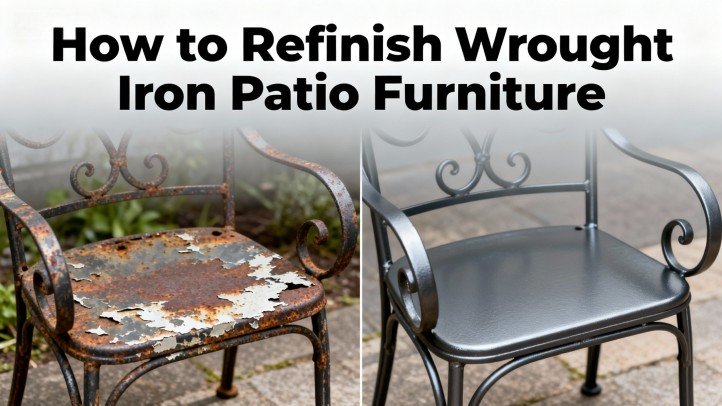
This guide shows you exactly how to refinish wrought iron patio furniture-from rust removal to primer and topcoat-so you get a durable, outdoor-ready finish that can last 3-5 years with routine care.
You’ll find
(1) a no-guesswork tools & materials list.
(2) Good/Better/Best product picks by climate and budget.
(3) realistic cost & time estimates.
(4) pro-level steps that prevent peeling and rust bleed-through.
(5) safety must-knows (lead paint, PPE, weather windows).
(6) a quick DIY vs powder-coating decision guide for heavily rusted sets. If you follow the workflow below, your finish will look cleaner on day one and stay better in the seasons ahead.
[For more information, please read: Patio Furniture Powder Coating vs. Sprays]
What This Guide Covers
- Results you can expect: A smooth, sealed finish in matte/satin/gloss or hammered texture that resists chipping, UV fade, and moisture intrusion.
- Why this method lasts: You’ll build a system-surface prep → primer choice → topcoat selection → cure → maintenance-that aligns with real-world outdoor conditions (UV, rain, salt air) and manufacturer recoat windows.
- Who it’s for: Beginners and DIYers with basic hand tools; homeowners comparing DIY repaint vs professional powder coating.
Tools & Materials
Essential tools: Wire brush, detail wire wheel, sanding block + sheets (80/120/180-220 grits), angle grinder w/ flap disc (80-120), painter’s tape, drop cloths, tack cloths or lint-free rags, degreaser (mineral spirits or dedicated metal prep), sawhorses. Safety gear (don’t skip!) Cut-resistant gloves, safety glasses, NIOSH-rated respirator for paint/solvents, long sleeves; work outdoors or in a well-ventilated area that follows the standards in OSHA Spray Operations, and choose respirators using NIOSH’s selection guidance and the NIOSH Certified Equipment List. Materials: Good / Better / Best (by durability & climate)
| Tier | Primer | Topcoat | Where it shines |
|---|---|---|---|
| Good (budget) | Rust-inhibitive alkyd primer | Oil-based enamel spray | Dry climates, light rust after prep |
| Better (balanced) | Zinc-rich or rust-converter spot treatment + alkyd primer | “Stops Rust”-style enamel or acrylic-alkyd | Mixed climates, moderate rust |
| Best (max durability) | 2-part epoxy primer (consumer kits) or pro zinc-rich primer | 2-part enamel/urethane or professional powder coat | Coastal/salty air, longest service life |
- Manufacturer dry times & recoat windows matter. For example, Rust-Oleum states specific recoat timing on both Clean Metal Primer TDS and Stops Rust Enamel Sprays TDS.
- Weather tips (shade, avoid direct sun, watch wind & humidity) are emphasized in Krylon’s spray-painting guide for metal.

Cost & Time Planning
Typical DIY scenario: 2 chairs + small table
- Materials: $60-$120 (primer + 4-6 cans enamel + abrasives + rags)
- Consumables & PPE: $20-$60 (mask cartridges, gloves)
- Time: Prep 2-3 hr → Prime 0.5-1 hr → Topcoats 1-2 hr → Cure 24-72 hr (handle sooner; full hardness later per TDS/weather)
Project variables that swing cost/time: Rust severity (pitting = more prep + spot converter), ornate scrollwork (= more edges), weather (cool/humid = slower), color change (light over dark = extra coats). Quick Estimator
| Set Size | Spray Cans (Primer/Topcoat) | Abrasives | Total DIY Cost | Active Labor | Cure to Use |
|---|---|---|---|---|---|
| 2 chairs | 1-2 / 4-6 | $8-$15 | $80-$140 | 3-5 hr | 48-72 hr |
| 4 chairs + table | 2-3 / 8-12 | $12-$20 | $140-$260 | 6-9 hr | 48-96 hr |
DIY vs Professional Powder Coating
If your pieces have deep pitting, widespread coating failure, or you live in a coastal/salt-spray environment, powder coating can offer significantly higher durability, better chip resistance, and uniform film build when pretreated properly (blast/clean/convert). See What Is Powder Coating? (PCI) and Powder Coating: A Better Kind of Paint (PCI) for fundamentals and benefits. At-a-glance comparison
| Factor | Quality DIY Repaint | Professional Powder Coat |
|---|---|---|
| Surface prep | Mechanical + spot converter | Media blast + chemical pretreat |
| Film build | Thinner, multiple coats | Thicker, uniform electrostatic film |
| Durability | Good; prep & maintenance dependent | Excellent; favored for harsh exposure |
| Cost | $80-$260 typical small set | $300-$700+ region-dependent |
| Color/texture | Wide (hammered, satin) | Very wide; color consistency superior |
| When to pick | Light/moderate rust; budget | Severe rust; coastal homes; heirloom set |
Technical context: Salt-spray (ASTM B117) is a comparative benchmark for corrosion resistance. The ASTM B117 Standard overview and Q-Lab explainer clarify that results are accelerated and comparative, not a direct outdoor life predictor. To find vetted shops, use PCI’s Membership/Directory or ask for PCI Certification.
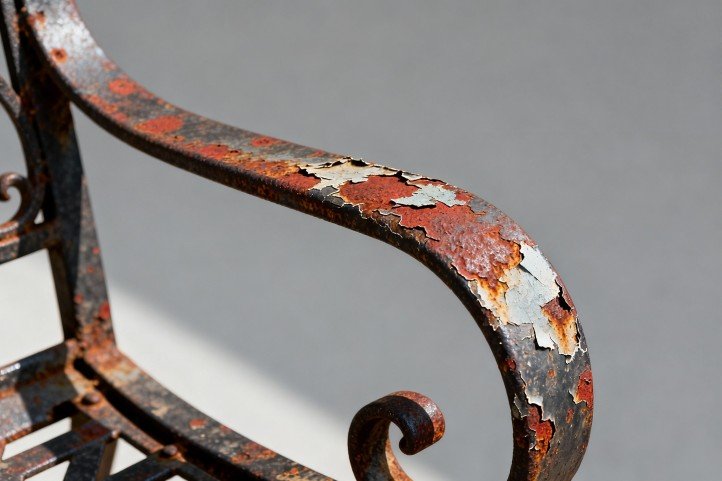
Inspection & Rust Removal
- Safety first-lead check (older finishes). If furniture may carry lead-based paint (common pre-1978), follow EPA Lead RRP guidance and see RRP resources for consumers. Avoid dry-sanding that creates dust; use containment and appropriate PPE.
- Wash & degrease. Rinse dirt; wipe with mineral spirits or a dedicated metal prep until rags lift clean.
- Mechanical removal. Remove rust and failed paint with a wire wheel/flap disc (80-120); hand-sand profiles and scrolls (120-180). Vacuum + tack cloth.
- Treat stubborn pitting. Where you can’t reach bright metal, apply a rust converter per TDS (e.g., Corroseal Technical Data Sheet). Converters chemically stabilize the oxide before priming.
- Final wipe. Dust and residue are adhesion killers-clean once more before primer.
Priming for Outdoor Durability
Pick the right primer, then apply it right.
- For most DIY jobs, a rust-inhibitive alkyd or zinc-rich primer is the sweet spot. Mist tight scrolls/welds first so edges don’t starve; then lay a full wet coat.
- Respect temperature/humidity (typically 10-32 °C; <85% RH; shade), avoid wind and direct sun-tips reinforced in Krylon’s metal how-to.
- Recoat rules matter. Many primers specify “recoat within 1 hour or after a long delay” to avoid wrinkling; confirm in your product’s TDS, such as Rust-Oleum Clean Metal Primer.
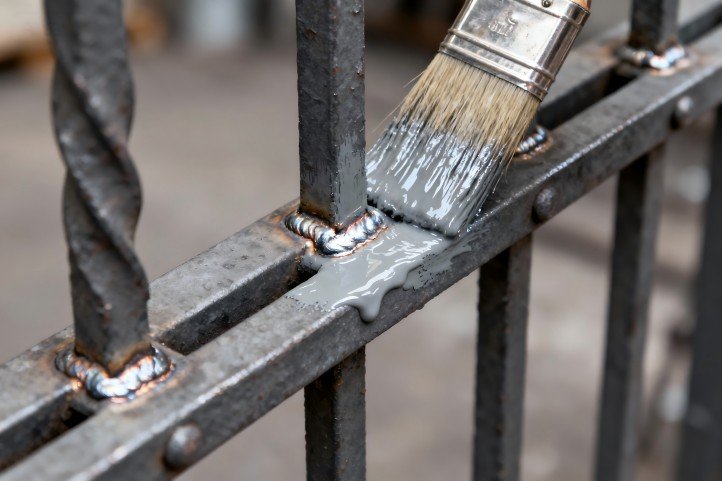
Topcoats & Finishes
Choose your chemistry-fit it to climate & wear.
| Finish | Pros | Watch-outs | Best for |
|---|---|---|---|
| Oil-based enamel spray | Easy, classic sheen, good chip resistance | Longer cure; odor | Most DIY sets |
| Acrylic-alkyd | Faster dry; good UV | Respect the recoat window | Mixed climates |
| Hammered/texture | Hides flaws; rich look | Slightly higher film build; practice technique | Heavily pitted/ornate pieces |
| 2-part enamel/urethane | Very hard; chemical-resistant | PPE & mixing; cost | High-abuse areas |
| Powder coat (pro) | Superior durability; uniform build | Shop cost/lead time | Coastal or heirloom sets |
Application sequence (rattle-can or HVLP): Light tack coat → 2-3 medium passes, 20-30 cm from surface with ~50% overlap. Start/stop off the work to avoid spits. Observe recoat windows and allow full cure before stacking/strapping cushions. For product-specific timings, see Stops Rust Enamel Sprays TDS.

Curing, Reassembly & Quick Touch-Ups
- Cure smart: Stand pieces on soft pads so fresh paint doesn’t print. Avoid strapping seats for 48-72 hours (follow your TDS and weather).
- Hardware & feet: Replace worn glides to keep metal off wet decking; a $10 set of feet can save a finish.
- Touch-ups: Keep a small brush + one can for spot repair. For chips: clean → feather sand (320) → spot prime → two light color passes.
Maintenance Plan
- Seasonal clean: Mild soap + soft brush; rinse; dry.
- Optional wax: A thin coat of automotive wax helps water bead on smoother finishes.
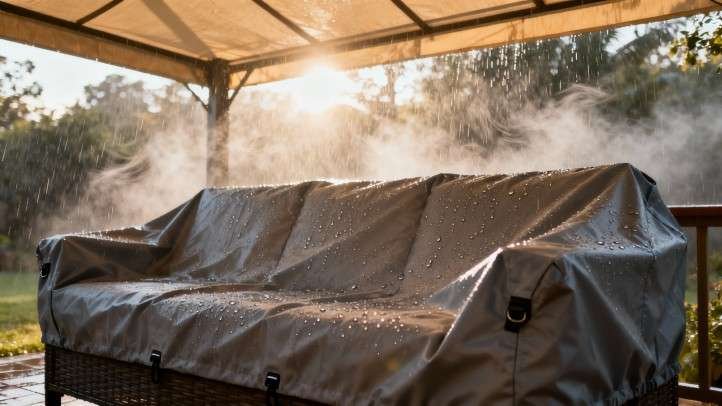
- Covers & storage: Breathable covers in off-season; avoid trapping moisture.
- After storms: Wipe standing water off horizontal bars; treat nicks immediately.
- Coastal homes: Inspect monthly; rinse salt with fresh water.
[For more information, please read: Patio Furniture Covers Guide]
Troubleshooting
| Symptom | Likely Cause | Fix |
|---|---|---|
| Peeling/flaking | Glossy surface not scuffed; oily residue | Degrease, sand to profile, re-prime, repaint |
| Wrinkling | Recoat outside window; heavy pass | Allow full cure; sand smooth; recoat per TDS |
| Orange peel | Hot surface; low overlap; wind | Paint in shade; 50% overlap; steady passes |
| Fisheyes | Silicone/oil contamination | Degrease; barrier primer; avoid silicone sprays |
| Blistering | Moisture under film; high humidity | Dry thoroughly; paint within the RH/Temp window |
DIY Video Add-On
-
- Rust-Oleum example:
- Rust-Oleum example:
-
- General walkthrough:
- General walkthrough:
Conclusion
Refinishing wrought iron patio furniture isn’t about “just spray and pray.” It’s clean substrate + correct primer + compatible topcoat + weather-smart timing. Use the Good/Better/Best roadmap here to match your budget and climate, respect recoat windows, and you’ll get a durable finish that stands up to sun, rain, and daily use. If your set is severely pitted, or you want the longest maintenance interval-powder coating from a PCI-certified shop is the smart upgrade.
FAQ
Q1: What is the best primer for wrought iron patio furniture outdoors?
A: For most DIY projects, choose a zinc-rich or rust-inhibitive alkyd primer clearly labeled for outdoor metal, and follow the product’s recoat window. See Rust-Oleum Clean Metal Primer TDS for an example.
Q2: Do I need a rust converter, or can I just sand and prime?
A: If you can reach clean, bright metal mechanically, you can skip a converter. When pitting remains, a converter helps stabilize rust before primer-see Corroseal TDS-then prime and topcoat.
Q3 Is spray painting better than brushing for wrought iron chairs?
A: For ornate scrolls/tubes, spray gives more even coverage on edges and joints, reducing sags and brush marks. Brushing works on simpler frames with high-solids enamels-just plan extra sanding between coats. Follow weather and recoat guidance (e.g., Krylon metal how-to).
Q4 How long should I wait between coats and before using the furniture?
A: Many aerosol enamels specify light recoats within 1 hour or else after a long delay to avoid wrinkling. “Dry to the touch” isn’t full cure-budget 48-72 hours before reassembly/use, longer if cool or humid. Check your exact product’s TDS, such as Stops Rust Enamel Sprays.
Q5 When is powder coating worth it compared to DIY repainting?
A: When you have severe rust, want multi-year durability with minimal touch-ups, or live in coastal/salt-spray regions. Powder-coated finishes are widely recognized for superior resistance when properly pretreated, and are considered a PCI-certified coater.