Introduction:
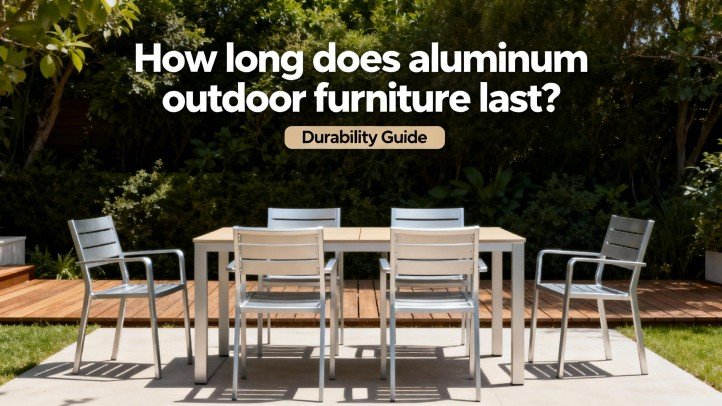
How long does aluminum outdoor furniture last? Short answer: In normal residential use, well-made, powder-coated aluminum outdoor furniture typically lasts 15-20 years. With higher-grade, “super-durable” coatings and simple care, many sets comfortably exceed two decades. In coastal or high-UV regions, plan on 10-15 years unless you adopt a coastal care routine-then you can push back toward the high end.
The longevity triangle (a practical way to think about it)
I use a simple triangle to predict lifespan:
- Material & build – alloy choice, wall thickness, weld quality, hardware.
- Finish – not just “powder coat,” but which grade?
- Exposure – salt, UV, and wet/dry cycles.
You don’t need all three to be perfect. Two strong corners usually carry the third. Example: If your exposure is harsh (beach balcony), compensate with a top-tier finish and tighter maintenance’ll still get long service life. Why aluminum has a head start: Aluminum naturally forms a thin, self-healing oxide film that resists red rust, which is a big reason it thrives outdoors. If you want the metallurgy behind that, skim the Aluminum Association overview of aluminum and its alloys.
A 10-second exposure score (E-Score)
Give each factor 0-3 points at a glance:
- Salt: inland (0) • occasional sea breeze (1) • within 1 mile of surf (3)
- UV: mostly shade/temperate (0) • sunny suburbs (1) • desert/high altitude (3)
- Moisture cycles: covered patio (0) • seasonal rain/snow (1-2) • daily dew/fog + sun (3)
E-Score 0-2 → expect the upper range (15-20+ years). E-Score 3-5 → expect mid-range (12-18 years). E-Score 6-9 → expect 10-15 years, unless you upgrade, finish, and maintain.
Finish quality matters more than most people think
“Powder-coated” is like saying “a car has paint.” The grade matters.
- Entry exterior powder: fine for shaded patios; color/gloss may soften sooner in full sun.
- Super-durable polyester (often marketed as meeting AAMA 2604): noticeably better color/gloss retention default for sunny decks.
- Flagship architectural systems (often marketed near AAMA 2605): best choice for coastal or high-UV homes when you want the finish to look newer, longer.
If you’d like a plain-English comparison of those two specs, this PDF is helpful: AAMA 2604 vs 2605 (exposure years and performance). For industry context on why “super-durable” powders are growing in outdoor/architectural use, see the American Coatings Association’s update on powder coating advances and technical overview of new powder technologies.
Rule of thumb: If your E-Score ≥4, prioritize the upper powder tier before paying for extra frame weight or ornate castings. Finish quality protects how it looks in years 7-10; the aluminum frame itself rarely “fails.”
Cast vs. extruded aluminum: which lasts longer?
Neither wins by default. Here’s how to judge it in the showroom:
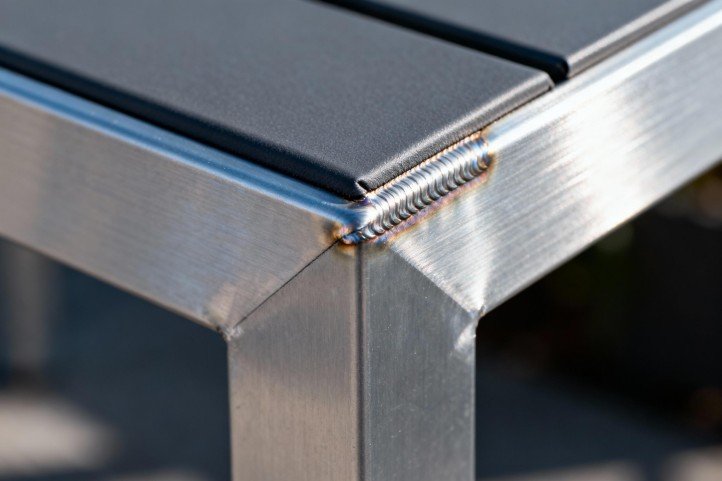
- Extrusions: look for consistent wall thickness and clean, continuous welds at corners.
- Cast pieces: check that edges are smooth and the powder isn’t thin on ridges (thin edges chalk sooner).
- Mixed frames (common): ensure welds are powder-coated after assembly; touch the joint-finish should feel continuous, not rough or “dry.”
Reality check: Premature aging is almost always finish wear (chalking/fade) or hardware issues, not the aluminum “rusting.” If you’re curious what “salt-spray hours” actually mean (and don’t mean), this explainer is good: ASTM B117 salt spray, what matters and why.
What I actually tell buyers when they ask, “How long will it last?”
Use my Range + If model:
- Inland, moderate UV: 15-20 years if you just clean occasionally.
- Coastal (salt + wind): 10-15 years baseline; rinse and wax seasonally, and you’ll push into the mid-teens or better.
- High-UV/high altitude: choose super-durable finishes and use covers; 15+ years is normal.
A quick way to sanity-check a brand’s confidence is the frame warranty. Established aluminum specialists frequently back frames for about 15 years in residential use-e.g., Tropitone 15-year frame warranty, Castelle 15-year frame / 5-year finish. Warranty isn’t the same as “end-of-life,” but it’s a useful signal.
The 80/20 of longevity (what moves the needle most)
- Finish grade – biggest lever on how “new” it looks in years 7-10.
- Salt management – a fresh-water rinse is worth more than any specialty spray.
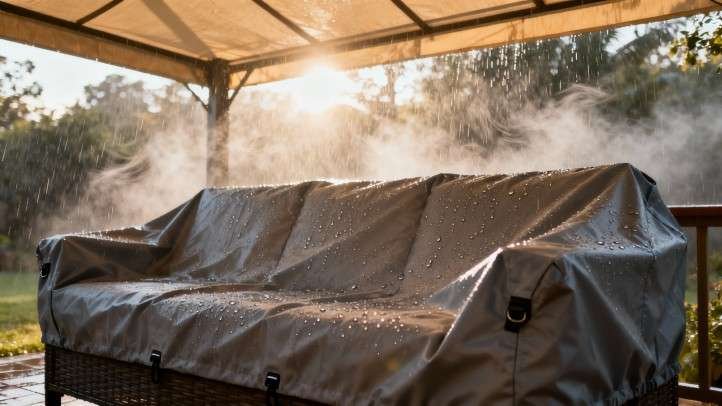
- Covers & storage – cutting UV and grime during the off-season is a free extra lifespan.
- Hardware – stainless fasteners and good glides prevent ugly edge cases.
If the budget is tight, shift dollars from decorative details to a higher-grade finish and quality covers. That’s where lifespan ROI lives.
A maintenance plan that actually fits real life
Monthly (in season) – 10 minutes, tops
- Hose off, mild soap + soft brush on frames, quick rinse, towel-dry.
- Spot-check for chips; touch up promptly (chips are where under-film corrosion can start).
Every 6-12 months
- A thin coat of clear automotive wax on the frames, especially in coastal/high-UV zones.
- Clean cushions per label; if you use solution-dyed acrylics (e.g., Sunbrella), follow their bleach-safe ratios for mildew: Sunbrella’s official cleaning guide.
Off-season
- Cover on; store cushions dry and ventilated.
What not to do
- No ammonia/bleach on metal frames, no abrasive pads, no pressure washers.
- Use bleach only on fabrics that explicitly allow it (Sunbrella does, with specific dilution).
- For a brand-authored care page that mirrors this advice, see Brown Jordan’s Care & Maintenance.
Helpful how-tos
- Video: How to Clean Aluminium Outdoor Furniture(Barlow Tyrie)
The coastal protocol (how to close the gap with inland performance)
If you can see or smell the ocean, do this:
- Rinse frames with fresh water every 2-4 weeks.
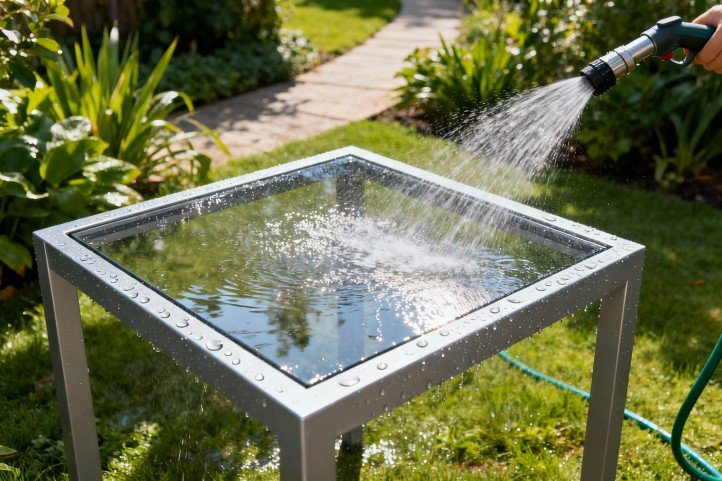
- Wax frames at season start (and mid-season if you’re right on the water).
- Cover at night or when storms kick up.
- Mind the edges: wipe arms and front rails after beach days-salt dries there first.
Do those four, and you can realistically keep a coastal set in the 15-year conversation.
A quick showroom checklist (what to physically check)
- Edge coverage: run a finger along sharp cast edges-powder should feel continuous, not like sandpaper.
- Underside look: flip a chair; inside corners should be coated, not bare gray.
- Hardware: stainless or coated fasteners; plastic isolation where aluminum meets dissimilar metals.
- Wobble test: sit, rock gently; flex should be uniform with no creaks at welds.
- Finish spec: ask which powder grade (don’t accept “just powder-coated”). If they mention the super-durable tier or architectural spec, that’s your green flag.
Side-by-side comparison (for people choosing materials)
| Material | Typical lifespan (residential) | UV/Corrosion behavior | Maintenance | Weight | Notes |
|---|---|---|---|---|---|
| Aluminum (powder-coated) | 15-20+ yrs | Doesn’t red-rust; finish quality sets the look-new timeline | Low | Light | Best durability-to-weight; coastal-friendly with care |
| Wrought iron/steel | 10-20 yrs | Strong, but the chips can rust | Medium | Heavy | Classic feel; watch for seam rust |
| Teak | 20-25+ yrs | Weathers to silver; extremely outdoor-capable | Medium | Heavy | Beauty improves with age if you like gray |
| HDPE/poly lumber | 15-20 yrs | No rot/rust; color can dull over time | Low | Heavy | Nearly zero maintenance; modern look |
| Resin wicker on aluminum | 10-15 yrs | Resin can chalk/embrittle with UV | Medium | Medium | Choose UV-stable resin and tight weaves |
Myths I still hear (and what’s actually true)
- “Heavier frames always last longer.” Heaviness ≠ longevity. Smart section design and a better finish beat raw mass every time.
- “All powder coats are the same.” Not close. “Super-durable” and higher-end architectural powders stay richer in color and glossier far longer in the sun (see this ACA overview).
- “Cast aluminum outlasts extruded aluminum.” It’s about design + finish. I’ve seen extruded frames outlast ornate cast sets because the powder and edge coverage were better.
- “If it chalks, the metal is failing.” Chalking is usually surface oxidation of the finish, not the aluminum dying. Clean, wax, and you’ll be surprised how much life you bring back.
Cost-per-season sanity check (why finish and covers pay)
Here’s a tiny back-of-napkin model you can use: Total Cost per Season (TCPS) = (Purchase Price – Resale Value) ÷ Years of Attractive Use
- If a $2,000 aluminum set lasts 16 seasons, TCPS ≈ $125/season.
- If you skimp on finish and it looks tired by year 9, TCPS jumps to ~$222/season.
- Spend $200 on high-quality covers and wax yearly for $10? If that buys 4 more “great-looking” seasons, those covers paid for themselves many times over.
So…how long does aluminum outdoor furniture last?
Bottom line: Expect 15-20 years in typical homes; 10-15 years in coastal/high-UV without extra care; and mid-to-high teens again with the coastal protocol. If you prioritize finish grade, manage salt/UV, and use covers, aluminum remains one of the longest-lasting, lowest-maintenance choices for outdoor living.
A smart next step – Happy Rattan
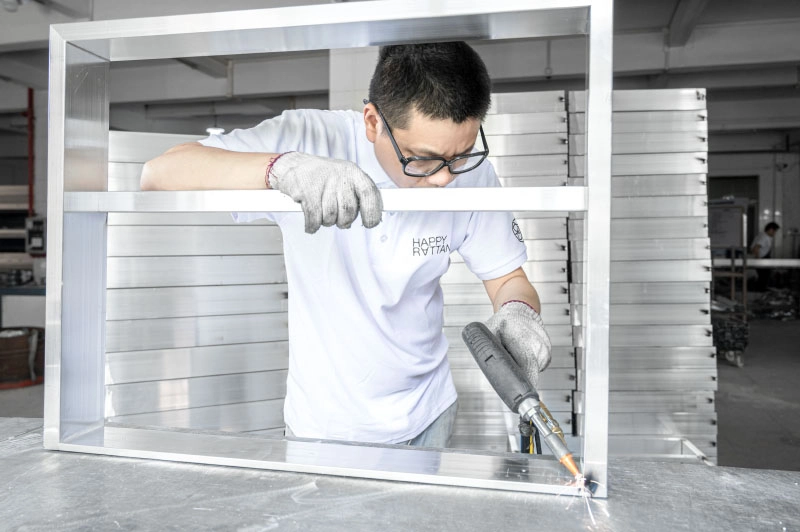
Suppose you like the 15-20-year plan we outlined. In that case, Happy Rattan builds aluminum collections around the same levers of longevity: thoughtful frame design, super-durable powder-coat options for high-UV/coastal settings, stainless hardware where it counts, and cushions in proven outdoor textiles
FAQ
Q1: How long does aluminum patio furniture last at the beach?
A: 10-15 years is realistic without extra care; 15-20 if you rinse salt monthly, wax seasonally, and use covers. Pick super-durable or architectural powder finishes (2604/2605-level).
Q2: Does aluminum rust like steel?
A: No-aluminum forms a self-protecting oxide layer; finish aging shows up as chalking/fade, not red rust. See the Aluminum Association’s primer.
Q3: Is cast aluminum more durable than extruded aluminum?
A: Durability is driven more by finish grade, weld quality, and design than by casting vs. extrusion alone.
Q4: What one maintenance habit extends life the most?
A: A quick soap-and-water wash each month. In coastal zones, add a freshwater rinse and seasonal wax. Brand guidance aligns with this-see Brown Jordan’s care page.
Q5: Are 15-year frame warranties a good sign?
A: Yes. They don’t guarantee “end-of-life,” but they signal a frame built to last well beyond a decade-see Tropitone’s 15-year frame warranty and Castelle’s warranty.