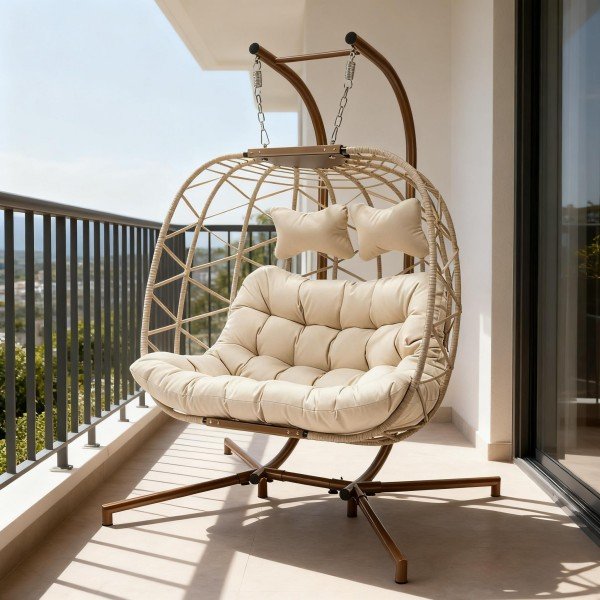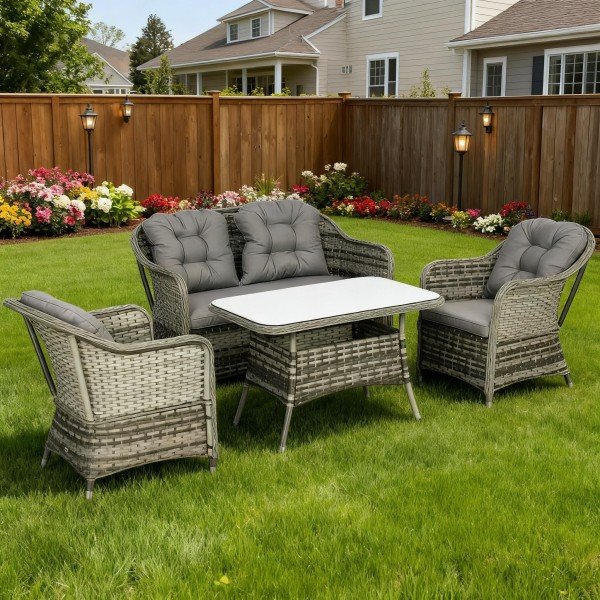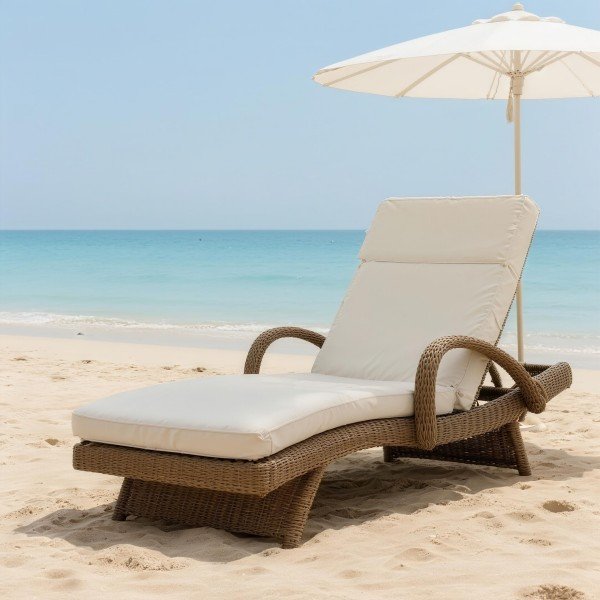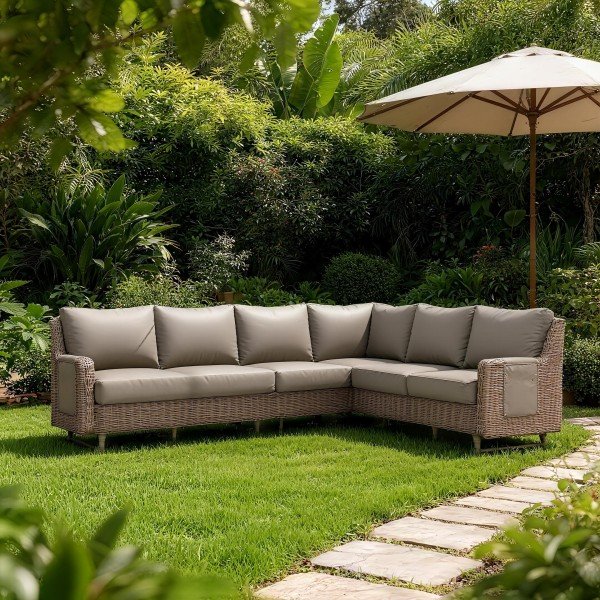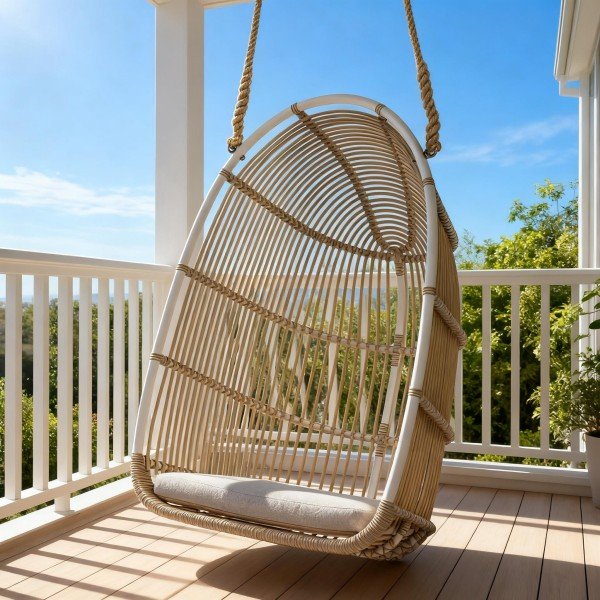
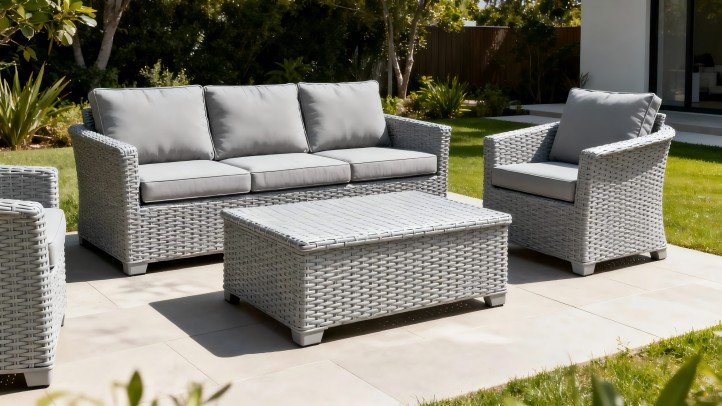
Introduction: Why the “Future of Synthetics” is Woven from HDPE
Outdoor living has changed. Natural rattan looks beautiful but doesn’t love rain, UV, or freeze-thaw cycles. Enter HDPE wicker outdoor furniture-a synthetic weave built from high-density polyethylene (HDPE) strands that are pigmented through the core and stabilized against sunlight. In this guide, we translate lab standards into plain English, explain why HDPE resists cracking better than alternatives, and show you how to read test reports to predict real-world lifespan before you buy. We reference durability standards like ASTM G154 and ASTM D4329 for UV exposure and ISO 4892-3:2024 for fluorescent UV testing, plus brand and material data where helpful.
What Exactly Is HDPE Wicker? From Polymer to “Color-Through” Fiber
HDPE wicker (sometimes called “synthetic rattan”) is extruded from HDPE pellets with color masterbatch and a UV stabilization package. Two families of additives do the heavy lifting:
- HALS (Hindered Amine Light Stabilizers): radical scavengers that interrupt UV-triggered degradation. See BASF’s overview of Tinuvin® light stabilizers and Tinuvin® for Plastics (HALS/UVA).
- UV absorbers: molecules that soak up UV and dissipate the energy harmlessly (e.g., Tinuvin® 770 DF and related blends).
Testing labs often specify UVA-340 lamps because their spectrum closely matches the short-wave portion of sunlight that drives photodegradation-see Q-Lab’s lamp guide and the QUV tester page. Premium weaving brands market color-through HDPE strands with claims around UV resistance and colorfastness. For example, see REHAU RAUCORD and RAUCORD core (HDPE); you can also browse Viro (HDPE-based synthetic wicker).
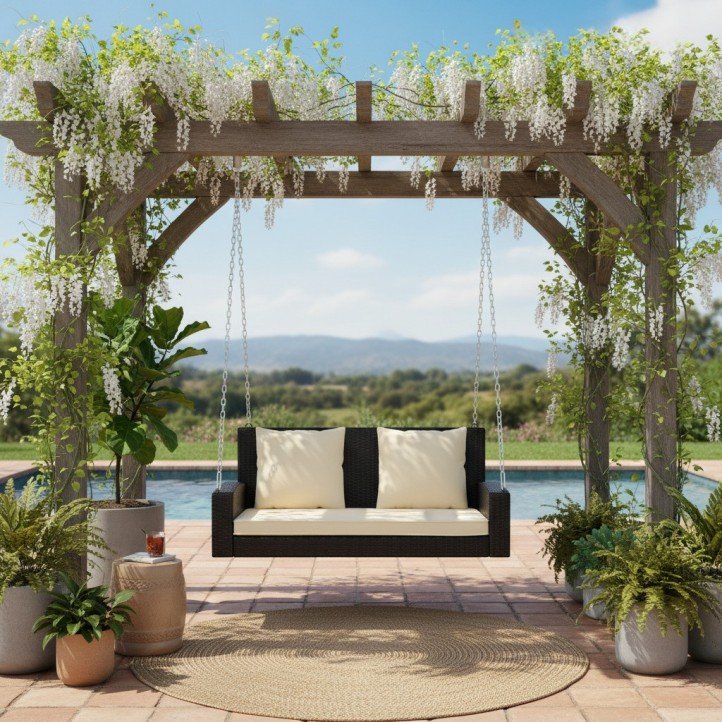
Why HDPE Resists Cracking: The Materials Science in One Page
Cracking outdoors comes from two pathways: brittle fracture (material turns glassy or embrittled) and environmental stress cracking (ESC), where small stresses plus detergents/oils trigger crazes and cracks. HDPE fights both.
- High ductility and low brittleness temperature Typical HDPE shows very high elongation at break (often several hundred percent) and a low brittleness temperature, allowing woven strands to tolerate bending and micro-notches without snapping. For representative ranges, see HDPE entries on MatWeb (e.g., Dow 12450N; INEOS grades).
- ESCR (Environmental Stress-Crack Resistance) ESCR is measured with ASTM D1693. It assesses how ethylene plastics behave under mild tensile stress in the presence of wetting agents-conditions similar to patio life (cleaners, sunscreen, spilled cocktails). Choosing HDPE grades with strong ESCR, plus rounding frame edges and controlling weave tension, dramatically reduces crack initiation.
Design translation: prefer thicker-wall fibers, generous bend radii at frame transitions, and even weave tension. Ask suppliers about resin grade and ESCR results-not just color charts.
“How Long Will It Last?” Translating Lab Hours to Backyard Years
You’ll often see claims like “2,000-hour UV test passed.” What does that mean?
- ASTM G154: fluorescent UV/condensation exposure practice for nonmetals (QUV).
- ASTM D4329: plastics-specific procedures using fluorescent UV.
- ISO 4892-3:2024: international counterpart for fluorescent UV exposure.
These tests accelerate damage mechanisms (UV + heat + moisture) to rank materials and screen formulations. They do not convert linearly to calendar years-correlation depends on climate, pigment package, and part geometry. Use hours as a comparative metric across similar products tested under the same cycle (e.g., UVA-340; 8 h UV @ 60 °C / 4 h condensation @ 50 °C). For a clear, vendor-neutral overview of QUV, see Intertek’s accelerated weathering explainer and xenon-arc note on correlation limits. How to read a report fast:
- Lamp & spectrum: prefer UVA-340 for sunlight-matching shortwave UV; avoid apples-to-oranges comparisons with UVB-313 unless specified (see Q-Lab lamp guide).
- Cycle & setpoints: note temperatures, irradiance control, and condensation/spray steps.
- Failure criteria: gloss loss %, ΔE color change, surface cracking, or tensile retention-“no visible change” isn’t enough.
- Controls: ask whether a control material was run alongside for comparability.
Quick Comparison: Which Wicker Wins Outside?
| Attribute | HDPE Wicker | PVC Wicker | Natural Rattan |
|---|---|---|---|
| UV Resistance | High with HALS + UVA package; commonly tested under G154 / D4329 / ISO 4892-3 | Moderate; plasticizer loss & chalking risk outdoors | Low; fibers degrade under sun & moisture |
| Low-Temp Cracking | Excellent ductility; low brittleness temperature (see MatWeb HDPE overview) | Variable; can stiffen in cold | Poor in freeze-thaw |
| ESCR | Good with proper grade (ASTM D1693) | Variable | N/A; moisture damage dominates |
| Colorfastness | Color-through pigments; premium fibers (e.g., RAUCORD, Viro) | Surface color can chalk/fade | Stains/finishes degrade |
| Maintenance | Soap & water; covers off-season (see The Spruce care tips) | Similar | Higher; avoid wetting, frequent care |
| Recyclability | Resin code #2 HDPE; program acceptance varies (see EPA plastics data) | #3 PVC; limited municipal recycling | Organic, but not curbside recyclable |
Notes: Standards are for accelerated weathering ranking; hours ≠ , years. Brand pages illustrate the “color-through” concept.
Design & Build Factors That Make (or Break) Lifespan
Fiber geometry: slightly larger diameter and thicker wall sections resist notch growth and distribute bending strain. Weave & tension: uniform tension avoids point loads that trigger ESC in the presence of cleaners or sunscreen residues. Frame: powder-coated aluminum or marine-grade stainless reduces sharp edges that cut fibers; specify rounded profiles. Cushions & drainage: quick-dry foams and breathable under-supports prevent trapped moisture that leads to mildew and harsher cleaning cycles. Supplier signals: premium manufacturers using branded fibers (e.g., RAUCORD) often publish care notes and commercial warranties-use them as proxies for overall design discipline.
[see more: Which outdoor furniture frame is right for your project]
Care & Maintenance: Small Habits, Big Years
- Clean gently, regularly. A soft brush plus diluted dish soap is sufficient; rinse and dry. See The Spruce’s outdoor furniture cleaning guide and Better Homes & Gardens’ wicker care.
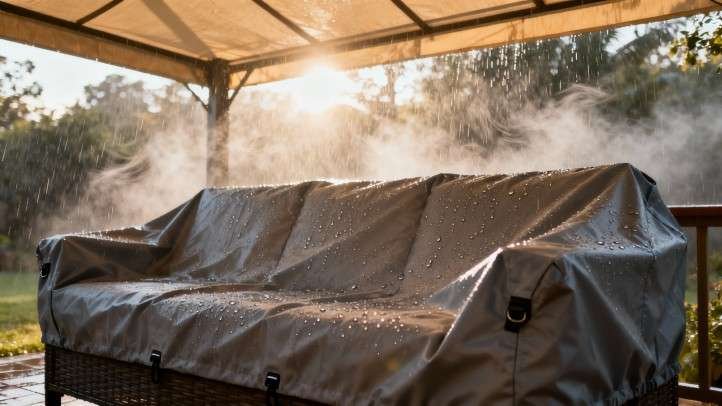
- Covers & shade. In high-UV regions, shading and seasonal covers meaningfully slow color/gloss change.
- Avoid solvents & close-range pressure washing. These can scar surfaces and start micro-cracks.
- Winter storage. In sub-freezing climates, reduce point loads and impacts; let frames carry weight, not tight straps.
[see more: The Importance of UV Stabilizers and Key Points in Anti-Fading Technology]
Sustainability & End-of-Life: #2 HDPE, but Check Local Reality
HDPE carries recycling code #2 and is among the more commonly reclaimed resins in packaging streams. For real-world acceptance and rates, consult the EPA’s plastics data, the national overview, and the state & local data hub. “Recyclable” ≠ “recycled” unless your local MRF accepts rigid HDPE furniture parts.
Buying Checklist (Copy-and-Use)
Ask your supplier to provide (and file) the following:
- Resin & stabilization: HDPE grade + UV package statement (HALS/UVA). Background: Tinuvin® stabilizers.
- UV test standard & cycle: e.g., ASTM G154 (UVA-340 8/4 cycle), exposure hours, setpoints, and failure criteria.
- Plastics-specific method: ASTM D4329 or ISO 4892-3 with parameters.
- ESCR evidence: ASTM D1693 method and F50 value if available.
- Brand of fiber: e.g., RAUCORD / Viro with colorfastness/UV notes.
- Geometry: fiber diameter & wall thickness tolerances; weave tension QA.
- Frame & finish: alloy, wall thickness, powder-coat spec.
- Warranty: what defects are covered (color change? cracking?), term for residential vs. commercial.
- Spare parts: replacement strands availability.
- End-of-life: #2 HDPE marking and local take-back options (see EPA plastics page).
Climate-Aware Maintenance (Quick Planner)
| Climate Zone | Sun Intensity | Rain/Humidity | Off-Season Action | Clean & Cover Rhythm |
|---|---|---|---|---|
| Desert Sunbelt | Very high | Low | Shade sails + breathable cover | Rinse monthly; deep clean 2-3×/yr |
| Coastal | High | High salt/mist | Rinse salt weekly; cover on storm alerts | Rinse bi-weekly; deep clean quarterly |
| Temperate | Moderate | Moderate | Store cushions in wet weeks | Monthly quick clean; deep clean 2×/yr |
| Cold/Freeze-Thaw | Low-moderate | Snow/ice | Avoid impacts below freezing; reduce strap tension | Before/after winter pack-down |
(Use this with the buying checklist, not instead of standards.)
Conclusion: A Practical Verdict
If you want the woven look without the heartache, HDPE wicker outdoor furniture is the category to beat. Its ductility (high elongation), low brittleness temperature, and stabilized pigments make it inherently resistant to cracking and fading when paired with good weaving, rounded frames, and basic maintenance. Don’t buy on hours alone; buy on the standard + cycle + failure criteria, ESCR evidence, and credible fiber brands. Use the checklist, save the reports, and your set should look good-and stay intact-season after season.
References & Useful Extras
- Standards & methods: ASTM G154 · ASTM D4329 · ISO 4892-3:2024
- Equipment & lamps: Q-Lab QUV overview · UVA-340 vs. others (Q-Lab guide)
- Materials data: MatWeb HDPE hub
- Brand tech pages: REHAU RAUCORD · Viro catalog
- Recycling reality: EPA plastics data · EPA national overview
FAQ (PAA-friendly)
Q1: How long does HDPE wicker outdoor furniture really last outside?
A: It depends on resin grade, UV package, and build quality. Look for QUV results per ASTM G154/ASTM D4329 or ISO 4892-3 with clear failure criteria (e.g., ΔE, gloss loss, cracking). Treat hours as comparative calendar years-because climate drives real-world aging.
Q2: Why is HDPE wicker less likely to crack in winter?
A: HDPE has high elongation and a very low brittleness temperature, so strands stay tough during bending and impacts. See representative properties on MatWeb’s HDPE pages.
Q3: What’s the single best line in a test report to check?
A: The test cycle (lamp type, UV/condensation timing, temperatures) and the failure criteria. “2,000 hours” without cycle and criteria tells you almost nothing; see G154/D4329 for what a complete report should include.
Q4: Is HDPE wicker recyclable?
A: Yes-HDPE is resin code #2 and among the more commonly reclaimed plastics, though actual rates depend on local programs. Check your municipality against the EPA plastics data and state & local data.
Q5: HDPE vs PVC wicker: which should I buy?
A: For true year-round outdoor exposure, HDPE typically wins on UV stability, cold-weather toughness, and recyclability. PVC may be acceptable for covered patios, but is more sensitive to chalking and cold embrittlement. For how tests are used comparatively, see Intertek’s QUV overview.