Introduction:
If you buy once and buy right, outdoor furniture should survive sun, salt, spills, and seasons. In 2025, the best outdoor furniture material isn’t a one-word answer-it’s the right base material + finish class + lab-verified performance for your climate, use case, and budget.
What “best” means in 2025: five decision pillars
- Climate exposure – UV intensity, rainfall, humidity, and especially chlorides in coastal wind/spray.
- Application – Hospitality pool vs. rooftop bar vs. streetscape: very different abuse and cleaning chemistry.
- Finish & testing – Powder coat class (AAMA/FGIA 2604 vs 2605), plus corrosion and UV/weathering tests.
- Sustainability & compliance – FSC for hardwoods; documented recycled content for plastics; relevant industry guidance.
- TCO – 10-year cost including refinish cycles, labor, downtime, and replacements.
Helpful standards and primers: AAMA/FGIA 2605 (store overview), FGIA technical resources, ASTM B117 salt spray (example copy), ASTM G154 overview (Q-Lab), ISO 4892-2 overview (ISO), BIFMA OF-2025 Outdoor Furniture Whitepaper (PDF), FSC Chain-of-Custody, Chlorides & stainless steel (ASSDA).
Quick scorecard: best material by climate & application
| Scenario | Recommended “Best” Stack | Why it wins | Risk if under-spec’d |
|---|---|---|---|
| High UV / desert sun | HDPE poly lumber with HALS + UV testing to ASTM G154 or ISO 4892-2 | Color-through and low maintenance; proven UV resistance when stabilized and tested | Fading/embrittlement without UV stabilization/testing |
| Coastal / salt spray | 316 stainless hardware/frames or powder-coated aluminum to AAMA/FGIA 2605 + sealed welds + ASTM B117 reference | 316’s molybdenum improves pitting resistance; 2605 retains color/gloss longer | Tea staining, pitting, and coating undercutting in 1-3 seasons |
| Four-season freeze-thaw | Powder-coated aluminum (2604/2605) or HDPE; avoid moisture-wicking fibers | Coatings/plastics shrug off wet/dry cycles; fewer checks | Peeling finishes, checks in softwoods |
| Hospitality pool deck | Resin (PE) wicker over aluminum, or HDPE, with 316 fasteners; slip-safe feet | Light, cleanable, chlorine-tolerant | Broken weaves, rusted screws |
| Public realm / heavy use | 6063-T5/T6 aluminum or 316 stainless; robust wall thickness; security fasteners | Structural robustness + corrosion resistance | Bent frames, early corrosion, theft |
Why these standards: AAMA/FGIA 2604/2605 classify architectural powder-coat performance; ASTM B117 screens chloride-driven corrosion; ASTM G154 and ISO 4892-2 screen UV/weathering on plastics/coatings. [For more information, please read: Patio Furniture Powder Coating vs. Sprays]
Deep dives by material (what to specify & what to avoid)
Powder-coated aluminum (6063-T5/T6)
Why choose it: Light, corrosion-resistant, and extrudable into ergonomic profiles. The finish class matters as much as the metal. Specify AAMA/FGIA 2604 for solid mid-term color/gloss retention, or 2605 for premium longevity (especially for harsh UV/coastal). Helpful explainers: Gordon, Inc. AAMA 2604/2605 paper (PDF), AAMA 2604 vs 2605 (AMICO).
RFQ snippet (copy-paste):
- Alloy 6063-T5/T6; minimum wall thickness to suit span/loads.
- Pretreatment compatible with marine/coastal use; TGIC-free polyester powder.
- Powder coat to AAMA/FGIA 2604 (good) or 2605 (best). Attach third-party test report or applicator certification (e.g., PCI 4000 / AAMA 2604/2605 compliance example).
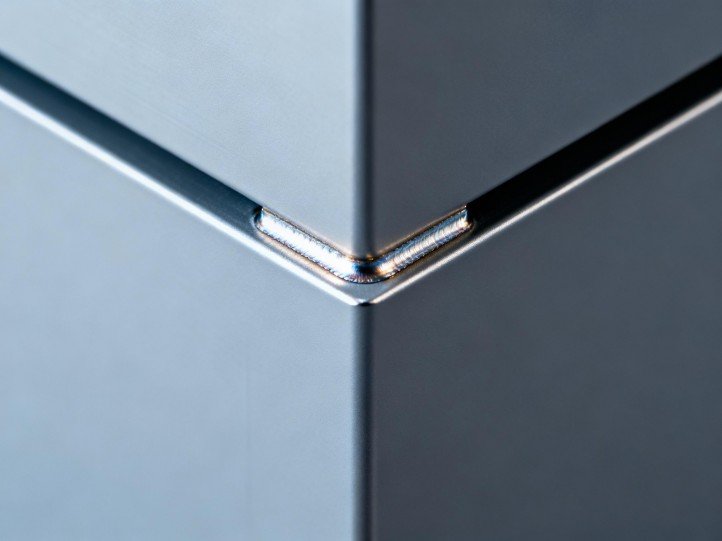
- Seal all welds; no raw aluminum exposed in hollow sections.
Field note: In sun-blasted rooftops or boardwalks, 2605’s superior color/gloss retention reduces repaint cycles versus 2604 (better TCO).
Stainless steel (304 vs 316)
When 316 wins: Anywhere with airborne chlorides or de-icing salts. The molybdenum in 316 increases pitting resistance; 304 often tea-stains or pits at the coast. See: ASSDA: Chlorine vs. Chloride and ASSDA FAQ on general corrosion (PDF).
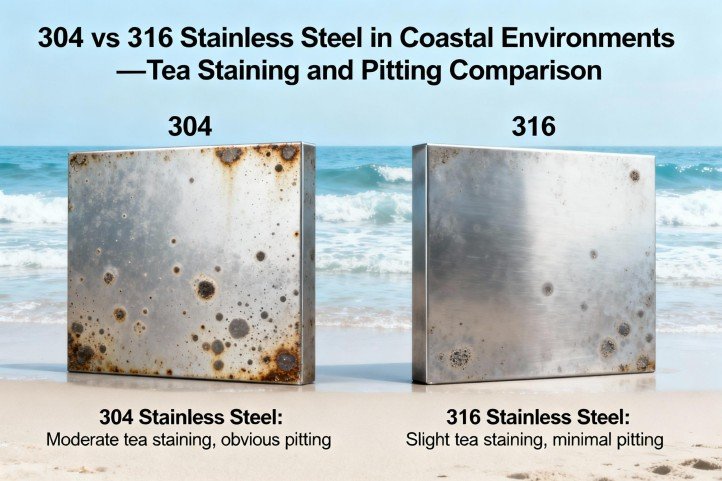
RFQ snippet:
- Grade 316 for coastal installs; brushed/electropolished finish to reduce crevice traps.
- Isolate dissimilar metals; specify 316 fasteners throughout (including hidden).
- Cleaning plan included in O&M (frequency rises with salt load).
Budget tip: 316 costs more up front but reduces stain remediation and replacements-often winning on 3-5-year TCO in coastal sites.
Teak and other hardwoods
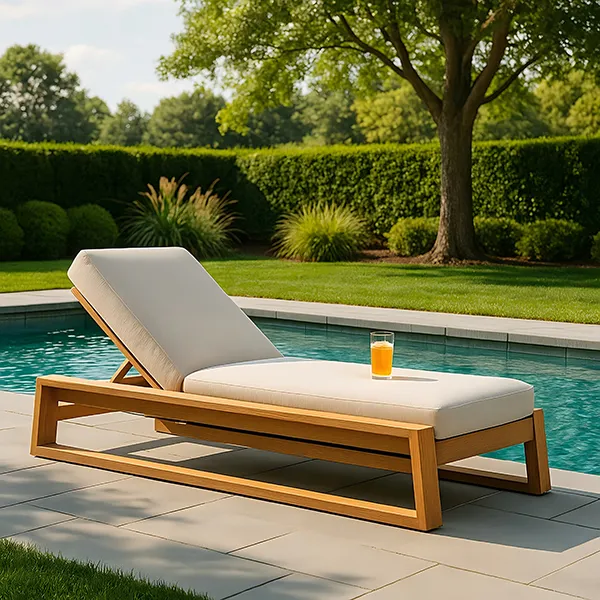
Why teak endures: Dense grain and natural oils resist rot and insects; it weathers to a silver patina. For responsible sourcing and proof of claims, require FSC Chain-of-Custody on invoices and packing lists.
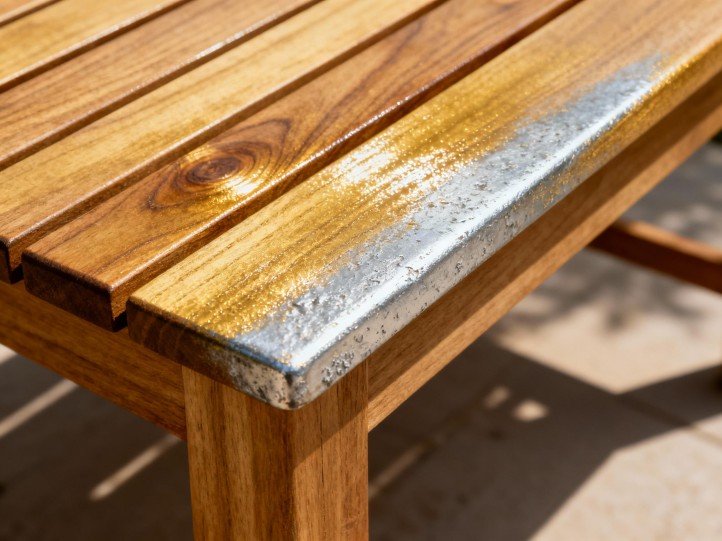
RFQ snippet:
- FSC-certified Tectona grandis; moisture content 10-12% at assembly.
- Mortise-and-tenon joinery; stainless fasteners; breathable covers.
- Maintenance: gentle wash; optional seasonal oiling if you want to keep the golden hue.
When to avoid: In high-turnover hospitality where seasonal wood care is unrealistic; choose HDPE or 2605 aluminum instead.
HDPE “poly lumber”
What it is: High-density polyethylene, often with recycled content. Premium brands use color-through lumber and HALS UV stabilization. See: POLYWOOD FAQs (HDPE + UV inhibitors), scientific background on HALS: 3V Sigma-HALS protecting plastics.
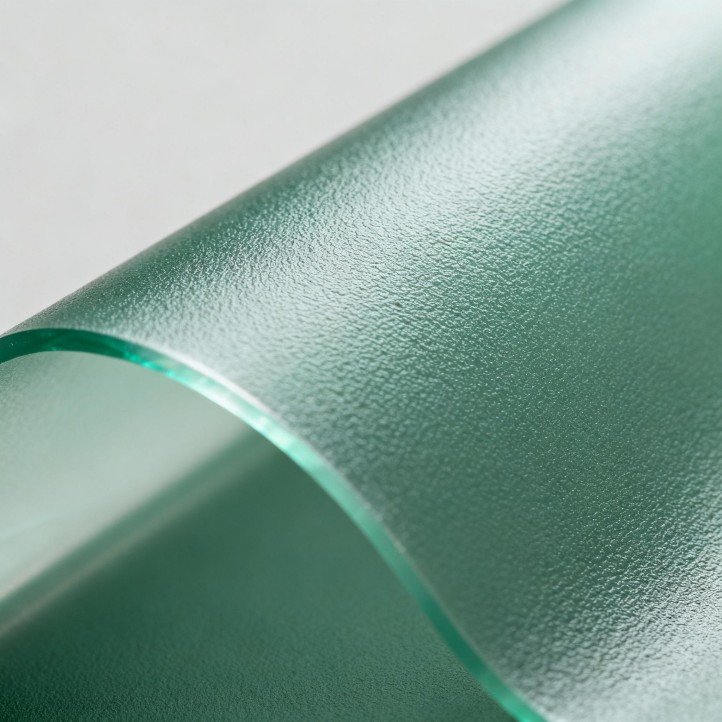
RFQ snippet:
- Color-through HDPE with declared recycled content; request UV stabilization documentation and ASTM G154/ISO 4892-2 exposure data (ΔE*, gloss retention, impact).
- Stainless fasteners; robust section thickness to control creep.
- Provide a cleaning chemical compatibility statement.
Why buyers like it: Minimal maintenance and long warranties; ideal for high-UV decks and education/parks where abuse is common.
“All-weather wicker” (resin) on aluminum frames
What it really means: “Wicker” is a weave method. Outdoor-safe “all-weather wicker” is typically polyethylene (PE) resin strands, UV-stabilized and woven over a powder-coated aluminum frame. Avoid PVC weaves for long, hot UV exposure when possible. Primer: HDPE vs. PVC wicker (buyer explainer).
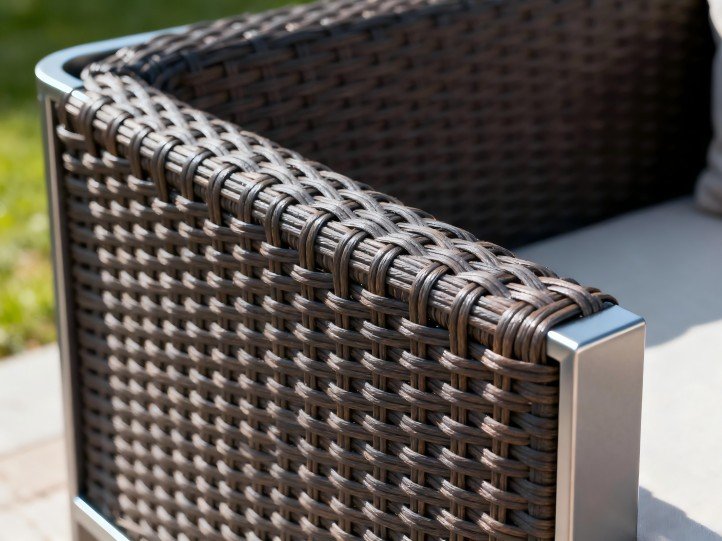
RFQ snippet:
- UV-stabilized PE wicker with color-through pigment; welded aluminum frame (2604/2605 finish).
- 316 fasteners in coastal installs; replaceable glides.
- Specify weave density (g/m or strands/cm) for consistency; chlorine-splash tolerance for pool deck applications.
Finishes & tests that actually predict lifespan
Powder-coat class (AAMA/FGIA 2604 vs 2605)
- 2604: Solid performance; typical mid-market choice for inland or moderate UV.
- 2605: Premium color/gloss retention and corrosion resistance-recommended for intense UV or coastal installs. Learn more: AAMA 2605 overview, plus practical explainers from industry (AMICO guide, Colorific primer).
Corrosion screening: ASTM B117 (salt fog)
Use ASTM B117 to compare coating systems and pretreatments under chloride load. It doesn’t replicate all field conditions but is a consistent screening tool for scribe creep, blistering, and undercutting.
UV/weathering for plastics & coatings: ASTM G154 vs ISO 4892-2
- ASTM G154 – fluorescent UV/condensation cycles; excellent for plastics/coatings screening.
- ISO 4892-2 – xenon-arc exposure; broader solar spectrum simulation. A quick lab explainer: Q-Lab on QUV vs. Q-Sun (PDF).
Show your stakeholders: short videos – ASTM G154 UV weathering demo or another lab demonstration.
Sustainability & compliance signals specifiers trust
- Hardwoods: Require FSC Chain-of-Custody documentation (certificate number + transaction IDs).
- Plastics: Ask for recycled content declarations and UV-stabilizer disclosure; link to third-party test summaries for ASTM G154/ISO 4892-2.
- Industry guidance (2025): The BIFMA OF-2025 Outdoor Furniture Whitepaper frames safety/performance for exterior commercial furniture and references relevant testing. See also the BIFMA Standards FAQ page.
10-year TCO model (illustrative)
| Material Stack | Capex Index (Year 0) | Annual Care (hrs/set) | Refinish Cycle | Likely 10-yr Events | TCO Notes |
|---|---|---|---|---|---|
| HDPE + 316 fasteners | 1.0 | 1-2 | None | Hardware swap rare | Low labor; heavy pieces deter theft. For UV assurance, ask for ASTM G154/ISO 4892-2 data. |
| Alu 6063 + 2604 | 0.9 | 3-4 | 5-7 yrs repaint (some sites) | Touch-up chips | Good inland value; upgrade to 2605 for harsh UV. |
| Alu 6063 + 2605 | 1.1 | 2-3 | 8-10 yrs repaint (harsh UV) | Minimal fading | Best for UV/coastal; see AAMA 2605. |
| 316 stainless brushed | 1.3 | 3 | None | Tea-stain cleaning only | Coastal winner; fewer replacements; see ASSDA chloride guidance. |
| FSC Teak | 1.2 | 4-6 | Oil/clean annually | Surface checks possible | Highest perceived luxury; requires a maintenance culture; verify FSC CoC. |
Assumptions: Hotel pool deck with daily use; coastal multipliers increase corrosion risk (justify 316 or 2605). Standards references underpin durability expectations, but local cleaning practice still drives outcomes.
Implementation playbook: from shortlist to signed PO
Climate & site audit (add to drawings)
- Distance to ocean, predominant winds, salt film risk, UV index, shade hours.
- Chemicals in play (chlorine, sunscreen, cleaning products).
- Cleaning access (water, storage), anchoring constraints, and theft risk.
Material & finish requirements (paste into RFQ)
- Frames: Aluminum 6063-T5 (min wall X mm) with TGIC-free polyester powder coat complying with AAMA/FGIA 2605 (2604 acceptable inland). Include pretreatment for coastal.
- Hardware: All visible and concealed fasteners 316 stainless; isolate dissimilar metals; supply material certificates. See ASSDA guidance.
- Plastics: HDPE with color-through pigment and HALS; provide ASTM G154 or ISO 4892-2 exposure results (ΔE, gloss, impact retention). Reference Q-Lab primer.*
- Wood: FSC-certified teak; attach FSC Chain-of-Custody certificate and transaction IDs.
Test documentation to submit
- Corrosion: ASTM B117 hours to first scribe creep/blister; coating DFT and adhesion notes.
- UV/weathering: ASTM G154 or ISO 4892-2 exposure with ΔE*, gloss retention, and impact results.
Warranty & maintenance
- Written cleaning SOP; finish warranty terms aligned to coating class (longer for 2605).
- Confirm spare parts support and lead times.
Conclusion: So…what’s the best outdoor furniture material in 2025?
- Coastal: 316 stainless or aluminum finished to AAMA/FGIA 2605, plus disciplined 316 fasteners and cleaning.
- High-UV inland: HDPE poly lumber or aluminum with 2605; verify ASTM G154/ISO 4892-2 performance.
- Luxury hospitality: FSC teak where maintenance culture exists; otherwise, aluminum/HDPE for operational simplicity.
In short, the best outdoor furniture material is the one whose base + finish class + test evidence match your climate and workload-and are written, verified, and warranted in your PO.
FAQ
Q1. What is the best outdoor furniture material for coastal areas?
A: If you’re within a few kilometers of the ocean or get salt-spray winds, spec 316 stainless or aluminum with AAMA/FGIA 2605 powder coat-and ensure all fasteners are 316 as well. This pairing resists chloride-driven pitting and finish undercutting better than 304 or lower-class coatings. For background, see ASSDA on chlorides.
Q2. Is AAMA/FGIA 2605 worth the premium over 2604?
A: Yes-in harsh UV or coastal installs. 2605 is engineered for superior color/gloss retention and corrosion resistance over longer exposures than 2604, which can reduce repaint cycles and downtime. See practical comparisons: AMICO guide.
Q3. Does HDPE “poly lumber” fade in strong sun?
A: Quality HDPE with HALS UV stabilizers and verified ASTM G154/ISO 4892-2 data resists fading and embrittlement far better than unstabilized plastics. Brand example: POLYWOOD’s UV-inhibiting ColorStay™.
Q4. Is teak still worth it in 2025?
A: For premium projects with a maintenance plan, FSC-certified teak offers longevity and a high-end aesthetic (silver patina). For low-maintenance operations, consider HDPE or aluminum finished to 2605. Verify sustainability via FSC Chain-of-Custody. Q5. Which tests should I require in my RFQ? At minimum: ASTM B117 (corrosion) for metals/coatings and ASTM G154 or ISO 4892-2 (UV/weathering) for plastics/coatings. Tie acceptance to outcomes (ΔE*, gloss retention, scribe creep).