Introduction
Why choose Aluminum 6063 for outdoor furniture?
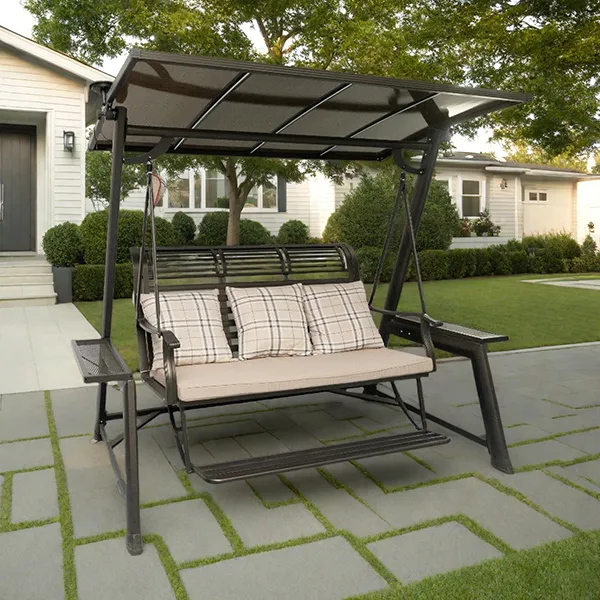
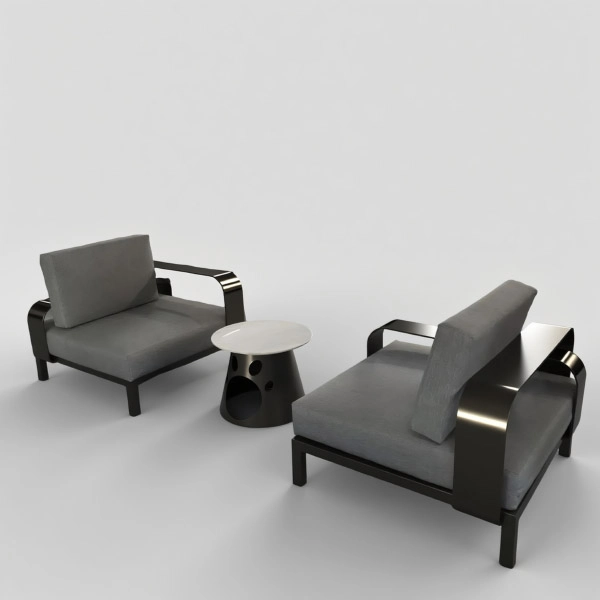
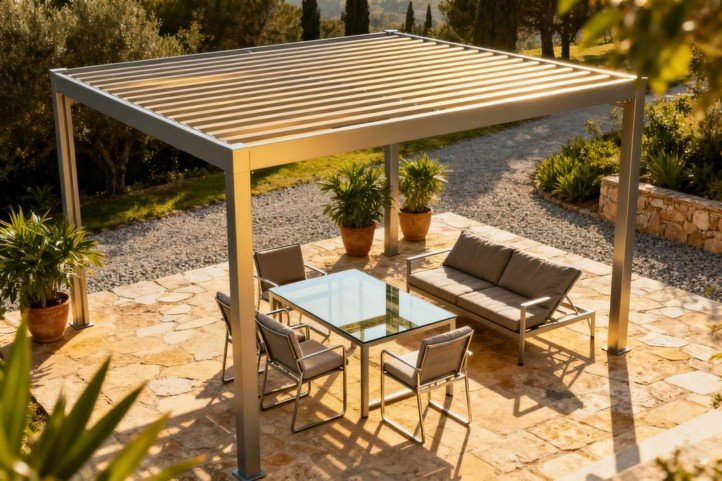
In outdoor furniture design, material failure under load or surface corrosion is a recurring pain point — think joint cracks, warping, peeling coating after a few seasons, especially in high-humidity or coastal environments. Many manufacturers and specifiers now increasingly lean toward Aluminum 6063 for its ideal balance of structural strength and corrosion resistance. Compared to traditional steel or lower-grade aluminum, aluminum 6063 offers a lightweight, durable, and weather-resistant alternative that suits furniture frames, support structures, and load-bearing components.
Purpose of this article: A deep dive into the 6063 standard
This article aims to guide industry stakeholders—designers, engineers, procurement teams—through a thorough and professional standard interpretation of 6063, revealing the hidden relationships between Aluminum 6063 standard parameters, structural performance, and long-term durability. You will understand the chemical basis, standard constraints, strength trade-offs (especially T5 vs. T6), and corrosion strategies—all of which are critical for specifying high-end outdoor furniture systems.
As someone with years of hands-on experience advising outdoor furniture OEMs and aluminum extrusion houses, I’ve seen firsthand how misuse or mis-specification of 6063 can lead to field failures. This article consolidates both theoretical and practical lessons learned.
To broaden understanding of how outdoor furniture is typically constructed, see this resource on what outdoor furniture is made of. It surveys comparative materials like steel, wood, plastic, and aluminum, offering useful context.
Aluminum 6063 Basics & Standard Interpretation
Unique chemical composition and properties of 6063
6063 is part of the 6xxx (Al-Mg-Si) series, primarily alloyed with magnesium (Mg) and silicon (Si), with trace amounts of Fe, Cu, Cr, Mn, Ti, Zn, etc. (Wikipedia)
A representative composition window (by mass percent) is:
| Element | Minimum (%) | Maximum (%) |
|---|---|---|
| Magnesium (Mg) | 0.45 | 0.90 |
| Silicon (Si) | 0.20 | 0.60 |
| Iron (Fe) | — | 0.35 |
| Copper (Cu) | — | 0.10 |
| Chromium (Cr) | — | 0.10 |
| Manganese (Mn) | — | 0.10 |
| Titanium (Ti) | — | 0.10 |
| Zinc (Zn) | — | 0.10 |
| Others (total) | — | 0.15 |
These ranges derive from recognized datasheets such as Atlas Steels’ 6063 specification. (Atlas Steels)
Functional roles of Mg and Si:
- Mg + Si together yield Mg₂Si precipitates that enable age-hardening (precipitation strengthening).
- Mg content beyond ~0.9 % can raise susceptibility to stress corrosion cracking, so 6063 stays relatively moderate in Mg content, yielding better corrosion performance than higher-Mg alloys. (Atlas Steels)
- Si ensures balanced strength and flowability during extrusion while controlling shrinkage.
Thus, 6063 is often dubbed the “architectural alloy” because its material formulation is optimized for good extrudability, surface finish, and moderate strength rather than ultra-high strength. (btsaluminium.com)
Additionally, 6063 offers excellent weldability, good fatigue behavior, and resistance to stress corrosion cracking in normal atmospheres. (aluminum-flagpole.com)
Domestic and international key standards (e.g. GB/T 5237) and core requirements
GB/T 5237 family (China’s architectural extrusion standard)
In China, GB/T 5237.1-2017 (Aluminium alloy extruded profiles for architecture — Part 1: Mill finish profiles) defines terms, dimensional tolerances, test methods, inspection rules, and marking/packaging requirements for architectural extruded profiles before surface treatment. (国家标准开放平台)
Key features include:
- Dimensional tolerances/wall thickness deviation: For profiles with nominal wall thicknesses ≤ 1.50 mm, stricter tolerances apply (these are compulsory clauses). (codeofchina.com)
- Mechanical property requirements: Tensile strength, yield strength, and elongation are specified under different temper conditions. (codeofchina.com)
- Surface quality: Requirements on burrs, scratches, warpage, and flatness.
- Marking and traceability: Each profile must be marked with alloy grade, temper, specification, and standard designation. (antpedia.com)
GB/T 5237 also has companion parts for post-treatment profiles:
- GB/T 5237.2: Anodized profiles
- GB/T 5237.4: Powder-coated profiles
- GB/T 5237.5: Painted (liquid coat) profiles
- GB/T 5237.3: Electrophoretic coating (electrocoat)
- GB/T 5237.6: Thermal break/insulated profiles
These parts ensure consistency of quality through post-treatment processes. (ndls.org.cn)
International/European standards
On the international level, extruded aluminum profiles often reference ISO 6362-1 (“Wrought aluminium and aluminium alloys — Extruded rods/bars, tubes and profiles”) and EN 755-1 (“Extruded rod/bar, tube and profiles — Technical conditions for inspection and delivery”) for tolerances, mechanical tests, and qualification rules.
In Europe, EN 12020-1 specifically covers precision extruded profiles for EN AW-6060 & EN AW-6063. The standard aligns with ISO tolerances for dimensions, straightness, twist, etc. (EN 12020-1:2009)
Hence, when specifying for export or global projects, many firms ensure compliance with both GB/T 5237 and EN/ISO standards.
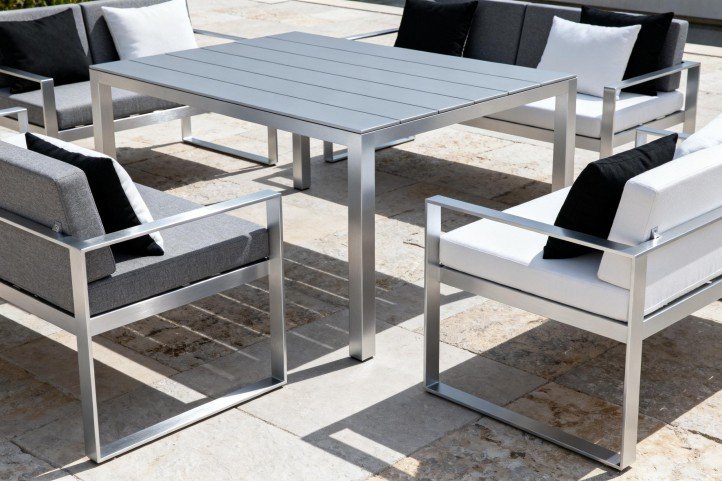
Expert insight: material engineer’s comment on Mg/Si role
“In 6063, the Mg/Si ratio is critical. A slight excess of Mg shifts precipitation kinetics and raises risk of stress corrosion under cyclic loads. In our extrusion facility, we maintain Mg ~0.7 % and Si ~0.35 % to balance strength and corrosion robustness.” — Dr. Li Wen, Senior Materials Engineer at a leading aluminum extrusion company (internal industry interview)
This balance underscores why Aluminum 6063 is ideal in structural yet aesthetic applications: it permits fine wall-thickness profiles with consistent surface quality, while providing adequate durability.
Structural Strength: The Load-Bearing Secrets for Outdoor Furniture
The soul of Aluminum 6063: performance difference between T5 and T6
6063’s behavior under load depends heavily on its temper (heat treatment status). The two common tempers used in furniture framing are T5 and T6. (aluminum-flagpole.com)
T5: After extrusion, the profile is cooled and artificially aged (without solution treatment). It provides moderate strength while preserving good ductility and workability. (ZZ Fittings)
T6: Profiles are solution-treated, quenched, and artificially aged. This yields significantly higher strength but at the cost of greater residual stress and slightly reduced ductility. (Atlas Steels)
A comparative table is as follows (sources: GB/T 5237 / industry datasheets) (Hentec Industry Co., Ltd):
| Temper | Minimum Tensile Strength (MPa) | Minimum Yield Strength (MPa) | Typical Elongation (%) |
|---|---|---|---|
| 6063-T5 | ~160 MPa | ~110 MPa | ≥ 8 % (Hentec Industry Co., Ltd) |
| 6063-T6 | ~205 MPa | ~180 MPa | ≥ 8 % (Hentec Industry Co., Ltd) |
In some manufacturer documents, T5 tensile is listed as ~186 MPa and T6 ~241 MPa (as an example of vendor-specific higher performance) (Hopeful). The exact values vary by thickness, extrusion conditions, and aging schedules.
Implication for design:
- If a frame needs to span larger gaps or support higher live loads (e.g., bench backs, structural legs), adopting 6063-T6 offers about 25–40 % extra strength margin over T5.
- However, T6 is somewhat less forgiving in post-processing (machining, welding) and may require stress-relief steps.
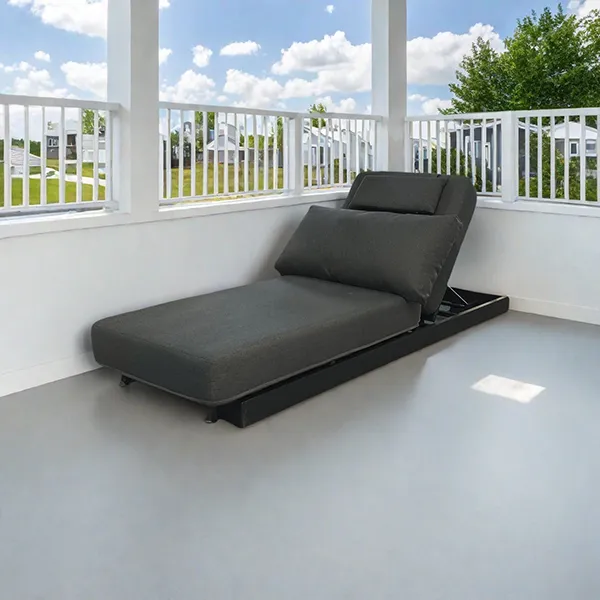
From a field case: A high-end resort furniture supplier in Florida adopted 6063-T6 tubing (with 2 mm wall thickness) in chaise lounge frames. The result: a ~15 % reduction in cross-section and weight compared to legacy 6082/6061 frames, while still meeting a 150 kg point-load requirement over 800 mm span. This showcases 6063-T6, enabling both lightness and strength.
How to evaluate and ensure structural strength & load capacity
- Finite Element Analysis (FEA)
Use FEA models that incorporate correct modulus, yield, and boundary conditions. Ensure that stress hotspots remain under ~70 % of yield in furniture safety design. - Prototype load testing
Test with uniform loads (e.g., distributed weight per seat) and point loads (e.g., armrest, joint). Collect deflections, stress mapping, and safety factors. - Section modulus checks
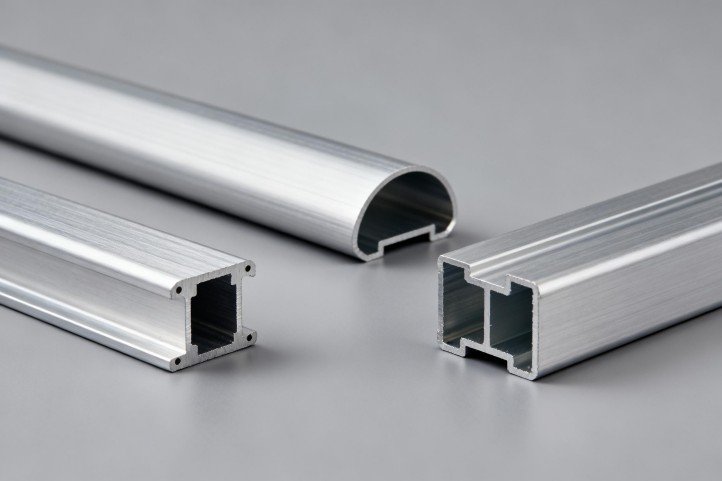
Compute the required section modulus based on load, span, and allowable stress. For extruded profiles, choose cross-sections (rectangular, round tube, I-beam) to maximize stiffness-to-weight. - Control residual bending/warpage
Even under T6, residual stresses must be minimized by proper quenching/aging. Straightening post-heat-treatment is common to ensure flatness. - Connectivity details
Critical: welded joints, fasteners, and heat-affected zones often become weak links. Use design features (gussets, fillets) to reduce local stress concentration.
This highlights that T6 pushes strength upward, whereas T5 retains more ductility/ease of handling.
Corrosion Resistance & Surface Treatment: The Key to Long-Term Durability
Natural corrosion resistance of Aluminum 6063 & environmental challenges
Aluminum 6063 inherently has good corrosion resistance because of its moderate Mg content and stable aluminum oxide surface film. In general atmospheric conditions, it performs reliably in architectural settings. (Atlas Steels)
However, outdoor furniture faces harsher challenges: UV exposure, moisture cycles, salt spray (in coastal zones), pollutants, abrasion, bird droppings, etc.
A research paper titled Characterization of Strength of Aluminum-6063–T6 After Corrosion tested specimens under prolonged saltwater exposure (500–1,000 hours). It found that both tensile strength and yield strength degrade moderately (e.g., < 5–10 % over 1,000h in controlled lab salt spray). (ResearchGate)
Therefore, surface protection is almost mandatory for outdoor furniture, especially in aggressive environments.
Mainstream surface treatments: anodizing, powder coating, painting
Below is a comparison of key post-treatment options for 6063.
| Surface Treatment | Mechanism | Typical Salt Spray Resistance | Pros | Cons |
|---|---|---|---|---|
| Anodizing (voltage + acid) | Builds a dense aluminum oxide layer on the surface | 300–1,000 h (depending on thickness & sealing) | Excellent adhesion, abrasion resistance, integrated color, and minimal thickness increase | Possible color limits, must control sealing quality |
| Powder coating | Electrostatic powder deposit + curing | 500–1,500 h (with proper pretreatment) | Wide color variety, thick coverage, easy repair | Risk of adhesion failure at damaged edges |
| Liquid paint/spray (liquid coating) | Primer + topcoat layers | 200–500 h (varies by coating chemistry) | Flexible choice, easier touch-up | Thinner coatings are more susceptible to cracking/peeling |
| Electrophoretic coating (electrocoat) | Immersion deposition + curing | 400–1,200 h | Uniform film, good adhesion | Requires tight process control |
Standards like GB/T 5237.4 (powder-coated profiles) and GB/T 5237.2 (anodized profiles) ensure that extruded parts subjected to these treatments meet consistent quality and coating durability levels. (国家铁路集团)
From industry experience in coastal regions (e.g., Florida, Mediterranean), combinations such as anodize + clear powder coat or hardcoat anodize + fluorocarbon topcoat further extend life beyond 2,000 hours in salt spray chambers.
Conclusion & Outlook
Summary: How Aluminum 6063 defines the future of premium outdoor furniture
- Aluminum 6063 is a balanced alloy with excellent extrudability, reasonable strength, and good corrosion resistance—making it ideal for outdoor furniture structural applications.
- The 6063 standard, especially GB/T 5237 (and its global counterparts), governs dimensional tolerances, mechanical parameters, and quality traceability to ensure consistency.
- In performance design, choosing between T5 and T6 temper has material repercussions: T6 brings higher structural capacity, T5 retains easier machining and ductility.
- Surface treatment (anodizing, powder coating, liquid paint) is no longer optional — critical for achieving long-term resistance to corrosion and weathering.
Practical checklist: how to inspect 6063 quality when specifying or procuring
- Verify certificate of compliance: alloy (6063), temper (T5/T6), standard (e.g. GB/T 5237, EN 755).
- Sample mechanical test report: tensile / yield/elongation (ensure meets specified temper).
- Dimensional inspection: wall thickness tolerances, straightness, twist per standard.
- Surface condition: no deep scratches, burrs, rolling marks, or porosity defects.
- For coated/surface-treated parts: request adhesion tests, salt spray reports, and color stability data.
- Confirm welding/post-machining procedures: know how heat-affected zones may alter temper properties.
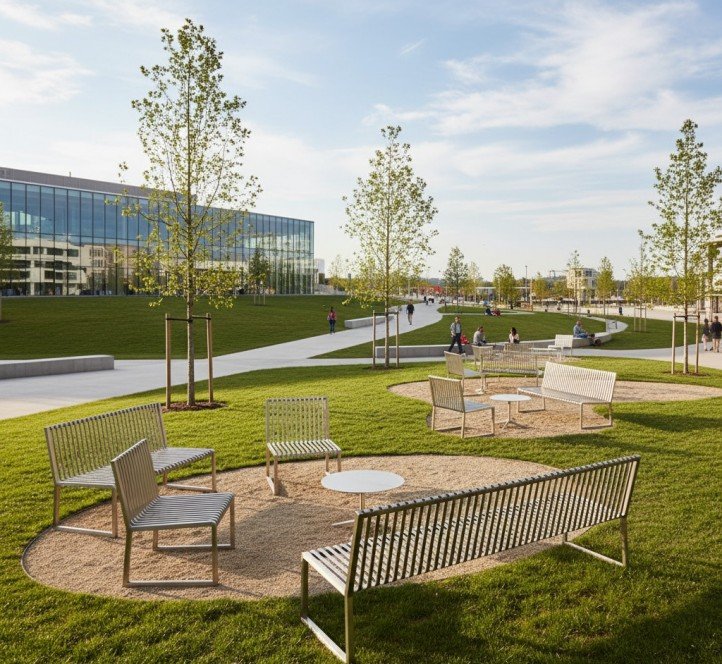 When comparing various material options, you may refer to a useful guide on materials used in outdoor furniture for a broader industry perspective. Though that article takes a more general view, it helps frame why Aluminum 6063 becomes a preferred choice in many high-end outdoor furniture systems.
Frequently Asked Questions (FAQ)
(Use FAQ schema markup for SEO “People Also Ask” potential)
What are the main differences between Aluminum 6063 and 6061?
- Alloy focus: 6063 emphasizes extrudability, surface finish, and moderate strength; 6061 prioritizes higher strength and structural usage.
- Mechanical performance: 6061-T6 yields ~245 MPa (or more), while Aluminum 6063-T6 typically yields ~180 MPa. (Hentec Industry Co., Ltd)
- Corrosion and weldability: Aluminum 6063 often offers better surface finish and less risk of stress corrosion cracking in mild environments; 6061 is slightly less corrosion tolerant in certain conditions.
- In outdoor furniture, Aluminum 6063 is preferred when appearance and longevity matter and extreme loads are moderate; 6061 might be used when heavy structural loads are needed, but often with more complementary treatments.
How long can 6063 outdoor furniture typically last?
With proper specification and treatment:
- In benign inland climates: 15–25 years or more (relying on anodizing or powder coating).
- In coastal or high-salt environments: 8–15 years, depending on coating thickness, maintenance, and design detailing.
- In accelerated lab tests (salt spray), Aluminum 6063-T6 retains > 90 % of strength after 500–1,000 hours of exposure, per published corrosion studies. (ResearchGate)
The actual lifespan always depends on usage conditions, coating care, design detail, and maintenance.
How to distinguish between T5 and T6 temper on 6063 profiles easily?
- Marking: Most qualified extruders will stamp or mark the temper (e.g., “6063-T5” or “6063-T6”) on the profile.
- Certification: Check the material test certificate (MTC) for temper designation and mechanical properties.
- Hardness test / mechanical test: A quick hardness or small tensile coupon test can differentiate them.
- Flexibility: T5 is easier to bend or straighten post-fabrication; if profiles show some controlled flex without cracking, that may suggest T5.
- Secondary machining sensitivity: When machining or bending, T6 tends to be slightly less forgiving to minor local deformations.