Introduction:
Does aluminum outdoor furniture get hot? Yes-aluminum surfaces warm up in direct sun, but they shed heat quickly once you add shade or wind. Color, coating, airflow, and layout control how hot they feel to your hand. In this guide, you’ll learn:
- What makes aluminum heat up and cool down?
- Real-world surface temperature ranges in common summer settings.
- How aluminum compares with steel, wood, resin/HDPE, and wicker.
- Practical ways to keep seats and armrests comfortable all summer.
[More: Outdoor Furniture Materials at a Glance]
Why Aluminum “Gets Hot”
Material properties
Aluminum spreads heat fast across the piece (high thermal conductivity) and does not store as much heat per pound as some dense metals. Translation for comfort: it can feel hot after direct sun, yet cools fast when clouds or a breeze arrive.
Color and powder-coat finish
Darker, glossier colors absorb more solar energy; light, matte/texture powder coats reflect more sunlight. Two optical terms matter:
- Solar reflectance (SR): how much sunlight the surface reflects.
- Thermal emittance (TE): how well the surface releases heat it has absorbed. Look for high SR + high TE finishes and “cool color” pigments in architectural powder coats.
External reference: • EPA – UV Index basics • LBNL Heat Island Group – Cool Materials & Reflectance
Design & mass
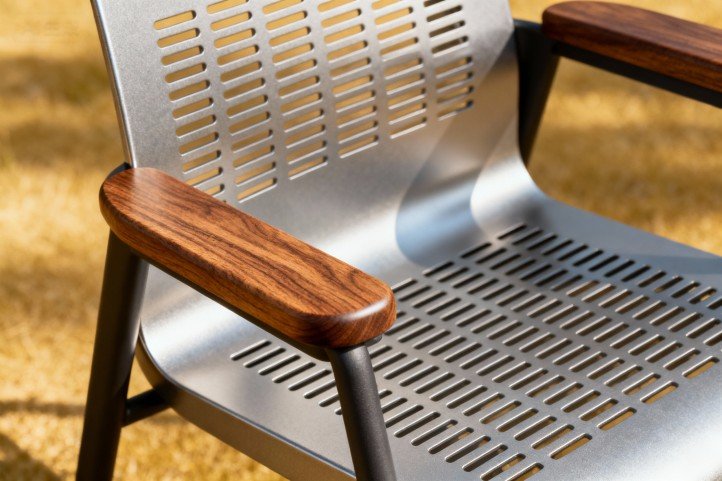
Arm caps, open weaves, slats, and vented backs promote airflow and reduce heat buildup. Thick, solid plates store more heat; perforations, ribs, and open frames store less and cool faster.
Environment
Midday summer sun with a high UV Index is the toughest. Wind speeds up convective cooling. Bright paving or pool water nearby can reflect light and nudge temperatures upward. Internal
Happy Rattan Engineer’s tip: Ask suppliers about SR/TE values or “cool pigments.” Coatings with higher near-infrared reflectance can drop sunlit surface temperatures while keeping your chosen color tone. External reference: LBNL – Cool Pigments Overview
Real-World Temperature Expectations
If you’re asking, does aluminum outdoor furniture get hot in typical summer sun, here’s the range you can expect. Numbers vary with latitude, UV, wind, color, coating, and how you measure.
Quick home test (3 steps)
- Place your aluminum chair in full sun for 60 minutes around local noon.
- Measure the armrest and seat with an IR thermometer (or touch very briefly).
- Note color/finish, wind, ground (grass vs. stone), and UV Index (see EPA link above).

Typical ranges you may see
Convert and publish this as a table + PNG figure for mobile.
| Scenario (60-90 min) | Finish/Color | Light breeze? | Seat/Armrest Surface Temp |
|---|---|---|---|
| Clear summer midday, full sun | Light, textured powder coat | No | 95-110°F (35-43°C) |
| Clear summer midday, full sun | Dark, smooth/gloss | No | 115-140°F (46-60°C) |
| Same as above | Either | Yes (~5-10 mph) | Typically 5-12°F (3-7°C) lower |
| Partial shade / high overhang | Any | Yes/No | Often 10-20°F cooler than full sun |
What those numbers feel like
- <104°F (40°C): warm; often fine for brief contact.
- 104-122°F (40-50°C): hot; use a cushion or towel.
- >122°F (50°C): very hot; add shade/mist before use.
Method note: Values measured at seat/armrest on powder-coated aluminum with a consumer IR thermometer; ±2-3°C variance is normal.
Aluminum vs. Other Outdoor Materials
| Material | Sunlit temperature tendency* | Cool-down speed | Touch feel | Maintenance | Typical price |
|---|---|---|---|---|---|
| Aluminum (powder-coated) | Dark > light; texture runs cooler | Fast (spreads/rejects heat quickly) | Can feel hot, then cool fast | Low (wash & inspect coating) | $$ |
| Steel/Wrought iron | Similar absorption by color | Slower (more mass) | Can stay hot longer | Medium (rust risk) | $$ |
| Wood (teak/cedar) | Usually cooler to touch | Moderate | “Warm,” not hot (finish matters) | Higher (oil/clean) | $$$ |
| Resin/HDPE | Light colors are cooler | Moderate | Softer touch; dark, solid tops can heat | Low | $-$$ |
| Wicker (PE rattan over aluminum) | Surface strands feel cooler; frame still heats | Fast | Comfortable; cushions help | Low-Medium | $$ |
*All materials heat up in the strong sun. Color, finish, and design often matter more than base material.
[More: PE Rattan vs. Natural Rattan-Which to Choose?]
Cooling and Comfort Playbook
Use layered steps. Start with finish/color, then design, then daily use.
Choose lighter, textured powder coats
Pick light neutrals (sand, linen, stone, pale gray) and matte/texture over deep gloss. Ask whether the finish uses cool-pigment technology or states SR/TE values.
Design details that cut heat
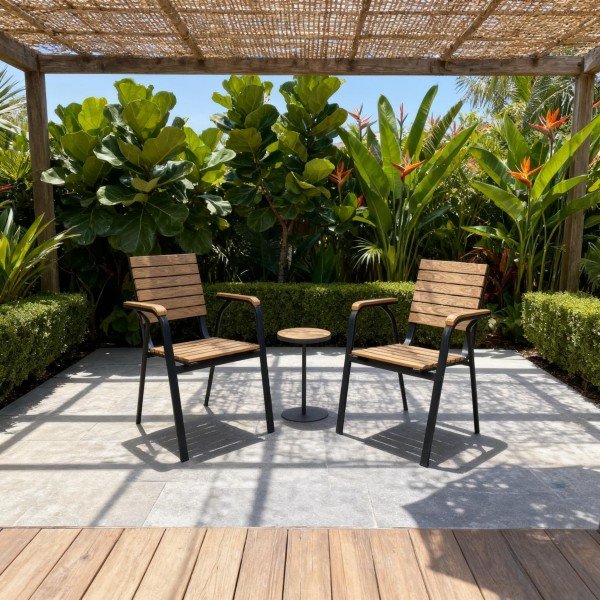
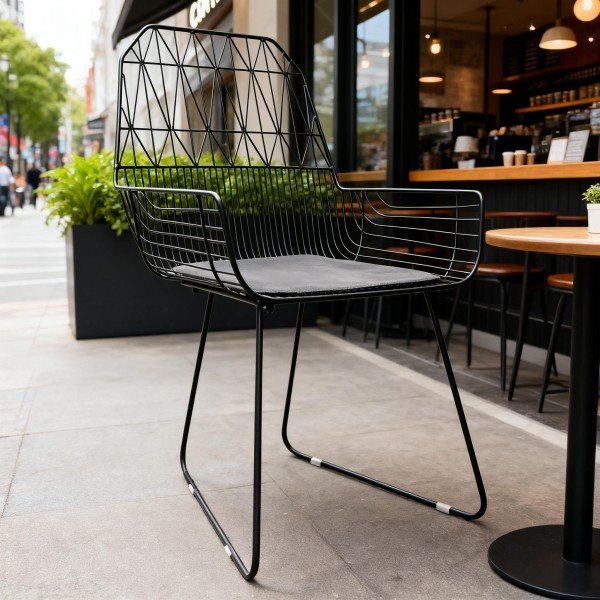
- Vented seats and backs, slatted tops, or woven elements increase airflow.
- Arm caps in wood, resin, or fabric sleeves keep touch points comfortable.
- Avoid large, flat, dark metal tabletops in full sun with no shade.
Accessories with immediate impact
- Quick-dry cushions (breathable covers + drainable foam).
- Table runners/placemats to break up large metal surfaces.
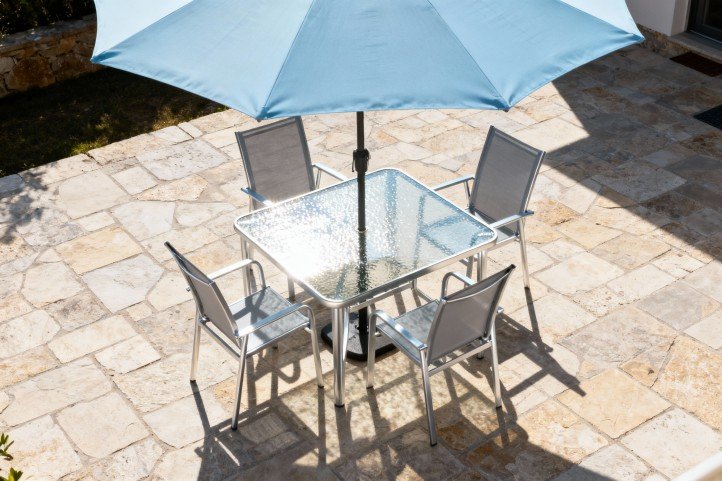
- Umbrellas, pergolas, or sails sized to cover seating during midday.
30-second cool-down flow (SOP)
- Shade first (umbrella/pergola/sail).
- Mist seat/armrest lightly or cover with a damp towel.
- Wait 30-60 seconds for convection/evaporation.
- 10-second touch test before sitting.
[More: Quick-Dry Foam Guide]
Expert guidance on climate
- Desert & high UV: Light textured finish + deep shade 11 am-3 pm.
- Coastal: Same as above, plus rinse salt film to keep reflectance high.
- Humid subtropical: Promote airflow under cushions; pick breathable covers.
Buying Guide-How to Choose Aluminum
When you shop online or in person-use this checklist. If getting aluminum outdoor furniture get hot is your top concern, prioritize light, textured finishes, and shade-ready layouts.
Finish & color
- Ask about architectural powder-coat programs (e.g., QUALICOAT) that include weathering/corrosion testing.
- Prefer light, matte/texture finishes; avoid dark, glossy solids for big surface areas.
External reference: QUALICOAT – Quality Label for Architectural Coatings
Structure & ergonomics
- Arm coverage (wood/resin caps), rounded edges, vent holes/slats for airflow.
- Balanced mass: strong enough for durability, not so massive that it stores heat for long.
Bundle the right accessories
- Breathable, quick-dry cushions, removable arm sleeves, properly sized umbrella.
Common pitfalls to avoid
- All-metal dark dining tables on bright stone with no overhead shade.
- Overstuffed, non-breathable cushions that trap heat and moisture.
[More: Patio Table Sizes & Seat Count Reference]
Real-world example: A hotel switched from dark, smooth powder-coated lounge frames to textured sand and added 9-foot umbrellas. Guest “hot touch” complaints dropped on similar UV days-thanks to higher reflectance + shade.
Maintenance Also Affects Comfort
Heat comfort improves when coatings stay clean and intact.
Cleaning cadence
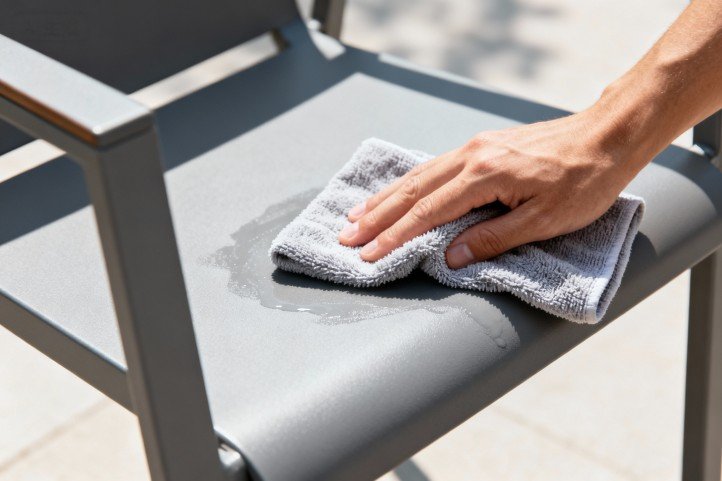
Rinse and wipe with a mild soap. Dust, pollen, and salt film can darken surfaces and increase heat absorption. Inspect for nicks/scratches; touch-up keeps reflectance steady and prevents corrosion on mixed-metal parts.
Seasonal strategies
- High-UV months: use covers or store during peak hours if you won’t use the set.
- Stormy seasons: secure umbrellas and light frames; avoid thermal shock on glass tops.
External reference: NOAA – UV and Sun Safety Basics
Myths vs. Facts
| Myth | Fact | What to do |
|---|---|---|
| “Aluminum is always the hottest.” | Color/finish dominates. Light-textured aluminum can run cooler than dark resin or steel. | Choose light/matte finishes; add shade. |
| “Thicker metal stays cooler.” | More mass stores more heat and can cool more slowly. | Balance durability with vented designs. |
| “A cushion solves heat no matter what.” | Dark, non-breathable cushions can warm up too. | Use breathable, light-colored covers + quick-dry foam. |
Conclusion
To answer the core question—does aluminum outdoor furniture get hot? — Yes, in full sun it can. But with light, textured coatings, vented designs, breathable cushions, and reliable midday shade, most users in hot climates keep touch temperatures comfortable while enjoying aluminum’s low maintenance and rust-free benefits.
Quick decision flow: High UV → light textured finish + vented seat + umbrella/pergola + quick-dry cushions. Coastal → add regular rinse to remove salt film.
[More: Balcony & Terrace Layout & Flow Guide]
FAQ
Q1: Does aluminum outdoor furniture get hot in direct sun?
A: Yes. In strong midday sun, light textured finishes often reach 95-110°F (35-43°C) after an hour; dark glossy finishes can reach 115-140°F (46-60°C). Shade and wind quickly reduce temperatures.
Q2: Which color of aluminum furniture stays coolest?
A: Lighter, matte/texture powder coats. They tend to have higher solar reflectance and good thermal emittance, so they run cooler in full sun. Ask about “cool-color” pigments.
Q3: Aluminum vs. wicker: which feels cooler to the touch?
A: Wicker (PE rattan) surfaces often feel cooler because thin strands and gaps ventilate well. But exposed metal arms or tabletops are still heated by color/finish. Aluminum cools fast once shaded.
Q4: How do I cool metal patio chairs quickly?
A: Move into shade, mist lightly, or drape a damp towel over hot areas, wait 30-60 seconds, then do a 10-second touch test before sitting.
Q5: Is aluminum cooler than steel?
A: In similar colors/finishes, both heat up. Aluminum often cools faster due to its typical section mass and its ability to spread and release heat quickly.