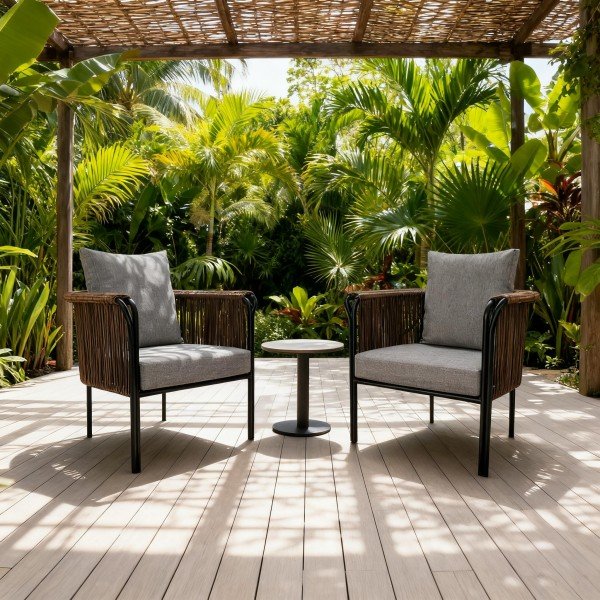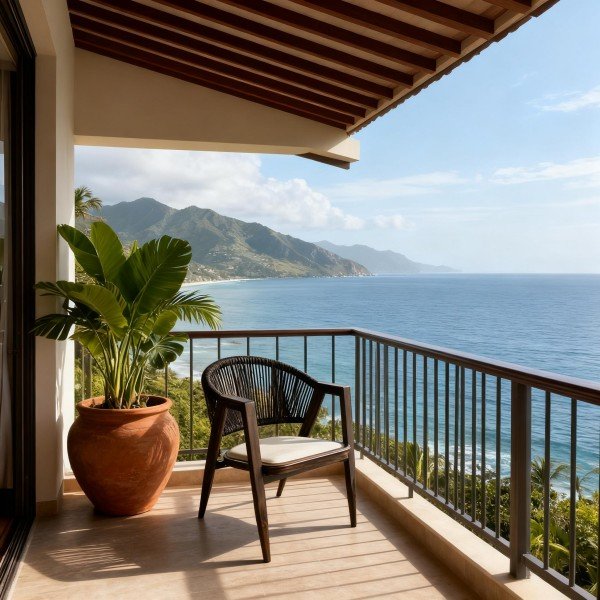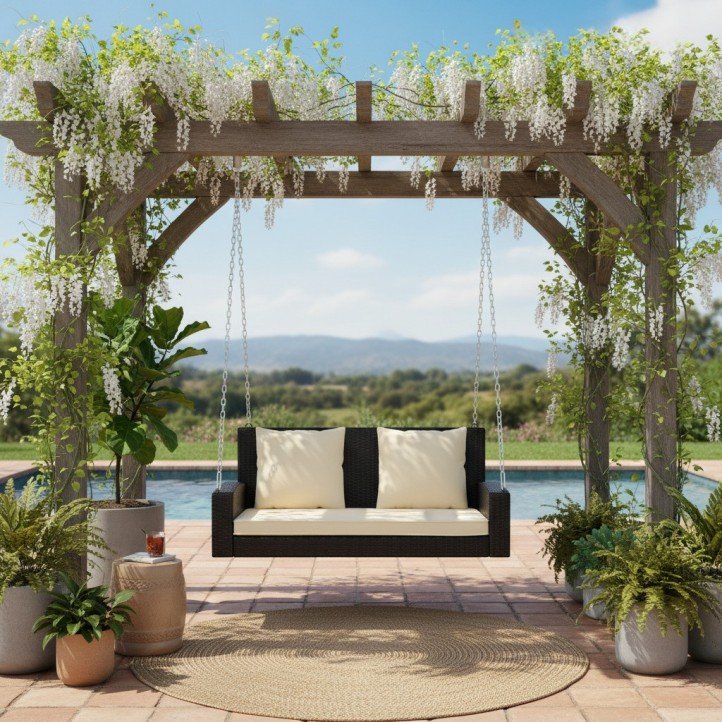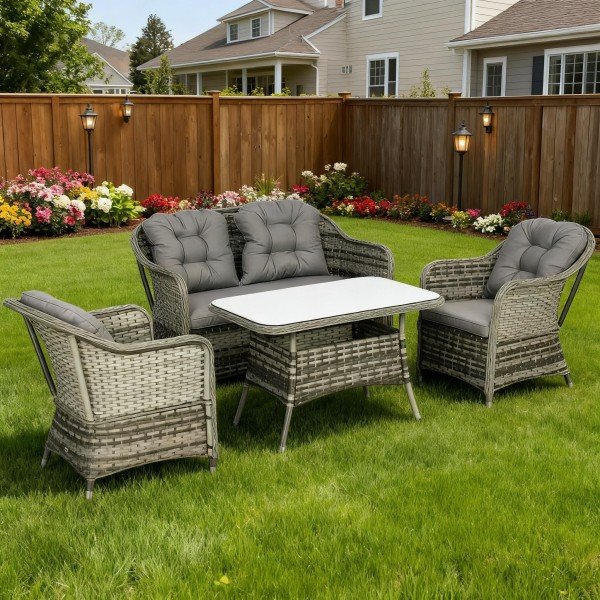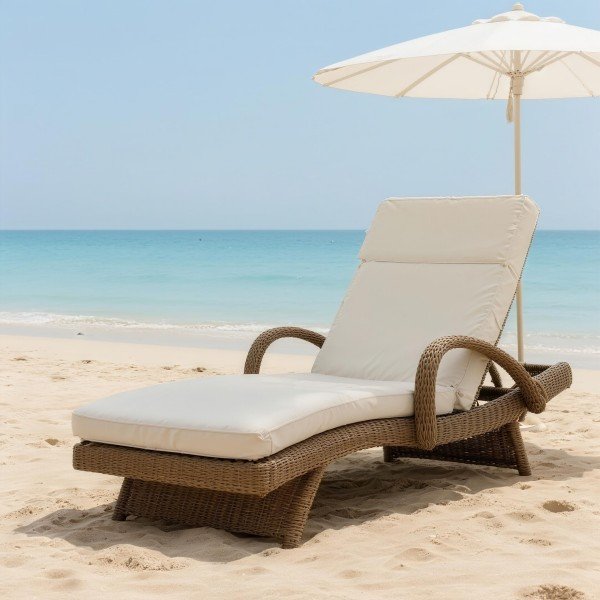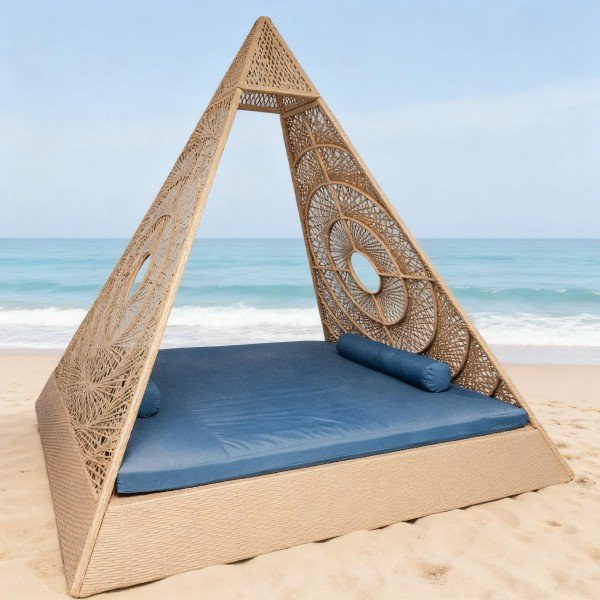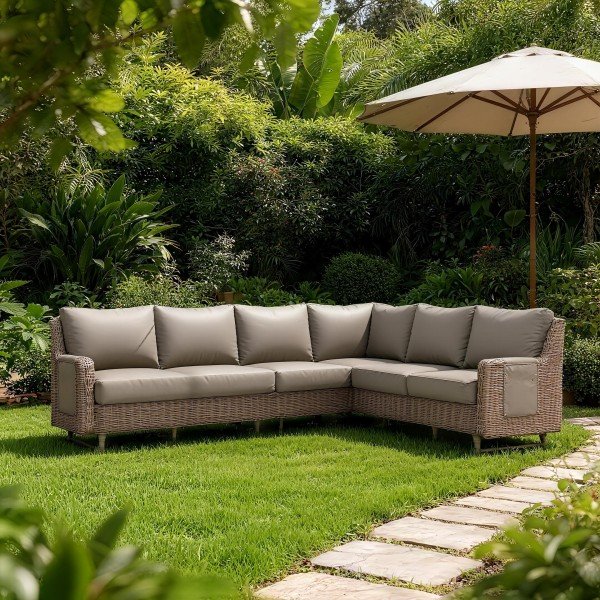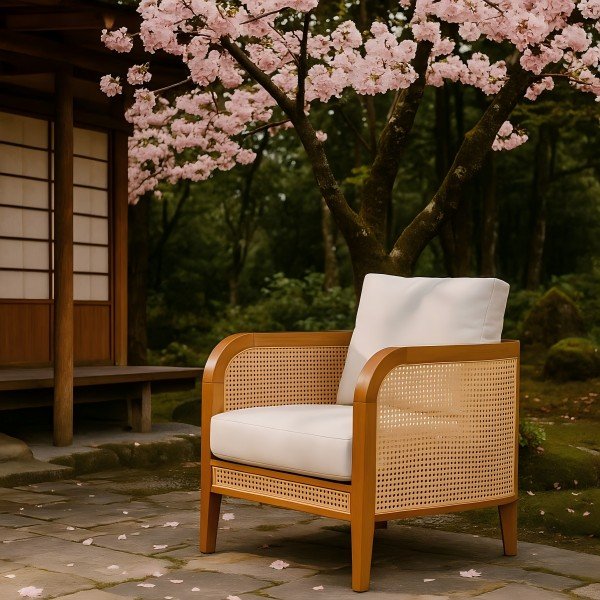
Why “PE Rattan vs Rattan” matters in 2025
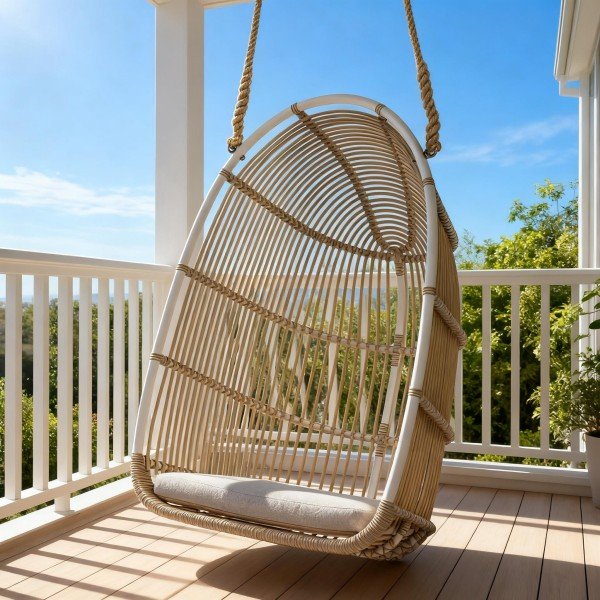
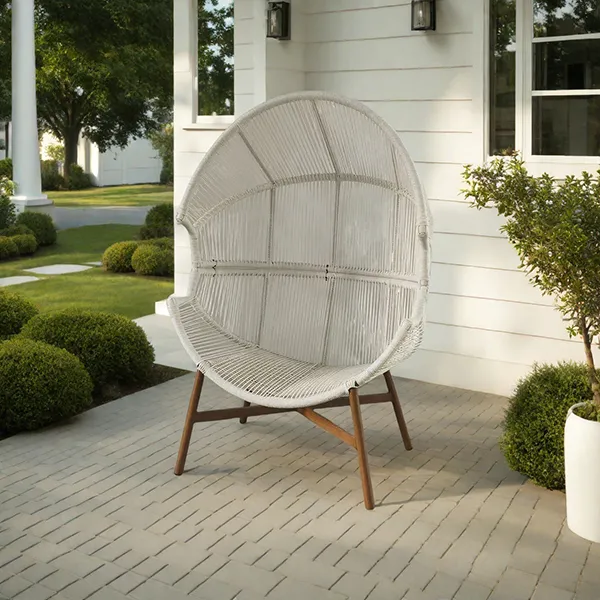
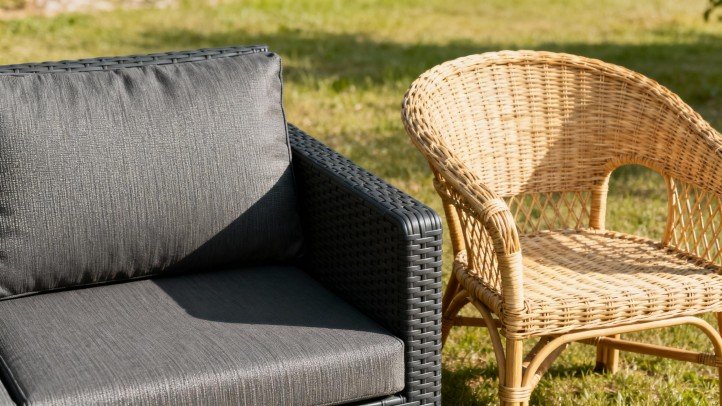
“Rattan furniture” now spans two very different materials. Rattan (the real, plant-based cane) offers organic warmth and craftsmanship. PE rattan (also called synthetic rattan or all-weather wicker) is an engineered HDPE fiber designed to look like cane yet resist sun, rain, and salt. If you’re furnishing an uncovered deck, a covered balcony, or high-turnover hospitality space, understanding PE Rattan vs Rattan up front prevents mismatches and reduces long-term cost.
Authoritative background on natural rattan comes from INBAR – International Bamboo and Rattan Organisation and FAO’s rattan overview. Outdoor durability for PE rattan is driven by UV stabilization packages (UVA absorbers + HALS) described by polymer suppliers such as BASF – Light Stabilizers for Plastics, and is often validated via ASTM G154 accelerated weathering.
[For more information, please read: Why Rattan Furniture Is Outdoor Retail’s Best-Selling Category]
What each term really means
What is “Rattan” (the natural cane)?
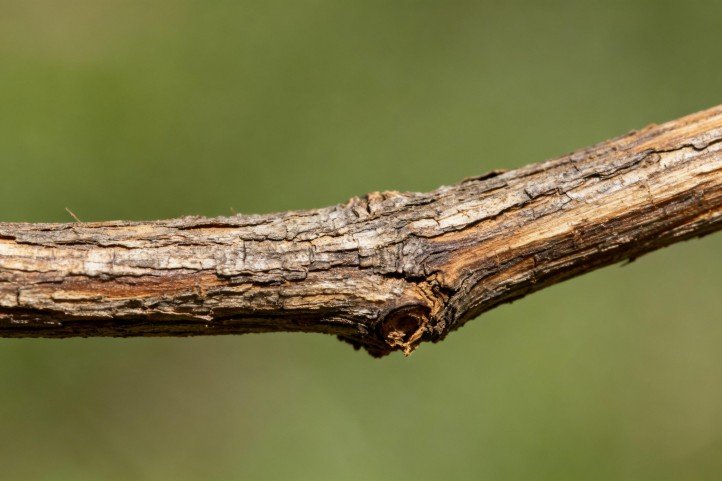
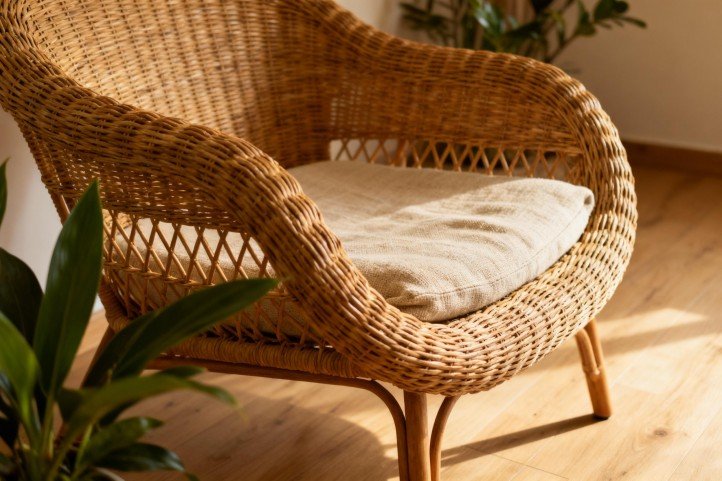
Rattan is the solid cane from climbing palms (Calamus and related genera). Its glossy outer skin and vascular bundle structure create a rare combination of flexibility and strength-ideal for hand-woven seats, backs, and frames in indoor environments. Species, diameter, and processing influence performance and patina (see FAO overview; INBAR resources). Plain-English takeaway: Real rattan is beautiful and breathable, but not an all-weather material. Prolonged wetting, high humidity, and intense sunlight can discolor, swell, or embrittle it without proper maintenance.
What is “PE Rattan” (synthetic/all-weather wicker)?
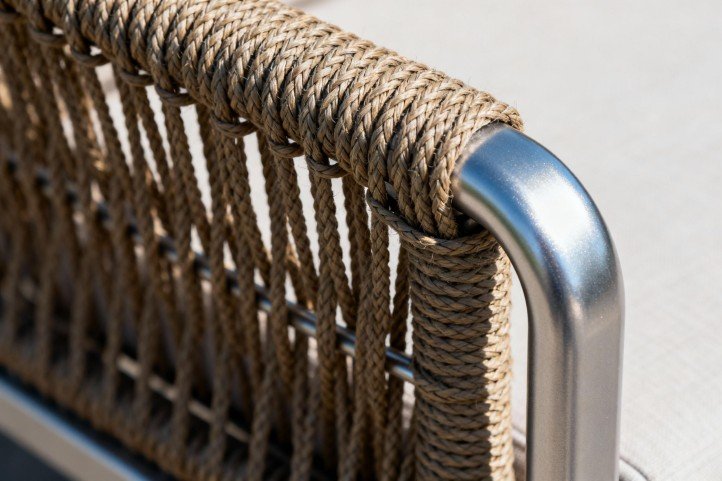
PE rattan is an extruded HDPE strand containing pigments, antioxidants, UVA absorbers, and HALS. These additives slow photo-degradation and color fade. The strands are woven over metal frames-ideally, powder-coated aluminum mimics wicker styling while tolerating outdoor exposure (see BASF – Light Stabilizers). Plain-English takeaway: PE rattan isn’t “just plastic.” Its UV stabilization + frame quality, + weave consistency determine real-world durability. Expert pro tip: Ask sellers for an ASTM G154 (or ISO 4892) test report showing exposure hours, cycle (UV/condensation), and pass/fail criteria-not merely “UV-resistant” on the label.
PE Rattan vs Rattan: the differences that actually matter
| Property | Rattan (natural cane) | PE Rattan (HDPE wicker) |
|---|---|---|
| UV/weathering | Sensitive to prolonged UV; color and strength can decline outdoors | Designed for sun/rain with proper UVA/HALS; performance varies by formulation |
| Moisture/mildew | Hygroscopic; can swell or mildew if saturated | Hydrophobic; low mildew risk on fiber; easy hose-down cleaning |
| Touch & look | Warm, organic handfeel; ages with patina | Realistic textures today; slightly cooler touch; tooling-dependent |
| Strength & fatigue | Good bending; species/diameter/craft matter | Stable when the strand spec, weave tension, and frame are well-engineered |
| Care | Gentle vacuum/soft brush; avoid soaking; manage humidity | Mild soap + rinse; periodic breathable covers reduce UV load |
| Sustainability & end-of-life | Biogenic; finishes/glues complicate recycling | HDPE is recyclable (#2) in principle; real-world rates vary – see EPA plastics data |
| Best use cases | Indoor styling, covered verandas, boutique hospitality | Uncovered outdoors, coastal decks, poolside, high-turnover hospitality |
Why these differences are credible: HDPE weathering performance is tied to polymer photochemistry and stabilizers; see BASF on light stabilizers and ASTM G154. For rattan’s anatomy and processing, see FAO and INBAR. For mechanism-level insights, review polyethylene weathering research (ScienceDirect).
Use cases: who should choose what
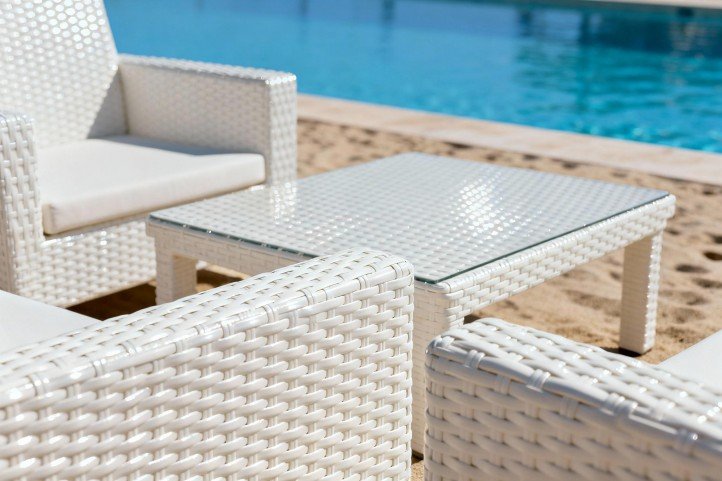
Uncovered outdoors (full sun/rain, coastal, poolside)
- Choose: PE rattan on powder-coated aluminum frames.
- Why: UV-stabilized HDPE strands resist sun, chlorine, and salt spray; aluminum avoids rust. Request ASTM G154 data and ask about powder-coat pretreatment steps.
- Cushions: Solution-dyed acrylic or premium olefin with UV inhibitors.
- Maintenance: Rinse, mild soap, breathable covers during heatwaves.
Covered patios & balconies (partial sun, wind-driven rain)
- Either can work depending on your tolerance for care.
- Pick PE rattan for low-effort living and splash resistance.
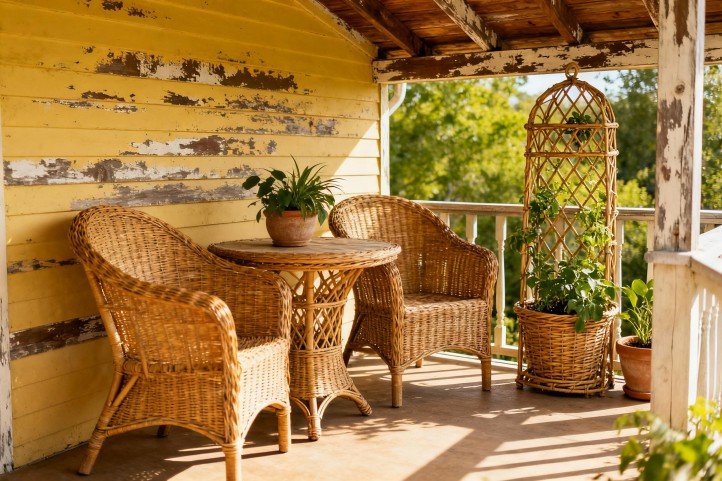
- Pick rattan for warm, organic texture-but keep it under roof, away from dew, and dry it promptly after accidental wetting.
Indoors & boutique hospitality
- Rattan excels in lounges, lobbies, and bedrooms-its grain and handfeel are hard to replicate.
- PE rattan suits foyers, cafés, or spa areas where spills/mopping are frequent and durability beats patina.
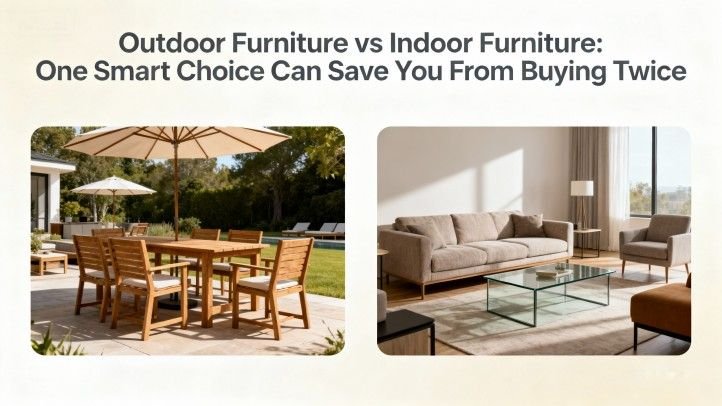
[You can read this article if you are looking for indoor or outdoor sofas.]
Total Cost of Ownership (TCO): 5-10 year view
TCO formula [ \text{TCO} = \text{Purchase price} + \text{Consumables} + \text{Covers/Storage} + \text{Maintenance time cost} + \text{Replacements} ]
- Maintenance time cost = (hours per year) × (your hourly value).
- Numbers below are illustrative mid-market ranges for a 4-seat conversation set; actual quotes vary by region/brand/spec.
Assumptions (illustrative)
- PE rattan set (aluminum frame): $1,000 purchase; lifespan 8-10 years uncovered with good stabilization; maintenance ~3 h/yr; covers $70/yr; consumables negligible.
- Rattan set (indoor/covered): $1,100 purchase; lifespan 12-20 years indoors with care; not recommended fully uncovered; maintenance ~6 h/yr; consumables (gentle cleaner/finish touch-ups) $20/yr; covers $40/yr if near windows/porch.
- Durability logic: polymer stability with UVA/HALS and validation via ASTM G154; rattan fundamentals via FAO & INBAR.
Scenario A – Uncovered outdoor (sun + rain), 5-year TCO
- PE rattan
- Purchase: $1,000
- Covers: $70 × 5 = $350
- Maintenance time: 3 h/yr × $20 × 5 = $300
- Consumables: ≈ $0
- Replacement: none in 5 yrs (decent spec assumed)
- 5-yr TCO = $1,650
- Rattan
- Not recommended outdoors; premature failure/replacement likely within ~2 years if fully exposed.
- If attempted: Purchase $1,100 + early replacement $1,100 + extra time 10 h/yr × $20 × 5 = $1,000 + covers $200 ≈ $3,400
- 5-yr TCO (attempt) ≈ $3,400
Takeaway: In open weather, PE rattan TCO is ~50% or less of rattan because cane isn’t engineered for that environment.
Scenario B – Covered balcony/patio, 5-year TCO
- PE rattan: $1,000 + (covers $40 × 5 = $200) + (time 2 h/yr × $20 × 5 = $200) → $1,400
- Rattan: $1,100 + (consumables $20 × 5 = $100) + (covers $40 × 5 = $200) + (time 6 h/yr × $20 × 5 = $600) → $2,000 Result: PE rattan still wins for low-effort ownership; rattan is viable if you prize its look and accept routine care.
Scenario C – Indoors (homestay lounge), 10-year TCO
- PE rattan: $1,000 + (time 1 h/yr × $20 × 10 = $200) → $1,200
- Rattan: $1,100 + (consumables $20 × 10 = $200) + (time 3 h/yr × $20 × 10 = $600) → $1,900. Result: Indoors, rattan lasts long and looks fantastic, but PE still wins on pure cost. Pick by aesthetic, brand story, and maintenance appetite.
Quick calculator (copy & adapt):
- Your TCO (5 yrs) Purchase + Covers (annual × 5) + Consumables (annual × 5) + (Annual hours × hourly value × 5) + Expected replacements
How to buy like a pro (checklist)
For PE rattan (outdoor sets)
- Fiber: Look for HDPE with UVA/HALS stabilization (see BASF – Light Stabilizers).
- Weathering data: Request ASTM G154 or ISO 4892 report with exposure hours and pass/fail criteria.
- Frame: Powder-coated aluminum; confirm pretreatment and coating thickness.
- Weave quality: Even tension, smooth cut ends, tight radii at corners.
- Cushions: Solution-dyed acrylic or premium olefin; quick-dry foams for wet zones.
For rattan (indoor/covered)
- Species/grade: Consistent cane diameter and intact outer skin (see FAO rattan overview; INBAR).
- Finish: Breathable topcoat; avoid heavy film finishes outdoors.
- Use-zone limits: Indoors or well-covered verandas; avoid dew, keep dry.
- Care: Gentle vacuum/soft brush; prompt drying; humidity control.
Care, cleaning & storage
Rattan (natural)
- Dust weekly with a soft brush; vacuum woven crevices.
- Spot clean only with a barely damp cloth; avoid soaking; dry quickly with moving air.
- Humidity & light: Avoid prolonged high humidity and harsh sun; rotate pieces near windows.
PE rattan (synthetic)
- Rinse with a hose; mild soap for grime; soft brush for weave texture.
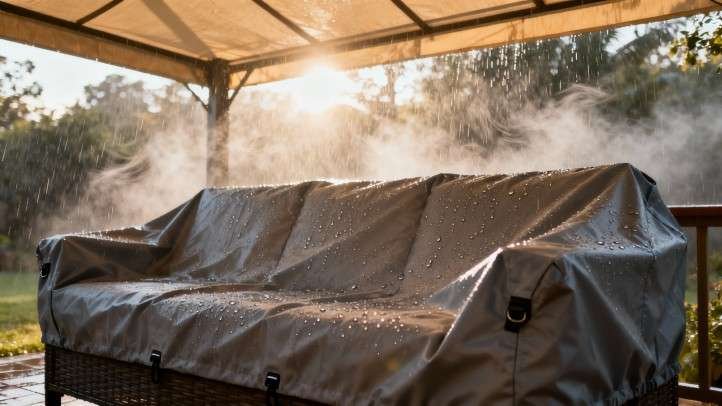
- Covers during heatwaves, storms, or long absences reduce UV load and keep cushions clean.
- Salt/chlorine: Rinse after pool or sea-spray exposure.
[Please read this article if you want to create a maintenance checklist for outdoor furniture.]
Helpful video:
Conclusion: Who should pick what (PE Rattan vs Rattan)
PE Rattan vs Rattan comes down to exposure and effort.
- Garden/pool & coastal homes: Choose PE rattan on aluminum for the lowest TCO and the fewest headaches outdoors; ask for ASTM G154 evidence.
- Homestay operators / interior designers: For indoor warmth and boutique character, rattan is wonderful-keep it dry and shaded (see FAO/INBAR guidance, INBAR). For wet zones or busy balconies, switch to PE rattan.
- Balcony consumers: If the area is well-covered and you love the natural look, rattan can work with diligent care; otherwise, PE rattan is the worry-free default.
FAQ (snippet-friendly, real-user phrasing)
Q1. Is PE rattan real rattan?
A. No. PE rattan is an HDPE-based synthetic wicker designed to look like rattan and survive outdoors. Real rattan is a plant cane with a warm, organic feel-best indoors or under cover. (See FAO rattan overview.)
Q2. How long does PE rattan last outside?
A. With the right UVA/HALS stabilization and decent frames, many sets provide multi-year service (often 8-10 years) when cleaned and covered in harsh spells. Ask for ASTM G154 test evidence.
Q3. Can I put rattan on an uncovered deck?
A. It’s not recommended. Sun + rain + dew can cause swelling, discoloration, and brittleness. Keep rattan indoors or covered, and dry it promptly after spills.
Q4. Is PE rattan eco-friendly?
A. The HDPE resin is recyclable (#2) in principle, but actual recycling rates depend on local programs and may be modest-see EPA plastics data.
Q5. What should I ask a seller before buying?
A. For PE rattan: HDPE grade, UVA/HALS used, ASTM G154 results, and aluminum frame spec. For rattan: species/grade, finish system, and explicit use-zone limits (indoor/covered). (Background: INBAR; FAO.)