Introduction
Keeping patio cushions fresh isn’t just about looks; it’s about comfort, hygiene, and getting full value from your outdoor furniture investment. In this guide, you’ll learn how to clean outdoor cushions step-by-step, when to deep clean versus spot clean, how to remove mildew safely, and the smartest ways to dry and protect cushions so they last for seasons. Expert note (HAPPY RATTAN Service Team): Most cleaning failures come from two mistakes-not rinsing thoroughly and not drying fully. Both leave residue and moisture that cause rapid re-soiling or mildew rebound.
Know Your Cushion
Before you touch a cleaner, read the care label. Fabric type and construction determine your safest path:
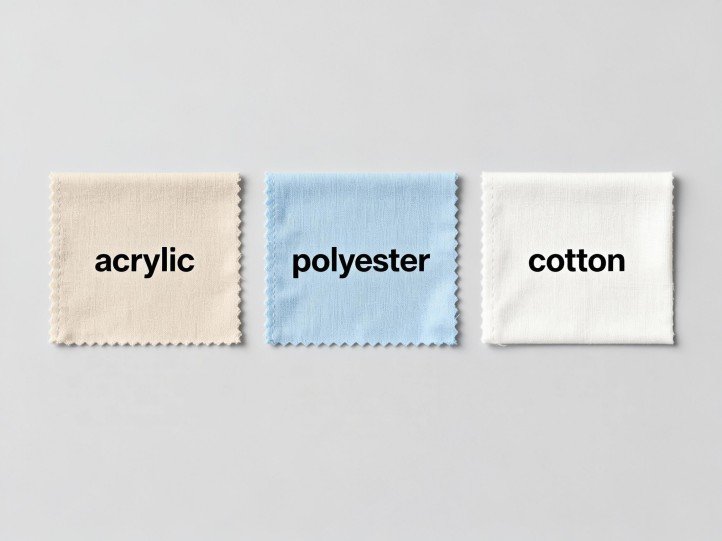
- Solution-dyed acrylic (e.g., Sunbrella®): color is in the fiber; highly UV-resistant; tolerates properly diluted chlorine bleach for mildew when thoroughly rinsed. See the official guidance from Sunbrella: How to Clean Sunbrella Upholstery and the broader How to Clean Sunbrella Fabrics.
- Polyester / Olefin: durable and fast-drying; generally responds well to soap-and-water, but long exposure to strong oxidizers can weaken fibers-spot-test first.
- Cotton blends/canvas: comfortable hand feel, but more prone to mildew and shrinkage; prioritize gentle detergents and quick drying.
- Construction: Removable covers can sometimes be machine-washed (delicate, cold, air-dry); fixed cushions require surface cleaning and careful moisture control. For Sunbrella® upholstery, many casings are machine-washable when labeled-see: Can I machine wash Sunbrella fabric?
Quick comparison table – fabric vs. approach
| Fabric | Everyday method | Mildew plan | Big caveats |
|---|---|---|---|
| Solution-dyed acrylic | Mild soap + soft brush + rinse | Diluted bleach per Sunbrella guide, then rinse thoroughly; air-dry | No tumble-dry; follow Sunbrella instructions |
| Polyester / Olefin | Soap & water; prompt drying | Try oxygen-based first; bleach only if the label allows | Oxidizers can weaken fibers-spot test |
| Cotton/canvas blends | Gentle detergent; quick sun-dry | Prefer non-chlorine options; test first | Shrink & dye-bleed risk |
| Vinyl-coated/others | Mild detergent; wipe | Avoid harsh solvents; follow label | Solvents can craze/coarsen the surface |
Your Routine Cleaning
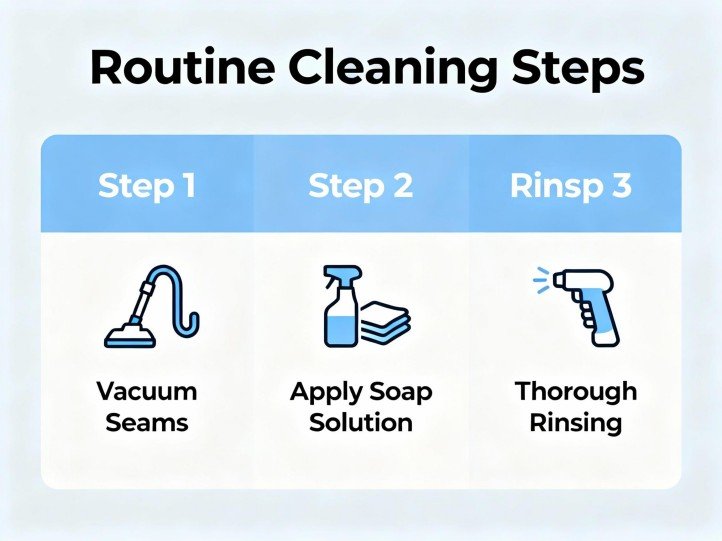
Tools: soft-bristle brush, bucket, mild dish soap, garden hose, microfiber towel, vacuum with upholstery tool.
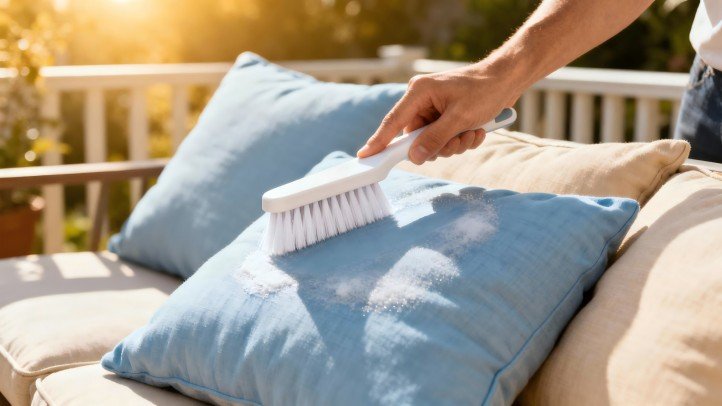
- Dry prep: Shake out, then vacuum seams and buttons to remove grit.
- Soap solution: Mix mild dish soap in lukewarm water (about 1 tsp per cup). Spray or sponge over the surface. For performance acrylics like Sunbrella, the baseline is mild soap + soft brush, followed by thorough rinse and air dry-see: Sunbrella Upholstery Cleaning.
- Light agitation: Brush in straight lines (not circles) from seam to seam to avoid rings (also recommended here: Commercial Sunbrella cleaning note).
- Rinse thoroughly: Residue attracts soil and can irritate skin-rinse until runoff is clear (Sunbrella guide).
- Dry fast: Stand cushions on edge in the sun with an air gap; flip once during drying.
Pro tip: For oily drips (sunscreen), dust with cornstarch first to absorb, then clean with soap and water-explicitly recommended by Sunbrella (Cleaning Guide and How to Clean Sunbrella Upholstery).
Deep Cleaning by Problem Type
Grease, sunscreen, and picnic stains
- First aid: Blot oils, apply cornstarch/baking soda for 10-15 minutes, scrape off, then wash. See Sunbrella’s stain guidance: Sunbrella Cleaning Guide.
- Escalate carefully: Use a degreaser rated safe for textiles; always spot-test.
Mildew or Mold
Mildew thrives on dirt and moisture trapped in fabric. For many performance acrylics, diluted chlorine bleach is effective when the label and brand allow it, followed by very thorough rinsing.
- Safer ratio & ventilation: The CDC advises using no more than 1 cup of household bleach per 1 gallon of water, working with good ventilation, and never mixing bleach with ammonia-see: CDC: Mold Clean-Up Guidance. The EPA also warns never to mix bleach with ammonia and reminds that dead mold still needs removal: EPA: Should I Use Bleach to Clean Mold?.
- Brand-specific guidance: Sunbrella allows up to 1 cup of bleach + 1/4 cup of mild soap per gallon of water for severe mildew on upholstery, with air drying only: Sunbrella Mold & Mildew Cleaning.
- Another reputable fabric maker’s caution: Perennials notes diluted chlorine bleach won’t affect the color of solution-dyed acrylic, but strong chemicals eventually affect fiber strength; use proper dilution and rinse thoroughly: Perennials Fabric Care and their care PDF: Perennials Care & Cleaning (PDF).
Step-by-step (for solution-dyed acrylic when label permits):
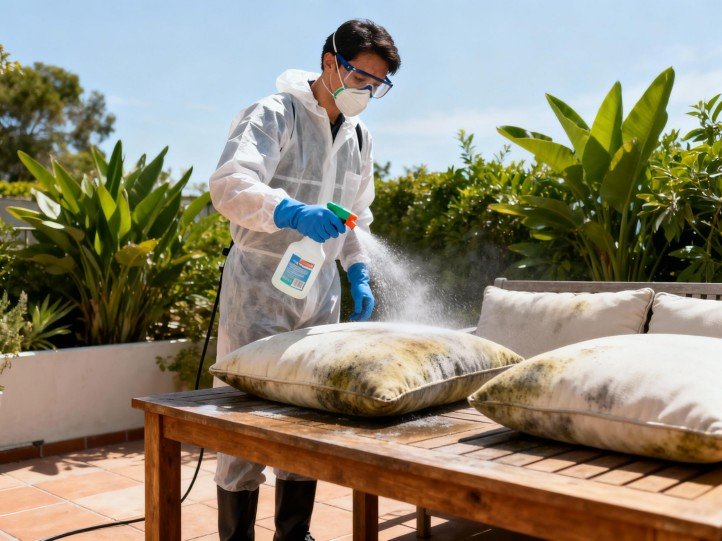
- Vacuum loose spores outdoors. 2) Spray the diluted bleach + mild soap solution; dwell 5-15 minutes. 3) Lightly brush. 4) Rinse thoroughly (seams, zippers). 5) Air dry in sun. Non-chlorine alternates: oxygen-based cleaners or hydrogen peroxide can help on fabrics where bleach is disallowed (consumer how-tos like The Spruce show oxygen-based options and ratios: The Spruce: How to Clean Outdoor Cushions).
Safety checklist (don’t skip): ventilate, wear gloves/eye protection, never mix bleach with ammonia, protect nearby plants (wet them first and/or cover), and manage runoff away from waterways. References: CDC: Mold Clean-Up • EPA: Bleach Advisory
Tree sap, bird droppings, wine & coffee
- Sap: Soften with a compatible solvent if your fabric’s stain chart allows it, then soap-and-water and full rinse. See examples in the Sunbrella Cleaning Guide.
- Bird droppings & acidic organics: Pre-rinse, then mild soap; repeat cycles, beat aggressive scrubbing on woven fabrics. The Spruce’s stain section gives quick kitchen-cupboard recipes: How to Clean Outdoor Cushions.
Should you use a pressure washer?
You’ll find mixed advice. Some guides show it can help when used correctly at low pressure and distance (see The Spruce’s method and distance guidance: Power-wash method). Others warn it can blow seams and force water into foam, inviting mildew; Bob Vila advises against high-pressure water on fabric furniture in general: 14 Things You Should Never Clean With a Pressure Washer. If you try, use a wide fan tip, gentle setting, 12-18 in (30-45 cm) away, and keep the spray moving-and only when the label permits.
Drying That Actually Prevents Mildew
- Squeeze, don’t wring: After rinsing, press cushions between towels or by hand to expel water without distorting seams.
- Stand on edge in sunshine with airflow underneath; flip once midway.
- No tumble dryer for most performance fabrics-air dry per brand guidance (see Sunbrella Upholstery Cleaning).
Re-Proofing & Protection
After multiple deep cleans or at season’s end, you may want to refresh water repellency. Brands recommend applying a compatible fabric protector/repellent once the fabric is fully dry, outdoors, per label instructions (see Sunbrella: How to Clean Sunbrella Fabric). Tips: apply in light, even coats; allow curing time; avoid overspray on decks/glass.
Eco & Family-Friendly Options
If you have kids, pets, or sensitivities, look for cleaners with the EPA Safer Choice label. The program screens ingredients for human and environmental safety; you can also search certified products here: EPA: Safer Choice and the Safer Choice Product Finder. Still read your cushion label and spot-test-“safer” doesn’t mean universally suitable. Prefer fragrance-free products where allergies are a concern.
[If you’re looking for a pet-friendly sofa, you can check out Happy Rattan’s guide to choosing a pet-friendly sofa.]
Troubleshooting & When to Replace
- Persistent musty odor even after sun-drying and proper bleach/oxygen cycles? The foam core may be colonized-consider replacing inserts.
- Crumbling foam, seam failure, or UV chalking on fabric? Re-cover or replace.
- Economics: If labor + chemicals + risk exceed 50% of replacement cost, it’s time to upgrade.
[See also: Outdoor cushion foam density]
A Seasonal Action Plan
- Monthly (in season): dry brush + vacuum seams, soap-and-water wipe, fast sun dry (15 mins).
- After storms/heavy use: spot clean immediately; ensure full drying within 24 hours.
- End of season: deep clean per fabric, air dry fully, re-proof if needed, store in a dry, ventilated bin.
- Pre-season refresh: quick wash + inspection of seams/foam; treat any small mildew spots using ratios from the CDC and brand guidance from Sunbrella or Perennials.
Quick Reference Tables
Table 1 – Stain & Solution Matrix
| Stain type | First move | Cleaner | Notes |
|---|---|---|---|
| Mildew (on acrylic) | Vacuum spores outdoors | Soap + ≤1 cup bleach/gal water | Ventilate, never mix with ammonia; rinse thoroughly; air dry. Sources: CDC • Sunbrella |
| Sunscreen/oil | Blot, dust with cornstarch | Mild soap | Absorb first; avoid scrubbing; rinse. Sunbrella Cleaning Guide |
| Wine/coffee | Cold water flush | Mild soap; repeat cycles | Avoid heat; multiple light passes |
| Bird droppings | Pre-rinse off solids | Mild soap (repeat; avoid grinding into weave) | Rinse thoroughly; see The Spruce |
| Tree sap | Soften with a compatible solvent | Then soap-and-water | Follow fabric chart; spot-test (Sunbrella Guide) |
Table 2 – Drying & Storage Cheatsheet
| Task | How | Why |
|---|---|---|
| Quick-dry | Stand on edge, full sun, airflow under | Drains fast; discourages mildew |
| Overnight | Bring indoors or under cover | Night humidity slows drying |
| Storage | Fully dry → breathable bin | Prevents trapped moisture/odor |
| Re-proof | Only after full dry, outdoors | Better beading; less soil pickup (Sunbrella) |
FAQ
Q1. What’s the fastest safe way to clean outdoor cushions?
A: Vacuum seams, scrub with mild soap and water, rinse until runoff is clear, then sun-dry on edge. It fixes ~80% of grime without harsh chemicals. (See Sunbrella cleaning basics).
Q2. How do I remove mildew from patio cushions without ruining the fabric?
A: If the label and brand allow (e.g., solution-dyed acrylic), use ≤1 cup bleach per 1 gallon water with good ventilation, light brushing, and very thorough rinsing, then air-dry in the sun (CDC bleach ratio; Sunbrella mildew method). If bleach is disallowed, try oxygen-based cleaners after spot-testing (The Spruce method).
Q3. Can I put outdoor cushion covers in the washing machine?
A: Sometimes-only removable casings are labeled as machine-washable. Use cold, delicate cycle, mild detergent, and air-dry (no tumble).
Q4. Should I pressure-wash my cushions?
A: It’s risky. Some guides show success at low pressure and at least 12 inches away (The Spruce power-wash section), but high pressure can force water into foam or damage seams-Bob Vila advises against pressure-washing fabric furniture: Never Clean With a Pressure Washer. When in doubt, stick to soap and water.
Q5. How often should I clean them to prevent mildew?
A: Quick clean monthly in season, deep clean at season end, and always dry fully within 24 hours after rain. Store completely dry-simple and very effective.