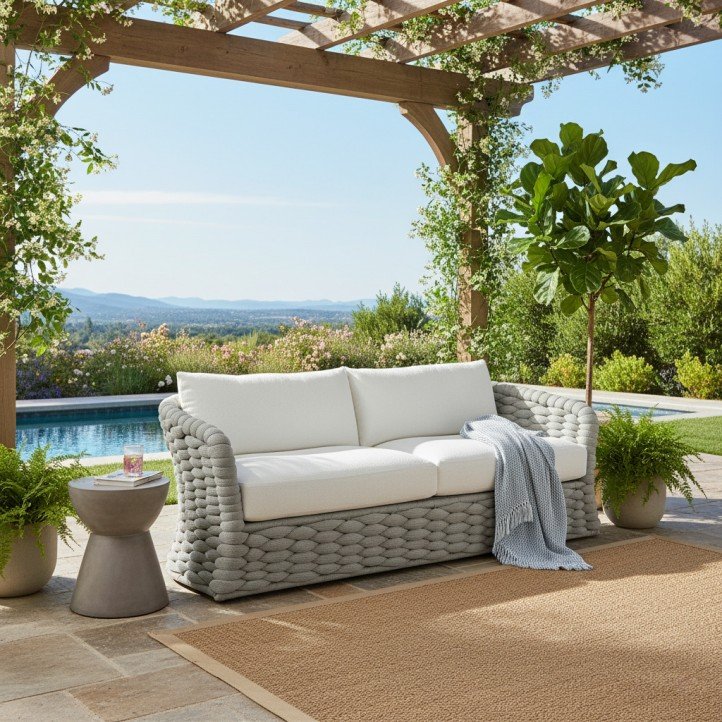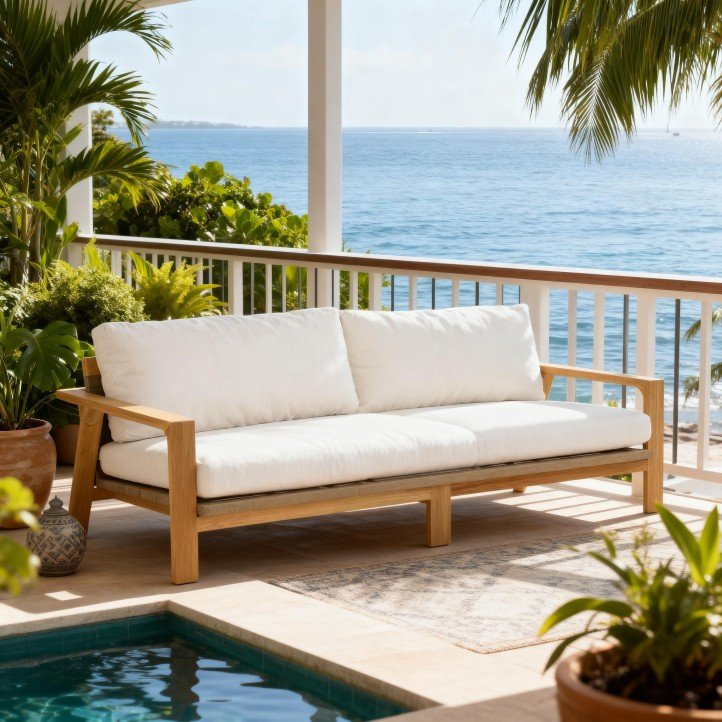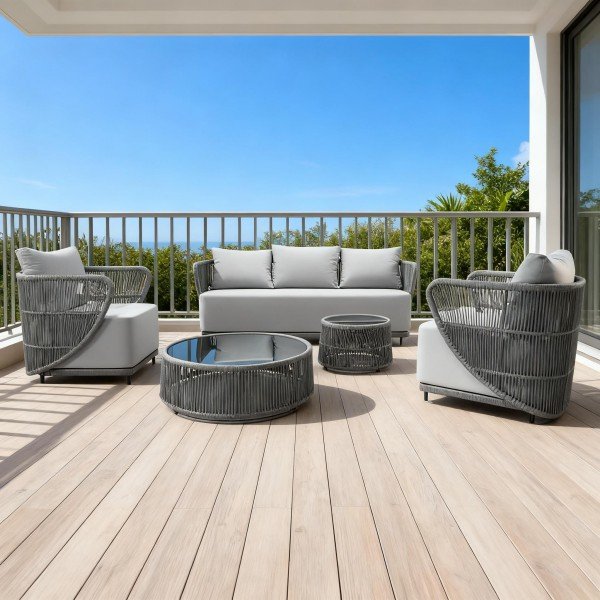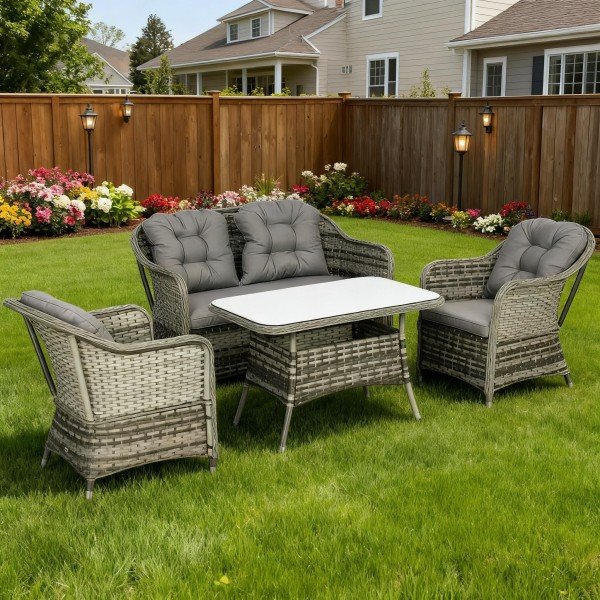
Introduction: Covers are cheaper than replacements
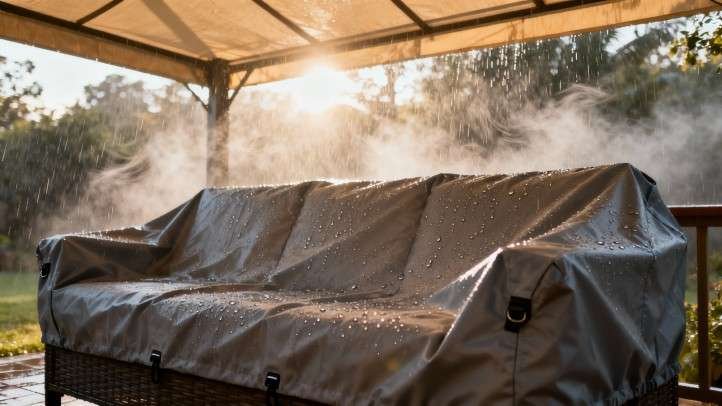
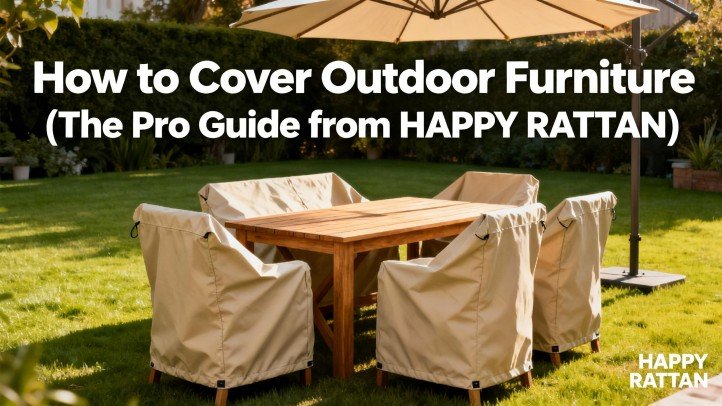
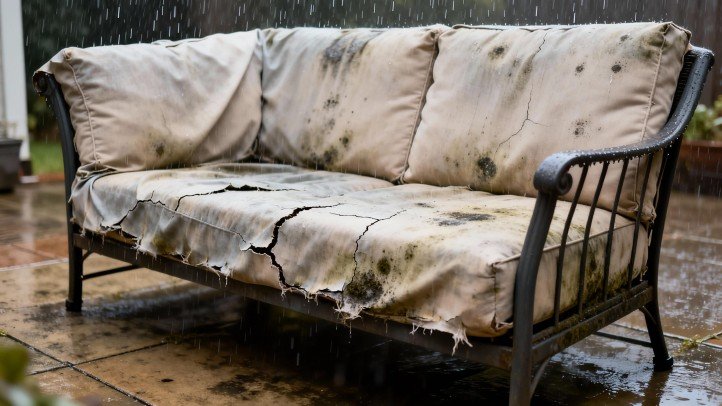
If you’ve invested in outdoor chairs, a teak dining set, or a plush sectional, the single most cost-effective way to extend their life is simple: learn how to cover outdoor furniture properly. Sun fades fabric and degrades polymers; moisture invites mildew and rust; wind turns a loose tarp into a sail. A smart cover plan prevents all three.
The U.S. EPA stresses that moisture control is the core of mold prevention: wet materials promptly and improve ventilation to avoid mildew (EPA: A Brief Guide to Mold, Moisture and Your Home, EPA: Mold and Your Home). Ultraviolet radiation also accelerates fading and material breakdown; plan shade or cover use on high-UV days using the NOAA UV Index (NOAA: What is the UV Index?, NOAA: UV Index Information).
Pick the right cover material (and know what “waterproof” really means)
Not all covers are created equal. Here’s how the common materials compare:
| Cover Material | What it is | UV & Colorfastness | Water Behavior & Useful Tests | Breathability | Typical Use |
|---|---|---|---|---|---|
| Solution-dyed acrylic (e.g., marine-grade fabrics) | Fibers are colored in the polymer “solution” before extrusion | Excellent long-term colorfastness; high UV stability | Usually water-resistant with DWR; look for spray tests like AATCC TM22 (AATCC: Water Repellency TM22 explainer) | Good breathability (less condensation) | Premium custom covers; hot, sunny climates |
| Polyester (300D-600D) with PU/PVC backing | Woven polyester with waterproof coating/laminate | Good UV if UV-stabilized; varies by finish | Often waterproof to a hydrostatic head spec; ask for AATCC 127/ISO 811 or ASTM D751 for coated fabrics (AATCC 127 overview, ASTM D751 standard page) | Lower breathability unless vented | Popular ready-made covers; rain/snow climates |
| Vinyl/PVC | Non-woven film or coated fabric | Can resist UV if stabilized; may stiffen in cold | Waterproof film; seams must be taped | Minimal breathability; needs vents | Short-term storm protection |
| Polyethylene (PE) tarps | Woven strands laminated with LDPE | Fair UV with stabilization | Waterproof; eyelets/seams are weak points | Non-breathable | Temporary or budget use |
Why these tests matter:
- AATCC TM22 (spray test) screens water repellency-how well water beads on a textile (AATCC guide).
- AATCC 127 / ISO 811 quantifies hydrostatic head-the water pressure a fabric resists before leaking (AATCC 127 intro).
- ASTM D751 covers procedures for coated fabrics (PU/PVC-backed), including hydrostatic resistance and seam strength (ASTM D751).
Pro note on acrylic: Marine-grade, solution-dyed acrylics (e.g., Sunbrella) are engineered for UV and are bleach-cleanable where the sun is harsher than the rain. See manufacturer care guidance: Sunbrella: How do I clean mold and mildew? and Sunbrella: How to Clean Mold and Mildew From Sunbrella Fabrics.
Sizing & fit: measure once, buy once (or custom)
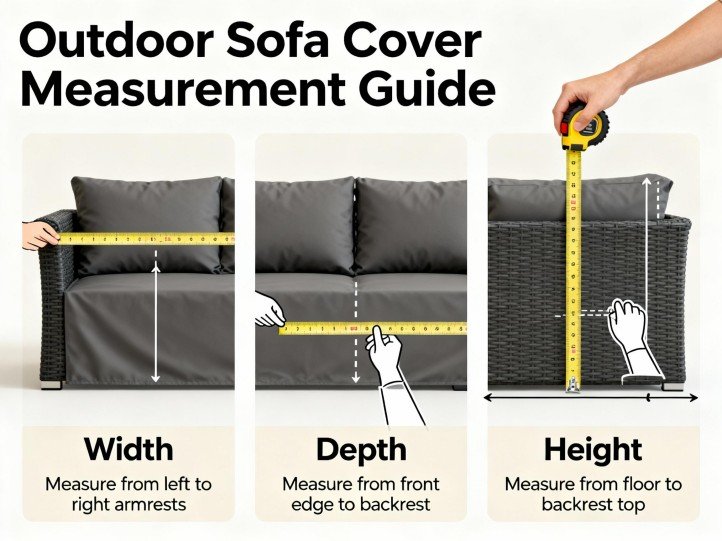
A perfect cover is sloped, secured, and not overly tight. Use a flexible tape and record Width (W) × Depth (D) × Height (H) at the tallest point. For L-shaped sectionals, measure the longest span in each direction and note the corner geometry. General rules
- Slope water off: Prefer covers with a crown or add a center support to avoid water pooling.
- Add ease: Leave ~1-2 in (2-5 cm) of ease so the cover slides on/off without snagging.
- Mind the hem: A slightly shorter hem (leave 1-2 in above deck/pavers) prevents ground wicking and improves airflow.
- Mind features: Note arm curves, reclining backs, or fire-pit controls, and whether you need a split zipper.
Trusted measurement guides:
- Classic Accessories: How to Measure (category hub)
- Classic Accessories: How to measure Sectionals (detail)
- Lowe’s: How to Measure for Outdoor Furniture Covers
Watch & learn (YouTube):
- Classic Accessories – How to Measure: Sectionals
- Formosa Covers – How to Measure Your Patio Furniture
Venting, breathability & condensation (why “waterproof” covers can still get wet inside)
Moist air trapped under a fully sealed cover can condense on cool surfaces overnight (think dewy mornings). That’s how cushions get clammy even when it never rained. The cure is ventilation and moisture management:
- Choose vented covers (mesh panels or hidden leeward vents). These reduce ballooning in wind and allow vapor to escape-less condensation and musty odor (see examples and explanations in retail/brand guides: Southern Living coverage of vented designs, F&J Outdoors on vented covers, Covers&All on breathability).
- Avoid ground contact: Keep the hem above the surface so air flows and splashback is minimized.
- Dry before covering: Trapped rainwater equals trapped humidity (EPA homeowner mold guidance).
Image ALT idea: alt=”Vented outdoor furniture cover releasing moisture to prevent condensation”
The step-by-step method: how to cover outdoor furniture (daily, storm, and winterizing)
Daily/Weekly Routine (year-round)
- Brush & dust: Knock off leaves, pollen, crumbs. Debris holds moisture against fabric and finishes.
- Dry check: After rain or morning dew, towel dry flat surfaces before re-covering.
- Cover installation:
- Drape from the back/top toward the front so seams shed water.
- Align vents leeward (downwind side) so air can escape.
- Secure buckles to chair legs or table trestles; snug drawcord hems.
- Hem height: Leave a 1-2 in gap above the ground for airflow and to reduce wicking.
- Weekly airing: On a dry, breezy day, pop covers open for 10-20 minutes.
Storm Prep (wind + heavy rain)
- Add support poles or an upside-down bucket beneath the cover to create a slope.
- Cross-strap long runs: pass a webbing strap underneath to stop billowing.
- In extreme wind, add sandbag weights to hems or move lighter pieces against a wall.
Winterizing (freeze, snow, long storage)
- Deep clean, dry thoroughly, then cover.
- Wood on risers: Avoid wood-to-soil/grass contact to reduce moisture uptake and termite risk (see extension advice: University of Kentucky Entomology: Eliminate wood-to-soil contact, Oregon State University Extension: avoid wood in contact with soil).
- Use waterproof + vented covers; after the first snow, knock off accumulation before it ices over.
Seasonal Checklist (print this)
- Spring: Inspect seams/cords; refresh DWR if beading fails.
- Summer: Maximize shade/cover on high UV days (NOAA UV Index).
- Fall: Elevate wood legs; swap to storm straps.
- Winter: Add center supports; clear snow loads promptly.
[For more information, please read: A Complete Guide to Winter Storage and Furniture for Outdoors]
Care & cleaning (covers and fabrics)
Covers (poly/PU/PVC)
- Rinse with low-pressure water.
- Clean with mild soap; avoid harsh solvents that can degrade coatings.
- Towel and air-dry completely before folding-moisture left in folds = mildew risk (general best practice echoed by consumer how-tos like Southern Living outdoor care and home guides such as BHG mold & mildew removal).
Solution-dyed acrylic (e.g., Sunbrella)
- Vacuum/brush loose dirt.
- Wash with mild soap; for mildew, this fabric is bleach-cleanable-follow maker dilution, dwell time, thorough rinse, and air-dry: Sunbrella cleaning FAQ, Sunbrella blog guide.
Mold & mildew basics
- Mold needs moisture; prevention = ventilation + fast drying. See the EPA homeowner’s mold guide.
Storage & folding
- Only store covers when fully dry; fold flat to avoid hard creases; keep in a breathable bin or hanging bag in a dry space.
Optional videos (for team training or embedded how-to)
- Storigami Easy-Fold Patio Furniture Covers – a design example that folds smaller/faster.
- Classic Accessories Storigami video hub.
[For more information, please read: Quick Cleaning and Drying Techniques for Outdoor Seat Cushions]
Common mistakes (and how to fix them fast)
- Using a fully sealed, non-vented “sauna” cover in humid climates → Switch to a vented or partially breathable design; air out regularly (see F&J Outdoors on vents and retail examples like Southern Living-vented cover features).
- Cover too tight (no ease) → Size up or order custom; add a center pole to stop pooling.
- Hem puddling on the ground → Raise hem or furniture; moisture wicks up from the ground.
- Skipping measurements & relying on generic sizes → Use manufacturer measurement guides or go custom (Classic Accessories hub, Lowe’s guide).
- Leaving wood legs on soil/grass all season → Elevate with pavers/risers to reduce termite and moisture risk (UKY Entomology, OSU Extension).
- Treating all “waterproof” labels as equal → Ask for test standards (AATCC TM22; AATCC 127/ISO 811; ASTM D751) and seam taping (AATCC TM22, AATCC 127, ASTM D751).
Conclusion: The 5-step cover formula
- Choose the right material for your climate.
- Measure carefully so the fit is snug but not too tight.
- Prefer vented designs to cut condensation.
- Secure with straps/drawcords and add slope.
- Clean & dry-then cover.
Follow that formula and you’ll master how to cover outdoor furniture like a pro-and your set will look new, season after season. Suggested internal reads:
- [For more information, please read: A Comprehensive Analysis of Sunscreen Coatings and Shading Solutions for Outdoor Furniture]
FAQs (People-Also-Ask style)
Q1. Do I need a waterproof or just a water-resistant cover?
A. In rainy/snowy climates, pick waterproof with taped seams and built-in vents. In hot, sunny climates with little rain, a breathable, UV-strong fabric (e.g., solution-dyed acrylic) can be kinder to cushions by reducing condensation. Look for standards like AATCC 127/ISO 811 or ASTM D751 on coated fabrics (AATCC 127 overview, ASTM D751).
Q2. How tight should a cover fit?
A. Snug but not skin-tight. Leave 1-2 inches of ease so you can install it without dragging. Keep the hem 1-2 inches off the ground to prevent wicking and improve airflow.
Q3. Why is there moisture under my “waterproof” cover?
A. That’s condensation-moist air cooling overnight. Use vented covers, dry the furniture before covering, and air out periodically (EPA mold tips; venting examples via Southern Living).
Q4. Can I use bleach on outdoor fabrics?
A. On solution-dyed acrylic (e.g., Sunbrella), yes-follow the maker’s dilution and rinse thoroughly (Sunbrella cleaning FAQ). Don’t use bleach on most polyesters with PU/PVC backings.
Q5. Any tips for winter?
A. Clean, dry, elevate wood off soil/grass, add a center support for slope, and use vented, waterproof covers. Clear heavy snow before it ices over (see termite/ground-contact cautions: UKY Entomology).