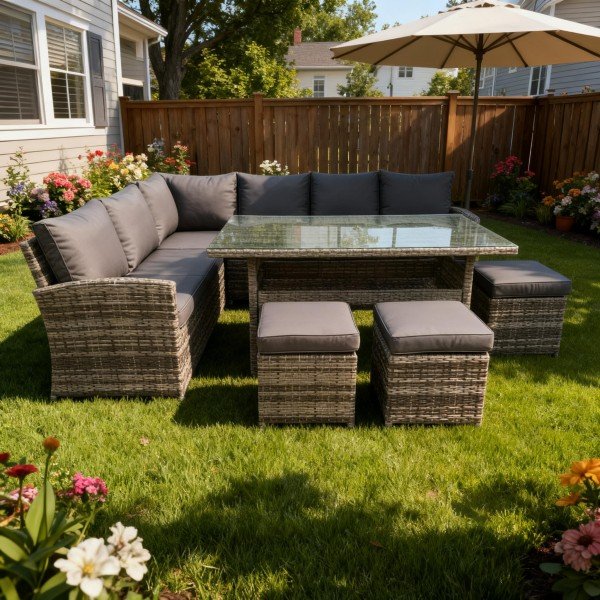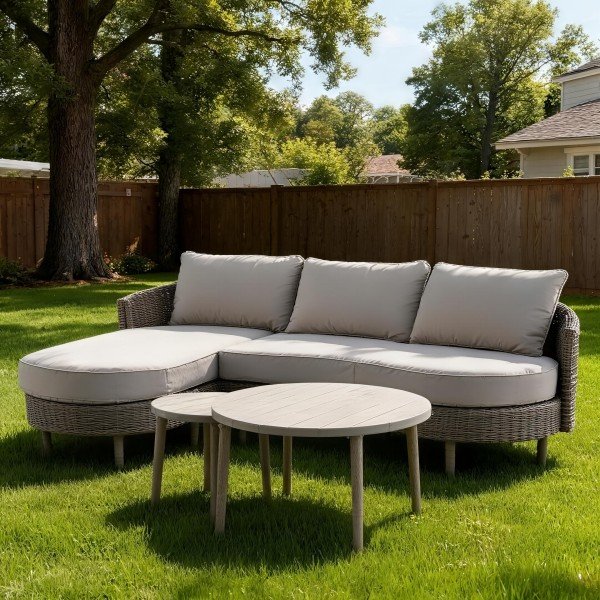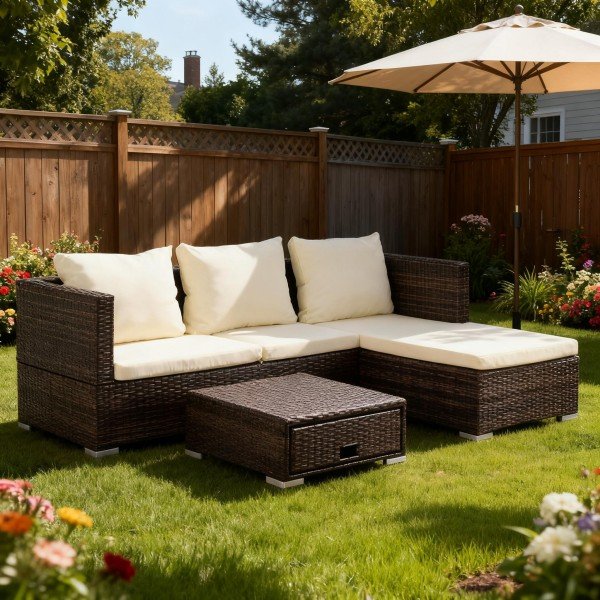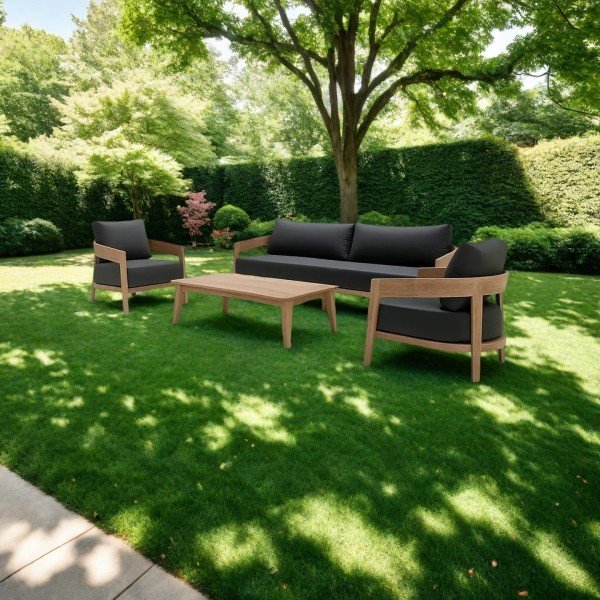
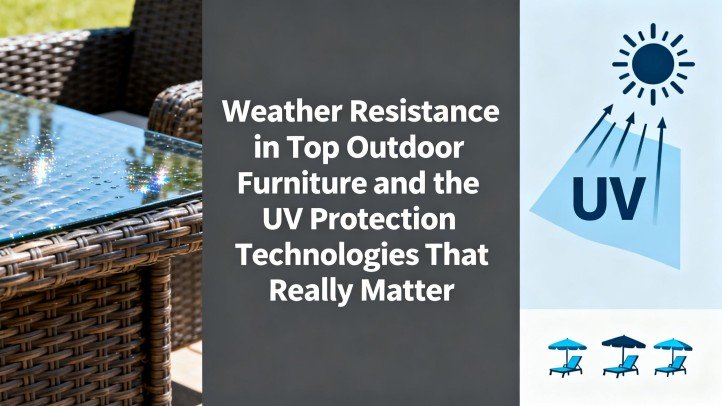
Introduction: Why “Weather Resistance” Drives Outdoor Furniture ROI
If you manage sourcing or product for an outdoor living brand, “weather resistance” isn’t a buzzword-it’s the difference between glowing reviews and warranty write-offs. Rain cycles, high UV index, salt spray, freeze-thaw, and airborne pollutants all attack frames, coatings, fabrics, and foams. The good news: you can specify durability instead of hoping for it by tying your RFQs, lab tests, and acceptance criteria to recognized standards for UV aging, corrosion, and textile performance (e.g., ASTM G154, ISO 4892, AATCC 16/22/127, AAMA 2604/2605). See overviews from Q-Lab for ASTM G154 and ISO 4892-3, the FGIA store for AAMA 2605, and AATCC listings for TM16, TM22, and TM127.
[Read more: Guide to Outdoor Frame Finishes]
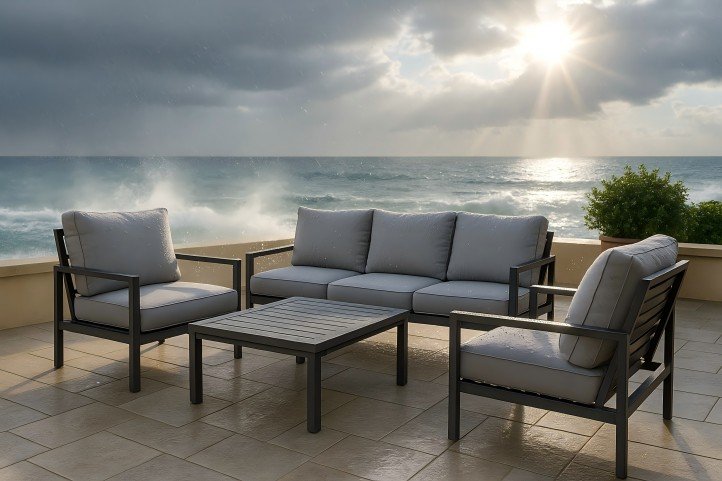
The Materials Lens: How Common Outdoor Substrates Really Cope Outside
Metals: Powder-Coated Aluminum vs 304/316 Stainless Steel
Powder-coated aluminum remains the volume leader for outdoor frames due to low mass and inherent corrosion resistance. Its longevity depends far more on coating system than base metal: AAMA 2603 is entry-level, AAMA 2604 boosts color/gloss retention, and AAMA 2605 is the high-performance benchmark for harsh sun and coastal environments (see FGIA/AAMA 2605). For stainless, when buyers ask “304 or 316?”, the short answer is: in chloride-rich exposures (salt air, de-icing), 316‘s molybdenum (≈2-3%) materially improves resistance to pitting and crevice corrosion versus 304. For poolside or marine-adjacent collections, specify 316 hardware and fasteners (primer: AZoM-304 vs 316 in Chlorides).
Polymers & “Wicker”: HDPE with UV Stabilizers
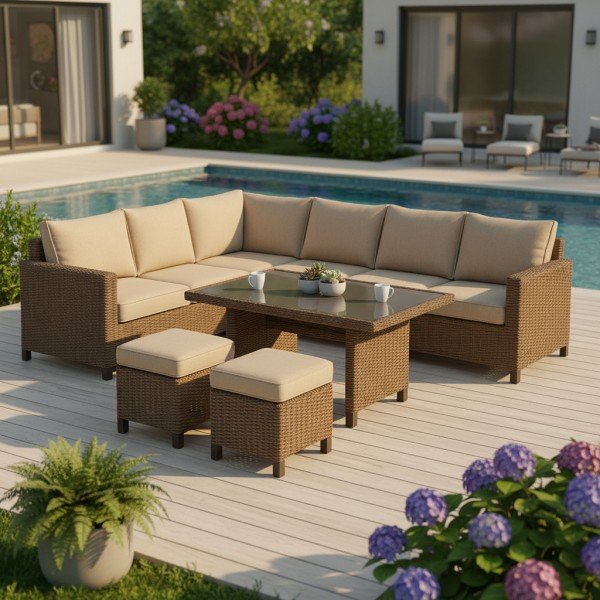
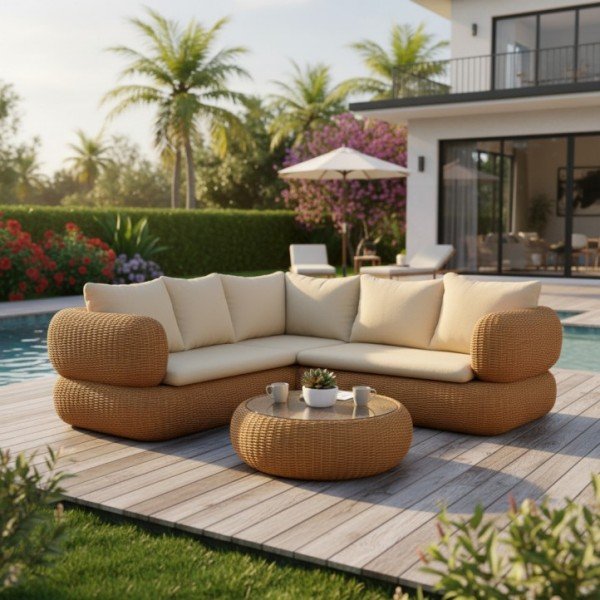
HDPE and engineered resins can be extremely weatherable when stabilized with UV absorbers and HALS (hindered amine light stabilizers), which quench radicals and protect polymer chains from photodegradation. Intro reading: HALS (Wikipedia). When qualifying resin wicker, ask for the stabilizer package details and ISO 4892 exposure data with pre-/post-tensile retention.
Wood & Composites
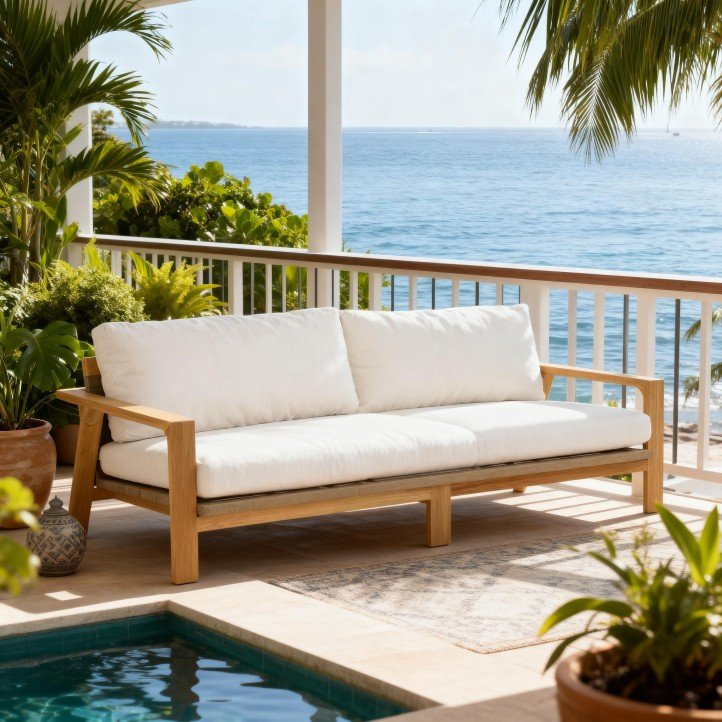
Teak and modified woods perform well if you control moisture exchange and refinish cycles. In hospitality, composite tops with UV-stable cap layers reduce refinish frequency-site maintenance budgets often define the real ROI.
UV Protection, Properly Defined (and Often Confused)
Separate UV protection for people (UPF) from the UV stability of materials.
- UPF for textiles indicates how much UVA/UVB is blocked by a fabric against human skin exposure. Labeling in North America follows ASTM D6603, and the widely used classification reference is AS/NZS 4399 by ARPANSA. These apply to apparel and also inform the shade of fabrics used near the skin.
- UV stability of materials (frames, coatings, plastics, fabrics) is evaluated by accelerated weathering, commonly ASTM G154 or ISO 4892, using fluorescent UV lamps (QUV). Specimens alternate between UV and moisture at controlled temperature to compress months of outdoor aging into weeks.
Why it matters: UPF 50 fabric might be excellent for skin protection, but that doesn’t guarantee the polymer or coating system won’t chalk, embrittle, or fade. Likewise, a coating that achieves AAMA color/gloss retention has nothing to do with human UV exposure safety. Tie your specs to the correct family of tests.
Fabric & Cushion Performance: Why Solution-Dyed Acrylic Leads
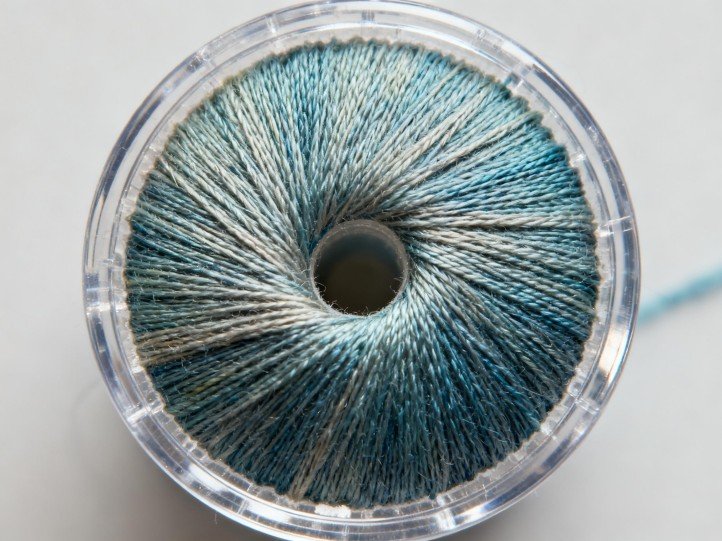
For seat cushions and soft components, solution-dyed acrylic (SDA) is the workhorse fabric in premium outdoor lines. Pigment is locked “color-to-the-core” inside the fiber before spinning, not just on the surface. The result is superior fade resistance and color retention versus many yarn-dyed polyesters; see Sunbrella-Color to the Core for an accessible overview.
- Colorfastness to light. Benchmark with AATCC TM16 (often referenced with Blue Wool standards). Hospitality buyers commonly target ≥ Grade 4 after specified AFUs for key colorways.
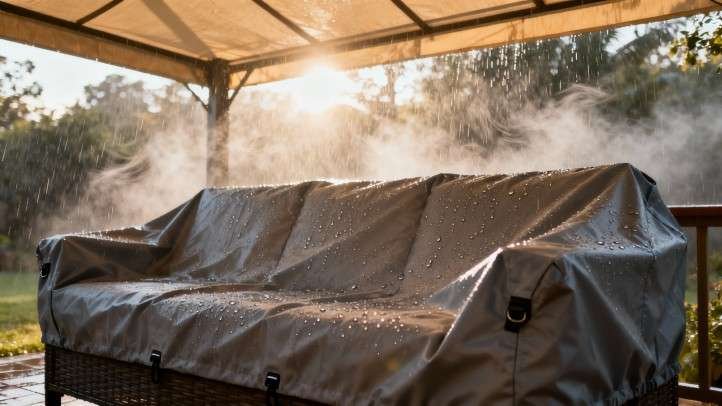
- Water behavior. Cushions see rain and dew. Screen spray rating via AATCC TM22 (water repellency) and, if you claim “water-resistant cushions,” validate hydrostatic head with AATCC TM127. Publish your pass criteria with the quote.
- Mildew & hygiene. SDA typically resists mildew better than cellulosics; specify breathable constructions and quick-drain foams so moisture doesn’t remain trapped.
[Read more: How to Specify Performance Fabrics]
Coatings & Finishes: Turning Good Frames into Weather-Ready Products
Architectural powder coatings have a clear performance ladder:
- AAMA 2603: basic residential; limited color/gloss hold in high-UV regions.
- AAMA 2604: “high performance”; better color/gloss retention and film integrity.
- AAMA 2605: “superior performance”; recommended for intense UV and coastal (see AAMA 2605).
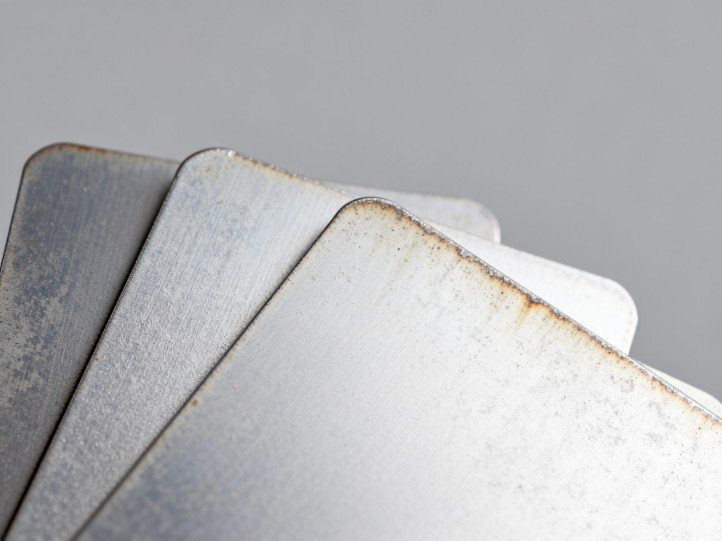
Corrosion checks. Neutral salt spray (ASTM B117) is widely used to screen corrosion resistance of metals/coatings. Use it to compare finishing systems, but don’t over-interpret “hours to red rust” in isolation-pair with outdoor exposure or cyclic tests and examine scribe creep/blistering. Background: Q-Lab-ASTM B117 (see salt spray in standards index). UV aging for coatings & plastics. Build ASTM G154 / ISO 4892 into your validation plan alongside measured ΔE, gloss retention %, and chalk rating (ASTM D4214). Ask suppliers for pre-/post-photos and data.
Quick-Compare: Material × Environment × Maintenance
| Component | Typical Material | UV / Fade Behavior | Corrosion / Rot | Maintenance Burden | Standards to Ask For |
|---|---|---|---|---|---|
| Frames (arid/high-UV) | Powder-coated aluminum | Strong if 2604/2605; color/gloss hold high | No rust; filiform risk if pretreated poorly | Low | AAMA 2604/2605; ASTM G154 |
| Frames (coastal/pool) | 316 stainless steel | Excellent; finish appearance stable | Superior pitting resistance vs 304 | Low-Medium (rinse to avoid tea staining) | Material certs; ASTM B117 |
| Wicker/straps | HDPE + HALS | Very good if stabilized; minimal embrittlement | N/A | Low | UV package details: ISO 4892 |
| Table tops | HPL/ceramic/stone | Very stable; check edge sealing | Non-corroding; stains vary | Low | Manufacturer UV & stain data |
| Cushions/awnings | Solution-dyed acrylic | Excellent lightfastness | N/A | Low (periodic cleaning) | AATCC TM16; TM22; TM127 |
| Hardware/fasteners | 304 vs 316 | N/A | Choose 316 near chlorides | Low | Grade markings, salt spray, or field checks |
Climate-Based “Good-Better-Best” Specs You Can Reuse
Desert sun / high UV (e.g., AZ, MEA, AUS interiors):
- Frames: Aluminum with AAMA 2605 powder; target ΔE ≤ 2.0 and gloss retention ≥ 70% after specified ASTM G154 exposure.
- Fabrics: Solution-dyed acrylic; AATCC TM16 ≥ Grade 4 after specified AFUs.
- Hardware: 304 acceptable inland; upgrade to 316 for splash or chemical exposure.
Coastal/poolside:
- Frames: AAMA 2605 minimum; pretreatment documented. Add nylon isolators to prevent galvanic couples.
- Hardware: 316 stainless wherever water and chlorides meet, metal-see 304 vs 316 guidance.
- Fabrics: SDA with thorough rinse/clean instructions in care labels.
Humid continental (freeze-thaw cycles):
- Frames: 2604+ powder; verify edge coverage and weld smoothing to reduce micro-crevice corrosion.
- Fabrics: SDA; emphasize breathability and quick-drain foam to avoid moisture entrapment.
- Add lounge options: Outdoor Chaise Lounge.
Spec Templates to Paste into Your RFQ
Frames (Coastal Program)
- Substrate: 6063-T5 aluminum extrusion or die-cast aluminum, chromate-free conversion pretreatment.
- Finish: Super-durable powder meeting AAMA 2605 for color/gloss/chalk retention; color XYZ, 60° gloss 35±5.
- UV/Weathering: Provide ASTM G154 exposure 1000 h, ΔE ≤ 2.0, gloss retention ≥ 70%, chalk ≤ 8 (ASTM D4214).
- Corrosion: ASTM B117 ≥ 2000 h; scribe creep ≤ 2 mm; blistering ≤ 6F.
- Hardware: All external fasteners 316; document alloy and finish.
Soft Goods (Desert Program)
- Fabric: 100% solution-dyed acrylic, ≥ 300 g/m², C6/C0-type repellency.
- Lightfastness: AATCC TM16 ≥ Grade 4 after specified AFUs.
- Water: AATCC TM22 ≥ 90 (spray rating); AATCC TM127 ≥ 1000 mm hydrostatic head if claiming “water-resistant cushions.”
- Hygiene: Quick-drain foam; breathable liners; care label with rinse/clean schedule.
Resin Wicker
- Polymer: UV-stabilized HDPE with UV absorber + HALS package; provide ISO 4892 exposure summary and post-exposure tensile/elongation retention.
- Color: Document masterbatch details; target ΔE ≤ 2.5 after exposure.
Buyer’s One-Page Quality Checklist
- Standards on the quote (number + revision year: e.g., AAMA 2605, ASTM G154).
- Exposure details (lamp type, hours, UV cycle, temperature).
- Colorways tested (light and dark are both tested).
- Edge cases: dissimilar-metal contacts, powder build on edges, weld smoothness, drainage holes.
- Hardware: prefer 316 near chlorides; document grade on drawings.
- Care & warranty: publish cleaning intervals; define color/gloss warranties by climate zone.
[Read more: Outdoor Furniture Maintenance Schedule]
Common Pitfalls (and How to Avoid Them)
- Confusing UPF with material weathering. UPF 50 protects skin; it doesn’t promise fade resistance. Use AATCC TM16 and accelerated weathering for materials.
- Over-relying on salt spray hours. ASTM B117 is a screening method, not a field-life predictor. Pair it with UV/moisture cycling and real-world exposure.
- Ignoring pretreatment. Even the best powder fails early without proper pretreatment and edge coverage. Ask for the chemistry and line controls.
- Specifying 304 in coastal zones. Use 316 stainless for fasteners and brackets near chlorides.
Conclusion: Make “Weather Resistance” Your Profit Moat
Across climates, your most reliable lever is a spec grounded in standards. For sun-intense or coastal installs, combine: AAMA 2605 (frames) + 316 stainless hardware (304 vs 316 guide) + solution-dyed acrylic (cushions) + validated ASTM G154 / ISO 4892 exposure + AATCC TM16/22/127 for fabrics. That stack turns weather resistance from a claim into measurable performance-and from warranty risk into brand equity. Encourage your team to save the checklists and spec templates above for the next RFQ.
FAQ
Q1: What’s the fastest way to verify real “weather resistance” on a metal frame?
A: Ask for AAMA 2604/2605 certification plus ASTM G154 exposure data (hours, lamp type, ΔE, gloss retention) and ASTM B117 salt-spray results. No reports, no deal.
Q2: For coastal resorts, is 304 stainless “good enough”?
A: Not reliably. Go 316 for hardware/frames near chlorides; the added molybdenum boosts resistance to pitting and tea staining.
Q3: Does a UPF 50 label mean the fabric won’t fade outdoors?
A: No. UPF is about protecting skin, not color retention. Look for AATCC TM16 lightfastness and ASTM/ISO weathering data to predict fading.
Q4: Solution-dyed acrylic vs yarn-dyed polyester-why pay more?
A: Solution-dyed acrylic locks pigment into the fiber core, so it resists fade and retains color far longer-ideal for sun-intense decks and rooftops.
Q5: If we claim “water-resistant cushions,” what tests back it up?
A: Use AATCC TM22 for repellency and AATCC TM127 for hydrostatic pressure. Publish pass/fail criteria right in the spec.