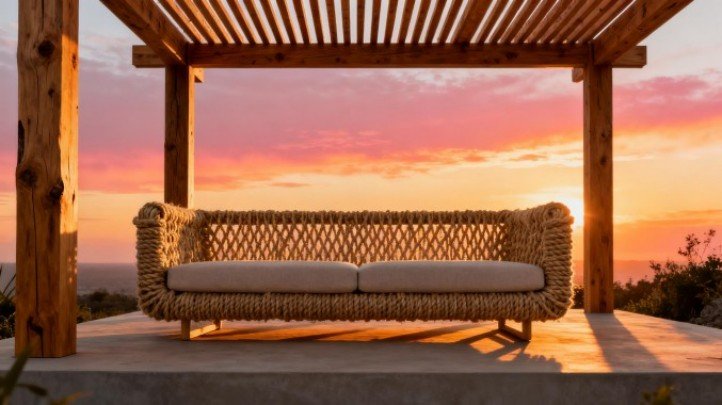
Introduction: The Outside Living Room That Drives Real‑World Results
An Outside Living Room is more than a patio with furniture—it’s a fully programmed, weather‑resilient living space designed to increase guest dwell time, boost spend per visit, and extend the usable season for properties. For retailers and hospitality buyers, it also means curated vignettes that upsell complete looks, simplify procurement, and reduce returns through better fit and finish. This blueprint turns site metrics, material science, and layout logic into a repeatable process you can deploy across single‑family, multifamily, and resort settings.
Internal links to explore collections: Outdoor Sofa Collections · Outdoor Dining Sets · Outdoor Chairs. For category insight, see: Why Rattan Furniture Is Outdoor Retail’s Best‑Selling Category.
Related reading: Patio Party Ready: Essential Furniture for Your Next Outdoor Gathering · 7 Outdoor Sofa Ideas to Transform Your Patio · How to Choose the Right Indoor Outdoor Sofa.
Data snapshot: The global outdoor furniture market was estimated at USD 50.89B in 2024, with a projected CAGR of ~6.3% (2025–2033)—evidence that demand for higher‑quality outside living environments continues to accelerate. (Grand View Research)
Site Assessment & Space Planning: Start with Numbers, Not Pinterest
Measure what matters. Before budgets or moodboards, document:
- Circulation lanes: target 36–48 in around and between seating clusters; 24 in is the absolute minimum for squeeze‑through access.
- Table clearances: allow 24 in per diner plus 36 in behind chairs for pass‑throughs.
- Sun/wind orientation: place lounge zones where afternoon shade is achievable; use planters/screens to break prevailing winds.
- Sightlines & adjacencies: kitchen↔dining within a straight 20–30 ft path improves service speed in hospitality and family use alike.
Fire features & heaters (safety first). Always verify local code, but as a rule of thumb, maintain generous horizontal and vertical clearances and use non‑combustible surfaces around fire pits. Consult NFPA resources for safe use and wildfire risk awareness (see 2025 guidance). For teams onboarding staff, share public‑education videos and checklists.
Helpful authority resources: NFPA wildfire & fire‑pit safety and public‑education playlists; see links under References & Further Reading.
Pro move: Capture a 1:1 plan via a phone‑based measuring app, then lay out scaled furniture cut‑outs. For quick training, share a measurement video with your team so site verifications are standardized.
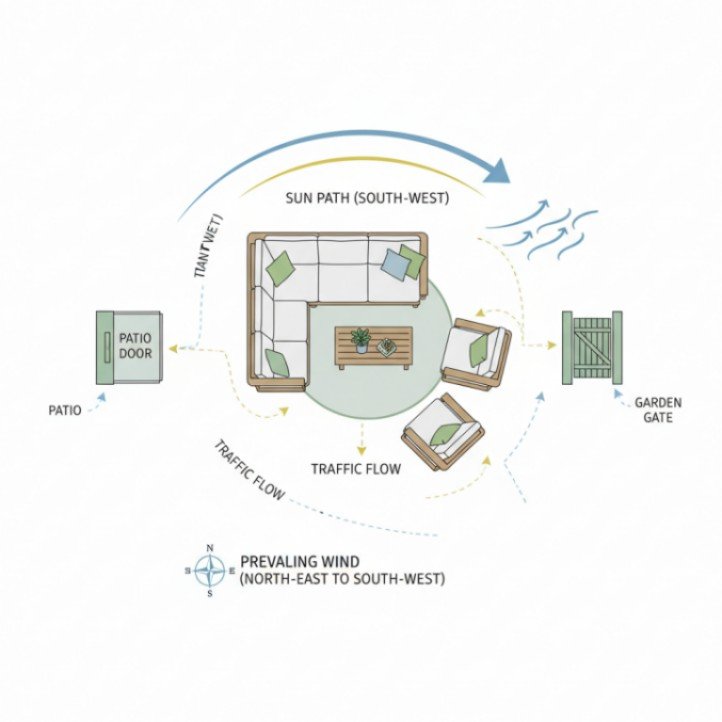
Quick layout starter kit (copy/paste into your project brief):
- Seating depth: most outdoor sectionals need 34–38 in depth; lounges 30–34 in.
- Coffee table spacing: 14–18 in from seat edge to table rim.
- Umbrella sizing: 7.5 ft for bistro/2–4 seats; 9–10 ft for 4–6; 11–13 ft for 6–8. Weighted bases matched to canopy size.
- Lighting baseline: ambient 5–15 lumens/ft² (string/pendants), task 30–50 lumens/ft² (kitchens, bars). Warmer 2700–3000K keeps an indoor‑like feel outdoors.
Related products as you plan: Outdoor Chairs · Outdoor Chaise Lounges.
Related reading: Adirondack Chairs Guide 2025: Styles & Placement · Patio Party Ready: Layout & Budget Tips·Outdoor Chaise Lounges
Zoning for Flow: Lounge, Dining, Cooking, Flex
Think of the Outside Living Room as four interoperable zones:
- Lounge (sofas, club chairs, coffee table); 2) Dining (table + chairs/bench); 3) Cooking (grill/kitchen); 4) Flex (swing/daybed, fire conversation, kids’ zone).
Capacity planning: As a planning metric, allocate 10–12 sq ft per seated lounge guest and 16–20 sq ft per dining seat, including circulation. A 12×16 ft (192 sq ft) patio supports either 12–16 lounge seats (tight) or 8–10 dining seats (comfortable), or a balanced mix (e.g., sectional for 5–6 + 4‑top dining).
Adjacency logic that reduces friction: Keep cooking downwind of the lounge and at least 10 ft from combustible screens. Dining should maintain a direct line of travel to the kitchen door. Flex zone doubles as a kids’ play space by day and a fire‑pit or projector lounge by night.
Expert insight (layout): Most comfort complaints come from a mismatch between furniture scale and circulation. If you must choose, prioritize walk paths—clipped corners on coffee tables and armless modular seats are the easiest trims that preserve capacity.
Related reading: 7 Outdoor Sofa Ideas to Transform Your Patio (modularity & canopy options) · Patio Party Ready (zoning & event flow). If you must choose, prioritize walk paths—clipped corners on coffee tables and armless modular seats are the easiest trims that preserve capacity.

Specifying Furniture & Materials: A Lifecycle View
Frames & finishes
- Powder‑coated aluminum: Light, corrosion‑resistant, ideal for coastal/multifamily rooftops. Look for polyester or super‑durable powder and fully welded frames.
- Teak (Grade A/B): Naturally oily, long service life; requires periodic cleaning and optional sealing for color retention.
- HDPE & “plastic wood” composites: Dense, UV‑stable, easy‑care; great for commercial decks and public spaces.
- Steel/iron (powder‑coated): Value‑driven for mild climates; specify robust coatings and glides to avoid rust‑stain transfer.
Weaves, ropes & slings
- PE rattan (all‑weather wicker): UV‑stabilized extrusions resist cracking; tighter, flat‑plus‑round blends look upscale and clean easily.
- Polyester/olefin ropes: Modern texture; ask for UV inhibitors and abrasion testing on tight diamond/box weaves for armrests.
Cushions & fabrics
- Solution‑dyed acrylic (e.g., Sunbrella®): Pigment is added to the fiber before extrusion, making it inherently UV‑ and fade‑resistant and bleach‑cleanable. Ideal for hotels and rental properties that need fast stain removal. See Sunbrella® technical page and cleaning videos for proof‑of‑performance.
Surfaces
- HPL/ceramic/porcelain tops: Scratch‑ and heat‑resistant; minimal expansion.
- Tempered glass: Light look but specify ceramic‑frit underside or textured finishes to mask water spotting in F&B zones.
Materials at a Glance (Comparison Table)
| Component | Best for | Pros | Watch‑outs | Example HR Link |
|---|---|---|---|---|
| Aluminum powder‑coat | Coastal, rooftops, heavy turnover | Light, corrosion‑resistant, low upkeep | Thin‑wall tubing can flex; ask about wall thickness and welds | Aluminum Dining Set |
| Teak | Luxury villas, resorts | Long service life, premium look | Patinas silver; oiling/sealing optional | Teak Outdoor Furniture |
| HDPE/Plastic Wood | Boardwalks, public realm | Color‑through, heavy, easy‑care | Can read “chunky” if not refined | Plastic Wood Furniture |
| PE Rattan Wicker | Residential retail, lounges | Soft touch, textural luxury | Low‑grade resin can chalk in UV | Outdoor Sofa Collections |
| Rope Weave | Boutique hospitality | Contemporary, breathable | Edge abrasion—spec tight weave & testing | Rope Furniture |
Reference: Sunbrella® explains why solution‑dyed acrylic is fade‑resistant and durable through cleaning—useful when writing care SOPs. See References.
Comfort Systems: Shade, Heat, Lighting & Privacy
Shade
- Center‑pole/tilt umbrellas: Quick‑deploy; canopy size should exceed table diameter by ~2 ft. Use bases rated for canopy size and wind exposure.
- Cantilevers: Free up table space; specify rotating/locking hubs and granite or plate bases; confirm clearance arcs in tight footprints.
- Pergolas/screens: Combine overhead shade with side‑screening; slatted or fabric canopies tune light.
Heat
- Electric IR heaters: Fast comfort in covered lounges; check mounting heights and clearances.
- Gas/propane fire features: Emotional anchor for the lounge zone; ensure non‑combustible surrounds and spark guards; train staff on shutoff procedures.
Lighting
- Ambient: 5–15 lumens/ft² via string lights, bollards, or pendants; 2700–3000K for residential warmth.
- Task: 30–50 lumens/ft² at grills/bars; shield glare.
- Accent: 100–300 lumens aimed; light foliage and verticals to enlarge perceived space.
Privacy & acoustics
- Planters with evergreen screens; slatted partitions that maintain airflow. In hospitality courtyards, mix soft plantings with hard screens to reduce cross‑table noise.
Layout Blueprints by Footprint (Copy‑Ready)
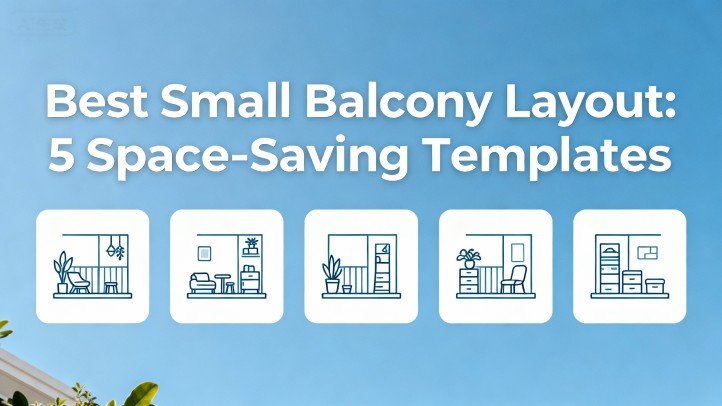
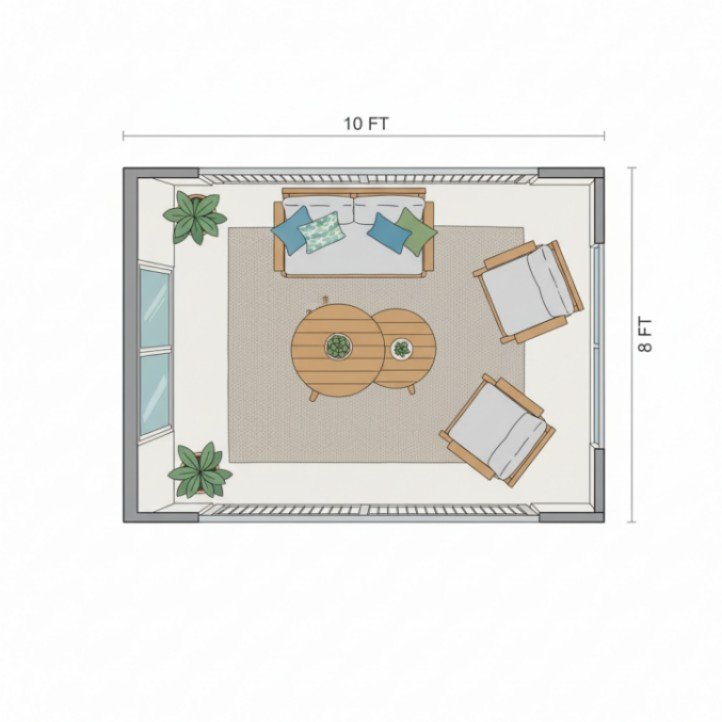
8×10 ft (80 sq ft) — Urban Balcony
- Furniture: 2‑pc modular loveseat (60–64 in), nested tables, two armless lounge chairs.
- Counts: Seats 4–5.
- Notes: Use armless modules to maximize seats; rail‑side planters double as privacy.
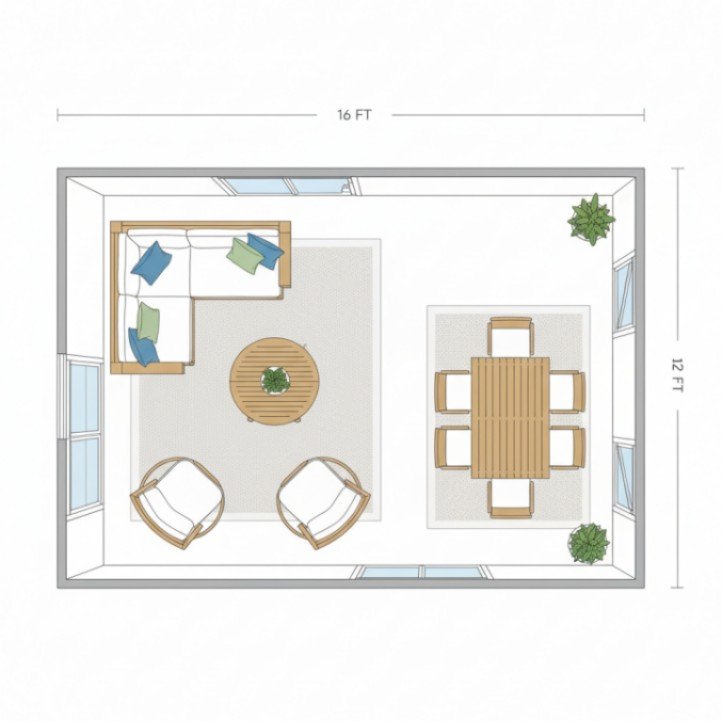
12×16 ft (192 sq ft) — Family Patio
- Furniture: L‑sectional (100–110 in each side), coffee table (48×24 in), swivel club chair pair, 4–6‑person dining (72×38 in).
- Counts: Lounge 6–7 + Dining 4–6.
- Notes: Maintain 36 in path between lounge and dining; place umbrella at dining; anchor lounge with a low‑height rug.
16×20 ft (320 sq ft) — Entertaining Hub / Hospitality Vignette
- Furniture: U‑sectional for 8–10, fire table centered, two accent chairs, 8‑person dining, and sideboard.
- Counts: 16–18 total seats in mixed program.
- Notes: Use dual-axis circulation around fire feature; string‑light crisscross anchors to pergola posts.
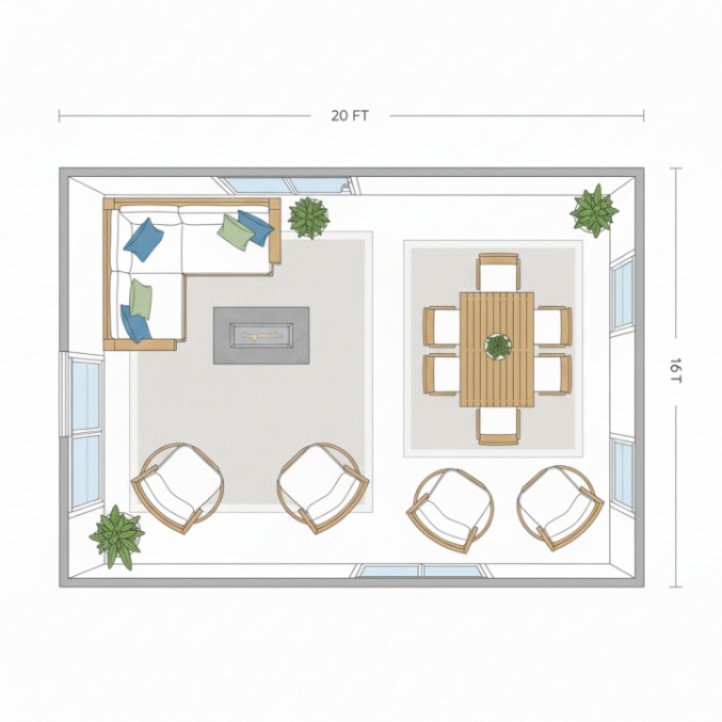
HR examples to visualize: U‑Shaped PE Rattan Sofa · Outdoor Dining Sets.
Related reading: Stackable Adirondack Chairs: Space‑Saving Ideas · 12 Best Pool Loungers for Comfort & Style in 2025.com/product/u-shaped-pe-rattan-outdoor-sofa-with-wooden-table/) · Outdoor Dining Sets
Scenario walk‑through (mini case): A boutique hotel with a 24×28 ft courtyard targets cocktail service for 32 guests. Using 10–12 sq ft per lounge guest, we allocate ~180 sq ft to lounge (seats 15–18) and ~492 sq ft to flow/dining/serve (remaining space), installing a cantilever umbrella at the dining deck and two IR heaters at 8.5 ft mounting height under a pergola. The result is a 3‑zone plan that flexes from daytime cowork to evening lounge without re‑setting heavy pieces.
Budgeting, Procurement & ROI
Good / Better / Best (indicative, ex‑factory ranges vary by spec & finish)
- Good: Powder‑coated steel frames + olefin cushions; resin‑top tables. Lowest upfront, higher maintenance.
- Better: Aluminum frames + PE rattan or rope; solution‑dyed acrylic cushions; HPL/ceramic tops.
- Best: Teak or heavy‑wall aluminum; Sunbrella® cushions; ceramic/porcelain tops; integrated power/lighting.
Lead‑time planning
- Peak season load‑in is 8–12 weeks backward from opening day to account for production + ocean + last‑mile. Book fabric colors early to avoid stockouts.
Procurement checklist
- Finish specs: powder type & thickness; UV test data; fastener material.
- Cushions: foam density, wrap, zipper type, and whether covers are removable.
- Tables: top material (ceramic/HPL), attachment method, and levelers.
- Warranty: clarify frame/finish/fabric terms; keep proof‑of‑care logs.
- MOQ & freight: consolidate SKUs to hit container efficiency.
Where to source: Start with HR’s category hubs to build a cohesive program: Products · Outdoor Sofa · Outdoor Chair · Outdoor Chaise Lounge. Learn about manufacturing depth and customization: About Happy Rattan.
Related reading for procurement teams: Patio Party Ready: Budgeting Tips · Why Rattan Furniture Is Outdoor Retail’s Best‑Selling Category.
Market outlook: Industry trackers point to sustained growth in outdoor living through 2033. Design partners (e.g., hardscape + furnishings) highlight modularity, wellness, and sustainability as 2025 priorities (Belgard × Yardzen Trendscapes 2025). Use this to justify premium, longer‑life specifications when presenting budgets to stakeholders.
Care, Cleaning & Off‑Season Storage
Weekly: Brush or vacuum cushions, wipe tables and arms with mild soap, empty umbrella bases of standing water.
Monthly: Check levelers, tighten hardware, inspect rope abrasion points, and re‑tension as needed.
Seasonal: Deep‑clean cushions; for solution‑dyed acrylic fabrics, bleach‑cleaning is permitted per manufacturer instructions. Refresh the teak clean/seal if you’re maintaining its golden tone.
Helpful how‑tos (share with staff or customers):
- Cleaning Sunbrella® outdoor cushions — Sunbrella cleaning videos playlist or quick tutorial.
- Measuring patio furniture for covers — quick walkthrough
- or measure the whole patio with a phone tool.
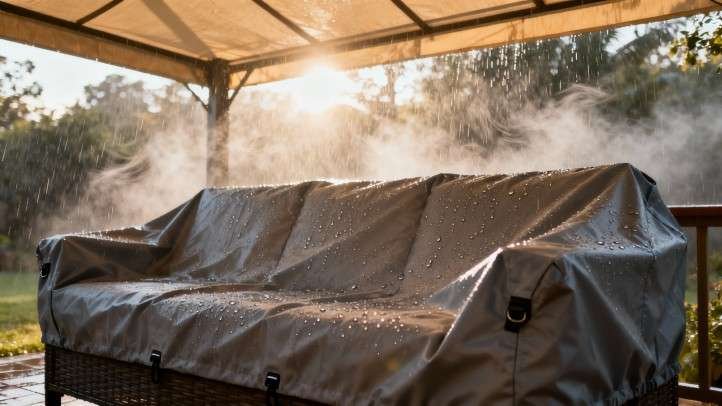
Storage: If you’re in freeze‑thaw climates, ventilate covers, raise feet on shims, and avoid trapping moisture against frames. Stack chairs per manufacturer guidance to avoid rope/arm abrasion.
Safety, Code & Substrates
- Substrates: On decks, verify load ratings before adding heavy ceramics or fire features. On pavers, use plate bases to spread umbrella/cantilever loads and prevent rocking. On concrete, use corrosion‑resistant anchors and cap any cut edges to avoid rust bleed.
- Fire features: Use spark guards, non‑combustible surrounds, and adhere to clearance diagrams; train staff on emergency shutoffs. Always check local code and HOA/property rules.
- Heaters: Respect mounting heights/clearances; integrate cutoff switches; verify electrical loads when adding IR heaters under pergolas.
Conclusion: Build the Outside Living Room Like a Pro
When you treat your Outside Living Room as a measurable, programmable environment—not just a furniture purchase—you protect budgets, elevate guest experience, and reduce maintenance. Start with the site math, specify long‑life materials (aluminum, teak, solution‑dyed acrylic), and complete the story with shade, heat, light, and safe substrates. Use HR’s category hubs to assemble a cohesive, on‑brand kit that’s easy to reorder season after season.
Explore: Outdoor Sofas · Outdoor Dining · Chairs
References & Further Reading (authoritative)
- Outdoor furniture market outlook — Grand View Research: Outdoor Furniture Market Size & Share (to 2033).
- Sunbrella® fabric science & cleanability — Sunbrella Performance Fabric: Fabric Difference.
- Fire pits & wildfire safety — NFPA: Wildfire Prevention Tips for Fire Pits & Outdoor Fires (2025) and NFPA: 4 Steps Toward Fire Pit Safety (2020).
- 2025 outdoor living trends — Belgard × Yardzen: Trendscapes for 2025 (press coverage).
YouTube support (optional embeds):
- Sunbrella® Cleaning Videos — Playlist.
- How to Measure Patio Furniture for Covers.
- How to Measure a Patio with Measure