Outdoor Furniture OEM/ODM, End-to-End: 6 Milestones From Engineering Drawings to First-Article Samples
Table of Contents
Why OEM/ODM for Outdoor Furniture Still Wins
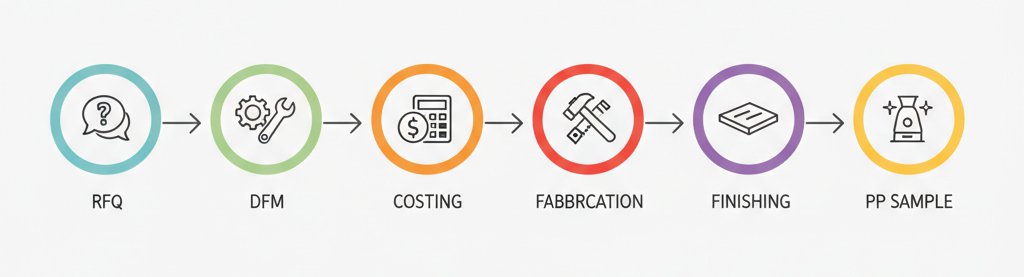
Executed well, an outdoor furniture OEM/ODM program compresses development cycles, stabilizes quality, and protects margins. Below, we walk through six milestones from RFQ to PP (pre-production) sample, with artifacts, tests, and governance you can plug into your SOPs.
Market context: multiple research houses size this category around $50–53B in 2024 with steady mid-single-digit growth through the early 2030s, underscoring sustained demand across commercial and hospitality channels (Grand View Research, Fortune Business Insights).
OEM vs. ODM: Choose the Right Engagement Model
Model
Best when
IP & documentation
Cost/time
Typical risks
OEM
You own the industrial design and CTQs; the supplier manufactures to spec
Full drawing pack (2D/3D), BOM, finish codes, validation plan
Longer NPI; tighter cost control later
Incomplete DFM, late change orders
ODM
You adapt a supplier’s base design to your brand/performance spec
Performance spec + branding requirements
Faster to market
Look-alike risk, limited geometry freedom
The Six Milestones (and What You Must Approve)
RFQ Scope & Data Handover
What to provide suppliers
Exploded views with tolerances; target loads (static/fatigue); end-use context (coastal, poolside, alpine); MOQ and lead time; packaging footprint and drop/vibration expectations.
IP hygiene, you can cite
WIPO’s Guide to Trade Secrets & Innovation offers governance and contract pointers you can adapt in NNN/technology clauses; WIPO’s technology-transfer resources include model agreements and clause libraries (WIPO Guide, WIPO Technology Transfer, WIPO Model Agreements).
Engineering for Manufacturability (DFM/DFS)
Where most cost is “decided”
Frames: aluminum 6xxx; bend radii ≥2–3× OD; TIG access; vent/drain holes for cure; fixture datum strategy to control stack-ups.
Coatings: specify pretreatment + film build + cure window. For general outdoor applications, ~50–75 μm (2–3 mils) is a good working range; align with powder supplier TDS and line capability (examples: Tiger blog—film thickness guidance, general overview: MS Metal—thickness 50–75 μm).
Textiles: write in UV/light-fastness method and grade.
Weathering & corrosion methods to reference in the spec
Salt spray (cabinet) for discontinuities/creep:ASTM B117 and ISO 9227 define the apparatus/environment and are widely used for QC comparisons (ASTM B117, ISO 9227:2022).
UV/weathering (coatings):ISO 16474-2 (xenon-arc; with 2022 daylight-filter amendment) (ISO 16474-2, Amd 1:2022).
Break cost into materials, forming, joining, surface finish, hardware, packaging, quality, overheads (setup, fixture amortization, yield). Use what-if levers (e.g., wall thickness vs. weld count; polyester vs. fluoropolymer powders).
Illustrative costed BOM (for one lounge chair)
Line
Item
Spec
Qty
Unit Cost
Subtotal
10
Aluminum tube
6063-T5, Ø28×1.8 mm
7.2 m
$2.65/m
$19.08
20
Welding & grinding
TIG + jigs
—
$6.80
$6.80
30
Powder coat
Polyester TGIC, 60–70 μm over conversion-coated Al
—
$7.40
$7.40
40
Fasteners
A2 (304) stainless
18 pcs
$0.06
$1.08
50
Packaging
5-layer carton + ISTA plan
—
$4.10
$4.10
90
QC & test
B117/ISO 9227 + ISO 16474-2 screening
—
$2.10
$2.10
99
Unit cost (ex-works)
$40.56
Why require PCI-certified coating capability?
The Powder Coating Institute (PCI) Certification is an audited program that verifies process controls, equipment, and QA for OEM/custom coaters—use it as a vendor filter (PCI Certification).
CNC cutting and mandrel bending; positional fixtures; Poka-Yoke for mirrored parts.
Aluminum’s naturally formed oxide layer provides inherent corrosion resistance; pretreatment and finishing extend service life in harsh environments (see Aluminum Association overview on oxide/passivation and corrosion topics: Water Staining Guidelines—oxide layer).
Textiles & weaving
Specify yarn type, denier, weave tightness, and UV inhibitor; validate ISO 105-B02 before the PP sample.
Wood
Request FSC chain-of-custody for teak/eucalyptus; maintain traceability in the part history (FSC Chain of Custody).
Additional process controls (long-term stability)
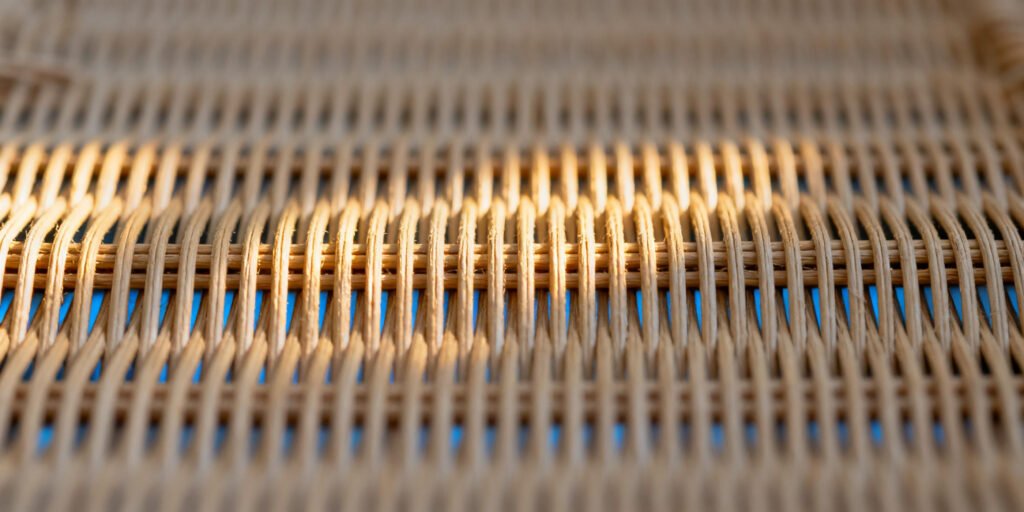
Include teak moisture control (kiln schedules, target MC) and wicker weaving tension requirements to stabilize dimensional consistency over time.
Pretreatment & curing
Adopt phosphate/zirconium/nano-ceramic pretreatments, controlled rinses, dry-off, electrostatic application, and verified cure profiles. Performance is the combo of pretreatment + film build + cure, not thickness alone (see PCI resources on process capability and film build considerations: PCI Coatings Comparison/Calculator).
Outdoor durability gates
Corrosion: reference ASTM B117 and ISO 9227; set failure modes (scribe creep, blistering).
REACH: screen chemicals against EU restrictions (add your internal REACH gate here).
Mini case snapshot (E-E-A-T) After instituting oven profiling and clamp-time SOPs, weld rework fell from 3.8% to 1.6%, and B117 creep at scribe improved from 3.2 mm to 1.1 mm at 240 h across three builds (n=3).
Sample types: appearance → functional → PP sample with full traceability and retains.
Validation matrix (what to actually test)
Domain
Method
Typical gate
Corrosion
ASTM B117 / ISO 9227
No crep>2 mm at scribe after environment-class hours; no blistering
UV
ISO 16474-2 (coatings) / ISO 105-B02 (textiles)
ΔE within spec; no chalking/flaking
Loads
Per internal spec, reference EN 581 families for outdoor seating/tables
Meet static/fatigue targets without permanent set (EN 581 overview)
Humidity
ASTM D2247
No blistering/delamination after time-on-test
Packaging
ISTA 3A for parcel shipments ≤70 kg (drop + vibration + compression) (ISTA 3A overview)
Pass all sequences with intact product
Cross-Functional Controls That De-Risk Your Program
Supply Chain & Risk
Dual-source long-lead extrusions and textiles; keep alternates on AVL.
Embed change control (ECR/ECO) and IP protection obligations in sub-contracts; WIPO resources provide neutral guidance and model language (Guide to Trade Secrets, Model Agreements).
Compliance & Sustainability
FSC chain-of-custody for hardwoods and veneers in scope (FSC CoC).
Layered audits: capability on CTQs (CpK), coating line control, oven profiles per lot, panel retains, PCI-certified finishing partners where feasible (PCI Certification).
Visual Aids You Can Re-Use
Milestone-Owner-Deliverable Map
Milestone
Owner
Must-have deliverables
Go/No-Go criteria
RFQ
Sourcing + Eng
RFQ pack, NNN, draft BOM
≥2 qualified bids; IP clauses signed
DFM
Supplier Eng + Your Eng
DFM report; updated drawings
All CTQs are manufacturable; test plan agreed
Costing
Sourcing + Finance
Costed BOM; yield & setup assumptions
Variance vs. target ≤3%
Fabrication
Factory
Jigs; first-off dimensions
CpK ≥1.33 on CTQs
Finishing
Factory + QA
Pretreat + cure records; film build ~50–75 μm
Cross-hatch/adhesion pass; no visual defects
PP Sample
QA
Test reports (B117/ISO 9227, ISO 16474-2, ISTA 3A)
All gates green; retains archived
Image ALT checklist (add to your CMS media library)
outdoor furniture OEM process flow from RFQ to PP sample
powder-coated aluminum frame, ~65 μm dry film build macro view
RFQ checklist for outdoor furniture OEM projects (drawings, tolerances, MOQ, lead time)
packaging drop test per ISTA 3A for outdoor furniture sample cartons
aluminum frame DFM drawing with vent holes and bend radii callouts
BOM cost breakdown table for a lounge chair (materials, finishing, QA)
Conclusion: Process Discipline Beats Rework
When your RFQ, DFM, finishing, and validation gates are anchored to recognized standards—salt spray (ASTM B117 / ISO 9227), humidity (ASTM D2247), UV (ISO 16474-2), and distribution (ISTA 3A)—the PP sample becomes a formality, not a gamble. Add auditable finishing capability (prefer PCI-certified suppliers), and you’ll see faster approvals and healthier contribution margins. This end-to-end outdoor furniture OEM/ODM approach also improves predictability from DFM to PP approval and beyond.
What’s the practical difference between outdoor furniture OEM vs. ODM?
OEM: you own design and drawings; supplier manufactures to your CTQs. ODM: You adapt a supplier’s base design; faster start, less geometry freedom. [Internal link: OEM/ODM Selection Guide]
How many PP samples and who keeps them?
Two for you (inspection + archive), one for the factory retain room. Retain coated panels and fabric swatches for at least 24 months with full lot IDs. Reference ISO 16474-2 and ISO 105-B02 on labels.
What salt-spray or UV hours should we specify?
Tie hours to environment class and finish system; cite ASTM B117/ISO 9227 for corrosion cabinet conditions and ISO 16474-2 for xenon-arc UV. Define failure modes (creep, blistering, chalking) in the spec.
How do we control color consistency across builds?
Master standard, ΔE thresholds, booth cleanliness, reclaim ratios, and oven profile records—plus retain panels per lot. For textiles, use ISO 105-B02.
Do we need ISTA 3A for furniture?
For sample or parcel shipments ≤70 kg, ISTA 3A is appropriate (drop + vibration + compression). Use the correct ISTA/ASTM profile for palletized freight.
Why aluminum frames for hospitality environments?
High strength-to-weight and a self-forming oxide layer yield strong corrosion resistance; pretreatment and finishing elevate durability in coastal duty (see Aluminum Association oxide/passivation overview).
Which third-party signals matter for finishing? PCI Certification demonstrates audited process control across pretreatment, application, and cure—use it to screen applicators.
What MOQ and lead time should we expect for an OEM start?
Ranges depend on extrusion lots, coating line capacity, and textile lead times. As a planning baseline: 150–300 units per SKU per colorway for first build; 45–60 days from tooling/DFM sign-off to PP sample, then 35–55 days to the first mass-production run (seasonality and capacity apply).
What documentation must accompany the PP sample?
Drawing pack revision, full BOM with finish codes, coating oven profiles, adhesion/cross-hatch, B117/ISO 9227, and ISO 16474-2 results (as applicable), packaging test reports (ISTA 3A for parcel builds), and retain panels/swatches with lot IDs.
Hi, I’m Ady, the author of this post. We have 15 years of experience in manufacturing and supplying high-quality outdoor furniture, serving customers in over 30 countries worldwide. From boutique garden designers to large resort chains, our clients rely on us for durable and stylish outdoor furniture that meets international quality standards. Our extensive product range includes rattan sofas, outdoor dining sets, lounge beds, and more, catering to a variety of styles and applications. Whether for hotels, resorts, villas, or private gardens, our furniture is built to enhance outdoor spaces, ensuring comfort, elegance, and long-lasting performance.
If you have any requests, get in touch with us for a free quote and let us provide a one-stop solution for your market.
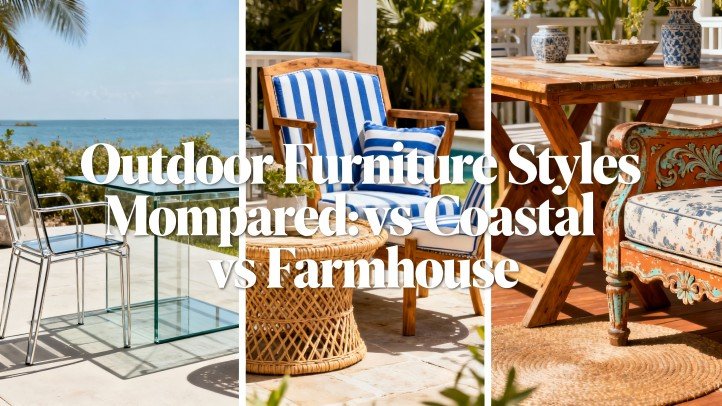
Introduction: This guide-Outdoor Furniture Styles Compared-looks at three favorites-Modern, Coastal, and Farmhouse you can choose with confidence. We cover look-and-feel, common materials,