Executive summary
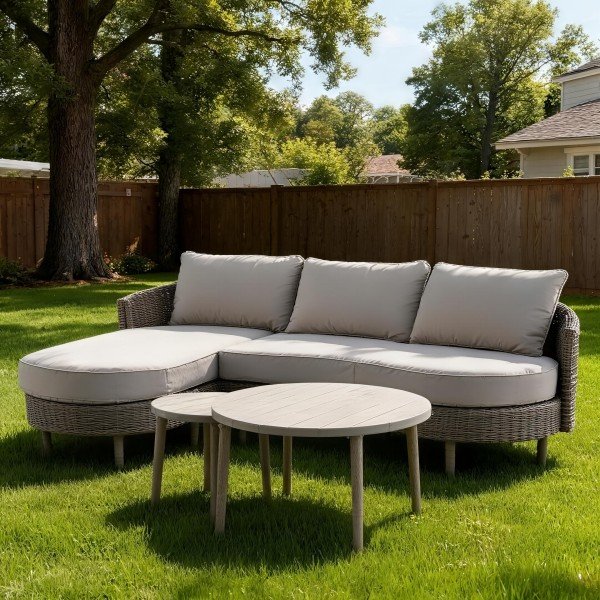
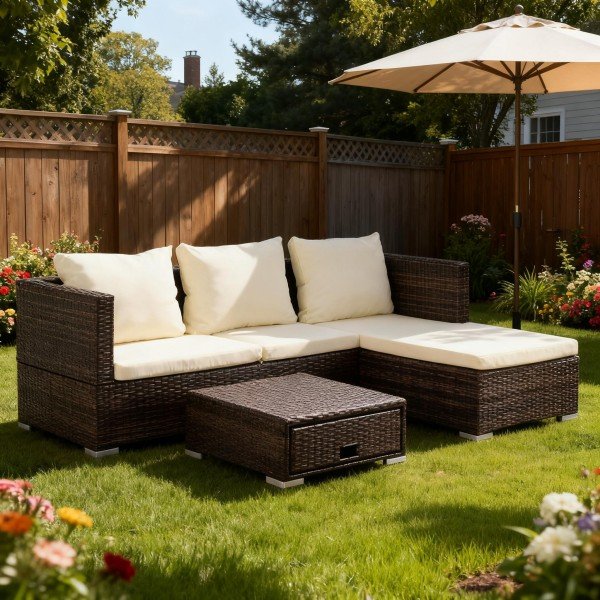
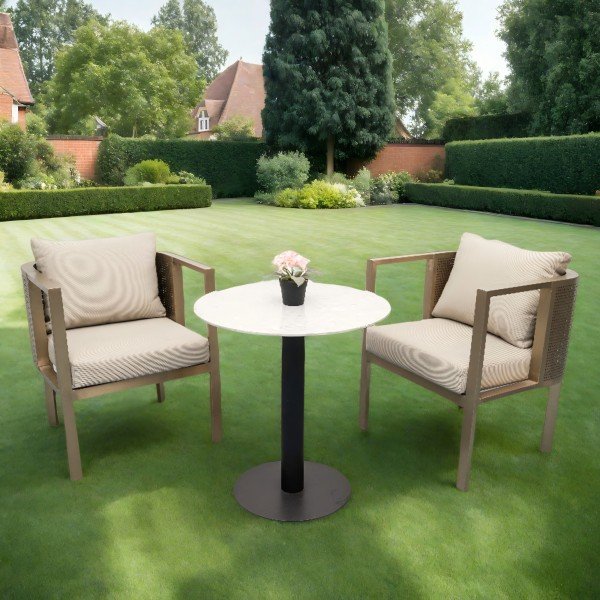
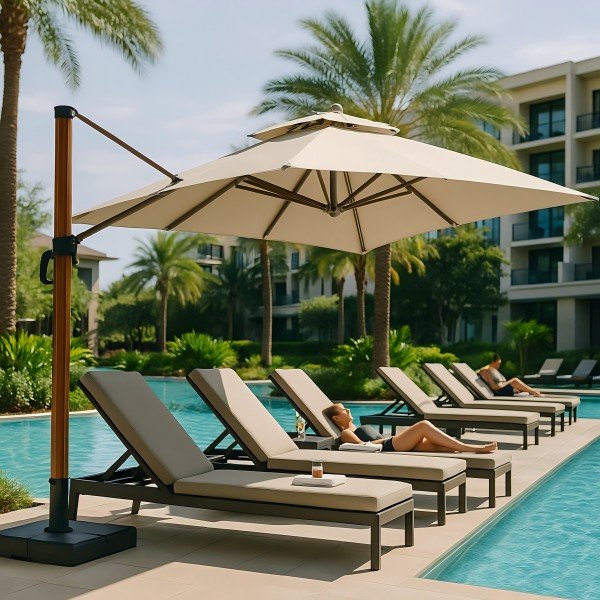
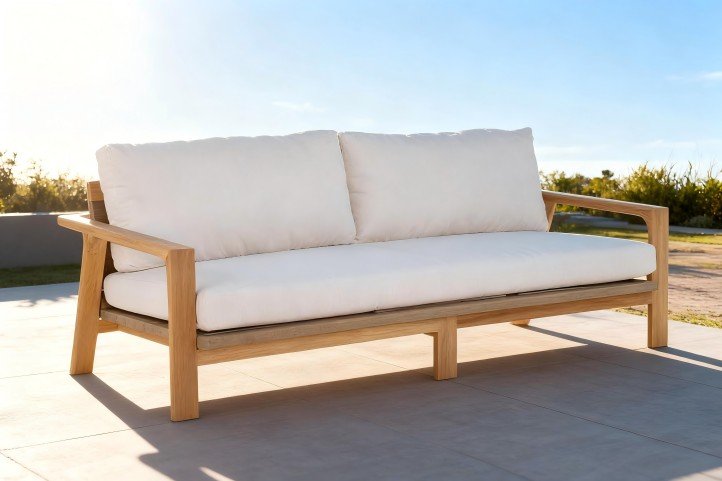
Upgrading to solution dyed acrylic outdoor fabric—where color pigments are integrated inside the fiber—boosts UV colorfastness and weathering stability, moving cushions from a 1–2 year refresh cadence to ≥5 years in typical deployments (brand/series dependent). The result: fewer mid-cycle reworks, consistent appearance, and lower total cost of ownership (TCO). Explore collections: [Happy Rattan Outdoor Sofa Series], [Happy Rattan Outdoor Dining Sets], [Happy Rattan Patio Umbrellas].
Why do many outdoor fabrics “fail fast”
Sun, rain, and bio-growth create a harsh loop: UV breaks dye bonds → visible fading/chalking; moisture cycles foster mildew; aggressive cleaning can accelerate wear. That’s why entry-level piece-dyed polyester or budget blends often look tired after 1–2 years, especially in high-UV markets.
Standards that measure the problem: xenon-arc ISO 105-B02 and AATCC 16 gauge lightfastness; ASTM G154 uses fluorescent-UV with condensation cycles to simulate outdoor UV + moisture exposure. These are the workhorse references in textile weathering. 国际标准化组织+2AATCC Test Methods+2
What “Grade-A high-weather-resistant” really means (and why SDA wins)
Definition (plain English): Solution-dyed acrylic outdoor fabric embeds the pigment inside the polymer before fiber extrusion—unlike piece-dyed goods that color only the surface. This structural difference drives superior UV colorfastness under xenon-arc and QUV protocols and is the basis for long warranties in premium lines. OUSEA
Translator for spec sheets:
-
ISO 105-B02 (xenon-arc): artificial daylight exposure; comparative fading versus blue-wool references. 国际标准化组织
-
AATCC 16 (xenon-arc variants): widely used colorfastness-to-light method in textiles. AATCC Test Methods
-
ASTM G154 (QUV fluorescent-UV + condensation): alternating light/condensation cycles to accelerate photodegradation and moisture effects. Q-Lab
Side-by-side: which outdoor fabric “holds up” outside?
| Property / Fabric | Solution-Dyed Acrylic (SDA) | Outdoor Polyester | Olefin/PP |
|---|---|---|---|
| UV colorfastness (fade resistance) | Excellent; pigment inside fiber; top choice in intense sun | Fair–Good; relies on stabilizers/finishes | Good; often trails SDA in severe UV |
| Moisture & mildew behavior | Good; easy to clean; many lines are bleach-friendly per OEM guide | Good shedding; finish-dependent | Very good water/stain behavior |
| Hand/comfort (cushions) | Soft, upholstery-grade | Varies (often crisper) | Varies |
| Typical warranty/expectation* | Furniture/upholstery commonly 5-year limited warranty; shade/marine has up to 10-year (brand/series dependent) | Usually shorter; varies by finisher | Varies by supplier |
| Budget | $$$ (investment grade) | $$ | $–$$ |
*Example reference: Sunbrella lists a 5-year limited warranty for upholstery/specialty/decorative shade fabrics and a 10-year warranty for shade & marine lines (series-dependent). Sunbrella
For additional non-brand explainers comparing acrylic, polyester, and olefin, see independent guides; they consistently highlight SDA’s fade resistance advantage due to pigment-in-fiber coloration. OUSEA
The “+200%” in practice: a simple 5-year TCO model
Moving from a 24-month polyester cycle to ≥60 months with solution-dyed acrylic outdoor fabric represents a 200%+ extension (2 years → 5+ years). A longer interval is plausible when lightfastness grades and QUV results are documented, and care follows the OEM playbook. Sunbrella+1
Illustrative ledger (replace with your own prices):
| 5-Year Horizon | Mid-Tier Polyester | SDA (Grade-A) |
|---|---|---|
| Unit price per cushion | $100 | $160 |
| Replacements in 5 yrs | 2–3 | 1 |
| Hardware/handling per swap | $15 × 2–3 | $15 × 1 |
| Downtime/appearance risk | High (fade by year 1–2) | Low (holds color) |
| Total 5-yr spend (est.) | $230–$345 | $175 |
Buying checklist: what to ask suppliers (and put in contracts)
-
Lightfastness proofs — request ISO 105-B02 / AATCC 16 grade targets relevant to your climate and exposure hours. 国际标准化组织+1
-
Accelerated weathering data — ask for ASTM G154 cycle settings (lamp type, irradiance, panel temperature, condensation regime) and ΔE/strength-retention curves. Q-Lab
-
Abrasion for seating — specify ISO 12947 Martindale thresholds by traffic profile (hospitality/public spaces usually higher).
-
Water repellency — evidence via AATCC 22 (Spray Test) if you want rain beading on cushions.
-
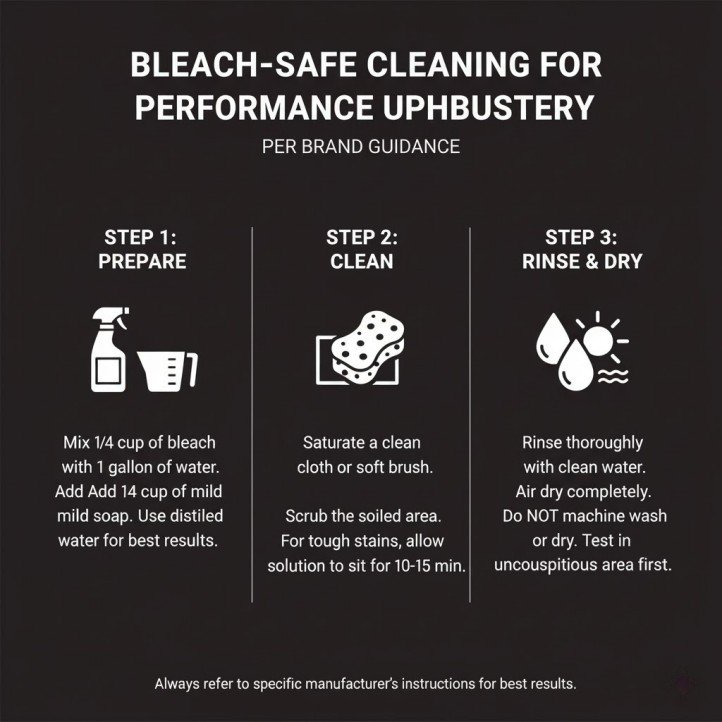
Care protocol — brand cleaning instructions; many SDA lines allow diluted bleach for mildew per official guides. Sunbrella
Maintenance that unlocks the full lifecycle
-
Routine clean: Brush off dust, rinse, and spot clean. For mildew on qualifying performance fabrics, brand guidance supports bleach-safe cleaning (e.g., 1 cup bleach + ¼ cup mild soap per gallon; soak ~15 min; rinse thoroughly; air dry). Always follow the manufacturer’s page. Sunbrella
-
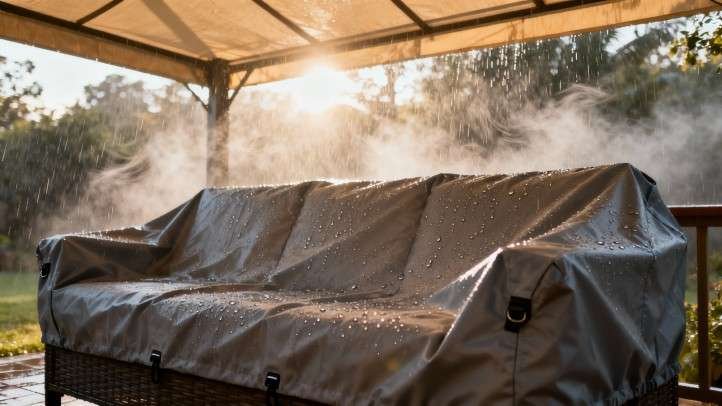
Seasonal protection: Use covers or store cushions during prolonged rain/off-season to reduce wet-time and UV hours.
-
Video resources (embed for UX & dwell time):
Expert insight (composite)
Upholstery Lab Engineer (composite): “In high-UV sites like pool decks and rooftops, piece-dyed polyester dark tones often show perceivable ΔE shifts after one to two peak seasons. Solution-dyed acrylic outdoor fabric—validated with ISO 105-B02 / AATCC 16 grades and a robust ASTM G154 profile—holds chroma and hue within acceptable brackets far longer. The economics flip the moment you cost a mid-cycle rework.” (Composite summary aligning with the cited standards and warranty references.) 国际标准化组织+2AATCC Test Methods+2
Conclusion: treat fabric as an asset, not a consumable
By specifying grade-A, solution-dyed acrylic outdoor fabric, backed by lightfastness grades, accelerated-weathering data, and clear care protocols, most venues can move from 1–2 years to ≥5 years between refreshes—a practical 200%+ extension that takes hidden costs off the P&L. Next steps: shortlist sets and request swatches—[Request Samples], [Happy Rattan Outdoor Sofa Series],[Happy Rattan Patio Umbrellas].
FAQ
Q1. Is “grade-A high-weather-resistant” the same as one brand?
No. It’s a performance class commonly met by solution-dyed acrylic lines from multiple manufacturers. Example: Sunbrella publishes 5-year upholstery and up to 10-year shade/marine limited warranties (series-dependent). Sunbrella
Q2. How do I quickly gauge UV fade resistance?
Ask suppliers of solution-dyed acrylic outdoor fabric for ISO 105-B02 / AATCC 16 grades and ASTM G154 exposure curves; higher grades/slower ΔE under defined cycles indicate stronger UV stability. 国际标准化组织+2AATCC Test Methods+2
Q3. Is olefin “worse” than SDA?
Not categorically—olefin shines in water/stain resistance and budget efficiency, but in intense UV, SDA typically leads in color retention thanks to pigment-in-fiber coloration. OUSEA
Q4. What abrasion spec should I ask for on seats?
Quote ISO 12947 (Martindale) cycles tailored to your traffic profile; hospitality/public spaces usually require higher thresholds.
Q5. Can I use bleach for mildew?
If the brand’s care page says it’s allowed (many SDA lines do), use a diluted solution and rinse thoroughly. Reference the official instructions. Sunbrella
References (anchor these in-text where noted)
-
Sunbrella Limited Warranty (5-year upholstery; up to 10-year shade/marine). Sunbrella
-
How to Clean Sunbrella Upholstery (bleach-safe method for mildew on qualifying fabrics). Sunbrella
-
ASTM G154 overview—fluorescent-UV with light/condensation cycles (Q-Lab explainer). Q-Lab
-
ISO 105-B02 xenon-arc lightfastness (ISO page). 国际标准化组织
-
AATCC 16 colorfastness to light (AATCC method page). AATCC Test Methods
-
ISO 12947 Martindale abrasion (ISO listing/technical explainer; use in specs).