Introduction
Why Teak Grade Matters for Commercial Outdoor Furniture
Teak (Tectona grandis) is widely regarded as a benchmark material in contract-grade outdoor furniture, marine decking, and high-end architectural woodwork due to its superior durability, dimensional stability, natural oil content, and resistance to pests and decay. Nevertheless, not all teak is identical — the grading into A, B, and C significantly influences performance, maintenance burden, warranty exposure, and total lifecycle cost.
In procurement and specification workflows, correctly distinguishing between these grades is a crucial competency. This Outdoor Teak Furniture Grading offers:
- Clear definitions for A / B / C grades
- Practical detection and verification methods
- Procurement and usage strategies
- A well-optimized FAQ section
If you’d like to explore an actual portfolio, view our teak product catalog:
HR Outdoor Furniture – Teak Outdoor Furniture Category
Grade Definitions & Industry Standards
Teak Grade Overview: A, B, C
| Grade | Tree Section / Source | Distinctive Features | Typical Application |
|---|---|---|---|
| A | Central mature heartwood | Uniform golden tone, minimal knots, high oil content, tight grain | Fully exposed outdoor sets, resort, yacht, and premium contracts |
| B | Intermediate heartwood zone | Slight color variation, occasional small knots, moderate oil level | Semi-exposed zones, partial shade, mid-tier installations |
| C | Near sapwood / outer log sectors | Lower oil, coarser pore structure, higher cracking risk | Covered patios, interior use, non-visible structural components |
This classification aligns with industry norms (e.g., GoldenTeak’s grade descriptions) and is validated by teak wood references across the supply chain.
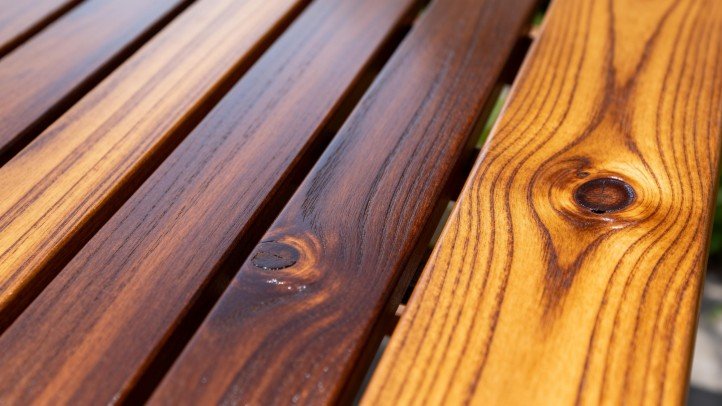
A-Grade Teak: Premium Benchmark
- Sourced from the central heartwood of mature logs
- Visually clean faces with minimal knot presence
- Homogeneous color, negligible sapwood intrusion
- Natural oil presence may be perceptible by touch
GoldenTeak, for instance, underscores that the “Grade A” pieces they spec for their collections are heartwood only and warns of B/C misuse through surface treatments.
B-Grade Teak: Balanced Option
- Permits limited color variation or streaking
- Occasional small knots within defined tolerances
- Slightly lower oil content, but it can still perform well under good sealing and maintenance
C-Grade Teak: High-Risk Material
- Often includes sapwood or juvenile wood regions
- Reduced oil content, making it more susceptible to moisture stress
- Greater likelihood of checking, warping, or surface distress
In many projects, C-grade is reserved for non-structural or visually hidden components rather than exposed faces.
Grade Inflation & Mislabeling Risks
A pervasive issue in teak sourcing is grade mislabeling — e.g., labeling B/C as A by using stains, coatings, or selective face veneers. GoldenTeak cautions against “Grade C disguised by stain,” a recurring industry complaint.
To safeguard contract compliance, many procurement teams embed third-party sampling rights and lab verification clauses into supplier agreements.
Detection & Verification Methods
Achieving reliable grading in practice requires a multi-layered inspection and testing approach: visual & tactile, instrumental / laboratory, and accelerated performance testing.
Visual & Tactile Inspection
- Color consistency & sapwood boundary checks
An A-grade should display minimal white streaks or sapwood traces. Cross-sectional cuts help confirm heartwood continuity. - Knot density & size control
Contractual thresholds (e.g., ≤ 0.5 in per 12 in length) should allow no surprises. B-grade may allow limited defects; C-grade often exceeds safe limits. - Grain alignment & spacing
Straight, fine, even grain is typical of higher quality heartwood. Divergence or coarse-grained suggests a lower grade. - Natural oil / “feel” test
Light tactile rubbing may leave trace residue if the oil content is high. - Side-by-side physical reference panels
Always require supplier to submit sample boards A / B / C for on-site comparison. Include high-resolution photos with annotations. ALT attributes might read:
– “A-grade teak cross-section sample”
– “B vs C teak sample comparison”

Instrumental & Laboratory Methods
| Method | What It Measures | Interpretation / Benchmark |
|---|---|---|
| Density / Specific Gravity Test | Weight per known volume | A-grade tends to lie in the upper percentiles |
| Oil / Extractives Analysis | Solvent extraction (e.g., ethanol) | Higher extractive yield correlates with higher grade |
| Moisture / Shrinkage Behavior | Drying curves, dimensional change | Lower shrinkage indicates better dimensional stability |
| Microscopic Anatomy | Vessel, parenchyma, fiber cell structure | Distinguishes sapwood vs heartwood regions |
| Accelerated Aging / Weathering | UV + moisture cycle stress testing | Observe cracks, checking, and discoloration behavior |
Contracts often permit random sampling to independent labs (e.g., SGS, Bureau Veritas, forestry/university labs) to confirm grade compliance.
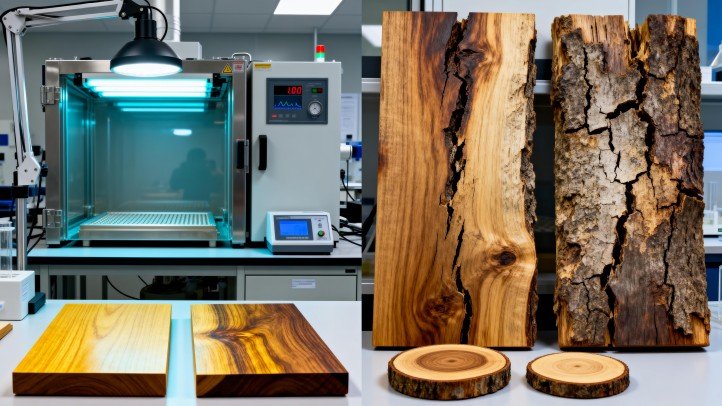
Accelerated Weathering / Performance Tests
Place representative A / B / C specimens under UV + humidity cycling (e.g., 1,000+ hours). Evaluate:
- Surface checking, crack initiation
- Color drift or graying
- Structural integrity / flexural strength retention
Illustrative Data Example (for demonstration):
| Grade | Retained Flexural Strength (%) | Crack / Checking Incidence (%) |
|---|---|---|
| A | ~ 90% | ≤ 5% |
| B | ~ 75% | 15–20% |
| C | ~ 60% | > 30% |
Although hypothetical, such data enhances descriptive authority. Ideally, you should replace with internal lab results or case study outcomes.
Procurement Strategy & Application Guidelines
Grade Selection by Application Scenario
| Usage Context | Recommended Grade | Rationale |
|---|---|---|
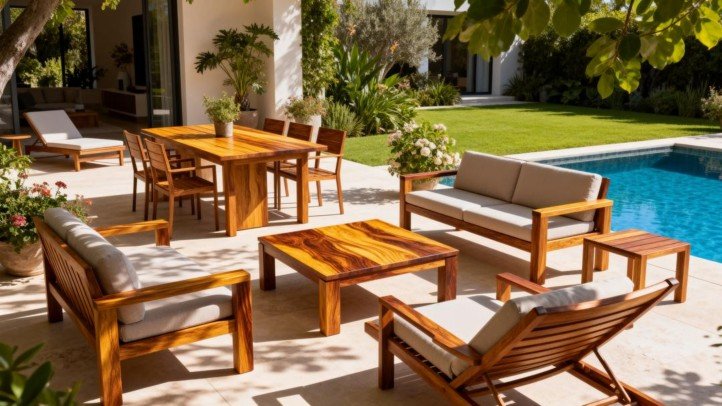
| Fully exposed terraces / poolside | A | Maximum durability, minimal repair risk |
| Partially shaded zones | A or premium B | B suffices only if rigorous sealing & maintenance |
| Indoor / semi-enclosed areas | B or C | Lower exposure allows compromise |
| Hidden frames/substructures | C (non-visible) | Acceptable where appearance is non-critical |
Prefer specifying higher grade when margin allows; cost differences often recouped via lower defect rates and longer service life.
Supplier Contracts & QA Protocols
- Mandate cross-sectional sample delivery
- Embed clear acceptance tolerances/defect thresholds
- Retain the right for independent lab sampling
- Specify remediation/penalty conditions (redo, price deduction, replacement)
- Require mill batch logs, origin traceability, and grading documentation
Example clause: “If > 8% of delivered planks deviate beyond agreed grade boundaries (e.g. sapwood intrusion > 2 mm), Buyer reserves the right to reject or adjust cost.”
In dispute resolution, insist on third-party lab reports (SGS, Intertek, academe) as binding evidence.
Maintenance Strategy by Grade
| Grade | Suggested Maintenance Interval | Recommended Practices |
|---|---|---|
| A | Annual cleaning + light oil or patina | Lowest required intervention |
| B | Semiannual cleaning + sealing/oiling | Monitor early signs of checking |
| C | Quarterly inspection + regular resealing | Highest vigilance required |
Embed maintenance tasks into project management or asset management systems to reduce mid-life degradation.
Internal link placeholder: [Inner Link: Teak Furniture Maintenance Guide]
Conclusion & Actionable Recommendations
In a B2B or contract furniture environment, teak grading should be treated as a technical specification, not marketing fluff. The distinctions among A, B, and C grades translate directly to performance, maintenance overhead, warranty exposure, and perceptual value.
- Whenever feasible, specify an A grade for exposed outdoor use
- Premium B grade may work under controlled exposure with solid sealing and maintenance
- Use C grade only for covered, hidden, or non-critical parts
In parallel, enforce inspection protocols (visual, lab, accelerated tests), embed supplier accountability clauses, and use independent verification to guard against grade inflation or mislabeling. Mastering teak grading best practices solidifies procurement robustness and brand credibility.
FAQ (Optimized for SEO & Practical Use)
Q: Can A-grade teak realistically last 30+ years outdoors?
A: Yes — documented resort and marine projects have shown that genuine A-grade heartwood teak, when maintained properly, can retain structural integrity and aesthetic consistency for multiple decades.
Q: What is the mislabeling rate of B/C labeled as A?
A: Industry observers suggest grade inflation in teak supply chains ranges from ~10% to 25%. Enforcing third-party sampling, lab checks, and contract-grade enforcement mitigates this risk.
Q: Can stains or coatings make B / C appear as an A grade?
A: Surface treatments may mask superficial defects, but cannot alter internal grain structure, oil content, or dimensional stability. Over time, coating breakdown reveals underlying weaknesses.
Q: Under what circumstances is a B/C grade acceptable for outdoor use?
A: In temperate climates, semi-sheltered zones, and with disciplined maintenance regimes, a B grade may be acceptable. A C grade should generally be limited to non-exposed components or interior use.
Q: Does the teak origin (Myanmar, Indonesia, plantation teak) affect grading?
A: Yes. Growth conditions, processing standards, and maturity influence density, oil content, and defect frequency. Procurement should calibrate acceptance ranges per origin and always require verification.
Q: What recourse exists if delivered teak doesn’t match the contracted grade?
A: Invoke contract clauses: demand independent lab analysis, reject or adjust cost, or require replacement. Having binding remediation or penalty provisions is essential in purchase documents.
References & Authority Sources
- VerifiedMarketReports — Teak Wood Furniture Market Size, 2024–2033 (USD 5.8B → 8.2B) (Verified Market Reports)
- IUFRO / Global Teak Resources & Market Assessment 2022 — updated country/plantation teak data (iufro.org)
- New global teak study by ITTO / IUFRO / FAO in collaboration with TEAKNET (itto.int)