The Great Debate: Finding the Perfect Material for Your Outdoor Chair
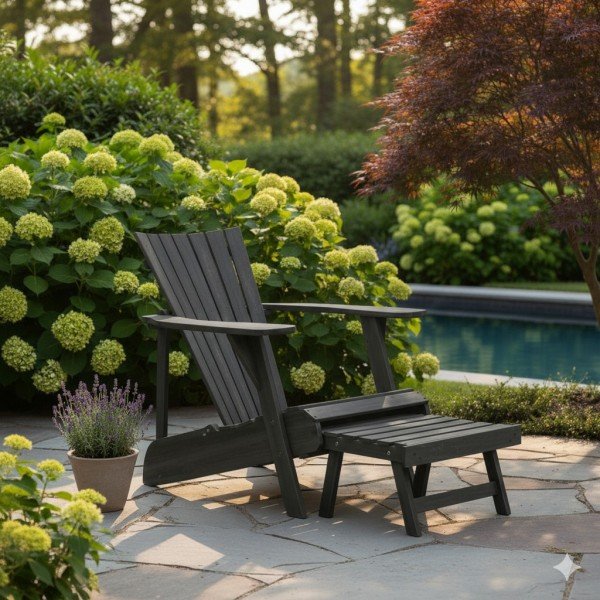
When choosing an Adirondack chair material, the decision often comes down to a timeless debate: wood vs. plastic (or composite). Both options promise comfort, durability, and style—but each comes with trade-offs.
This article will give you a clear Adirondack chair material comparison, breaking down the strengths and weaknesses of both wood and plastic chairs. By the end, you’ll have the insights you need to make the right choice for your home and lifestyle.
The Timeless Appeal of Wood Adirondack Chairs
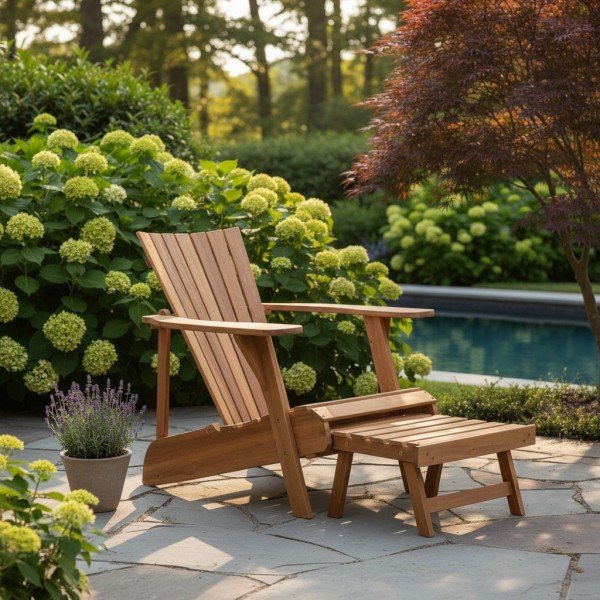
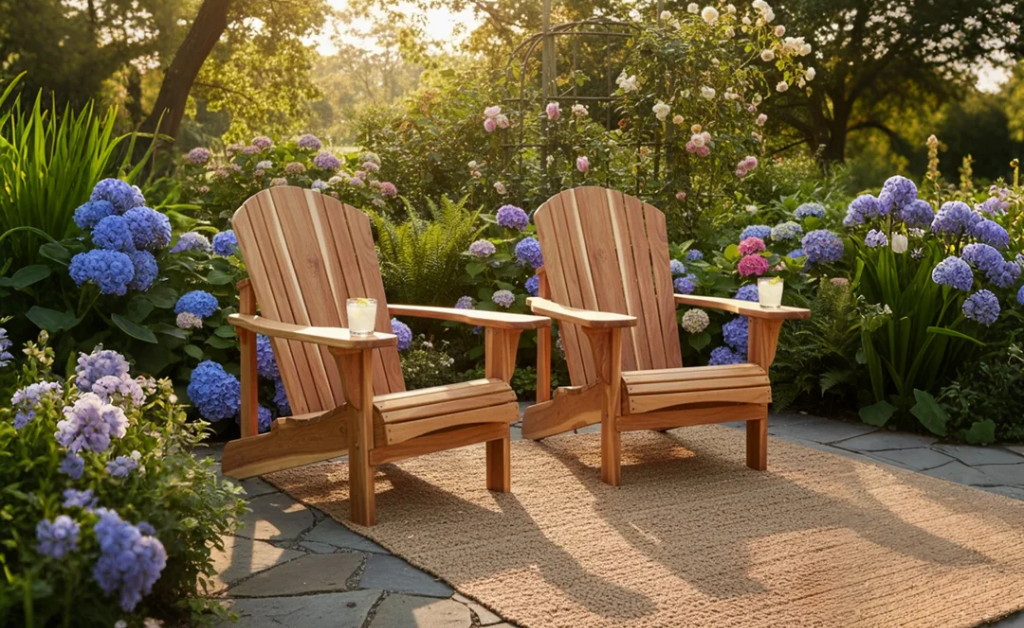
Wood has been the classic Adirondack chair material since the design was first introduced in the early 1900s. Its natural beauty and strength remain unmatched.
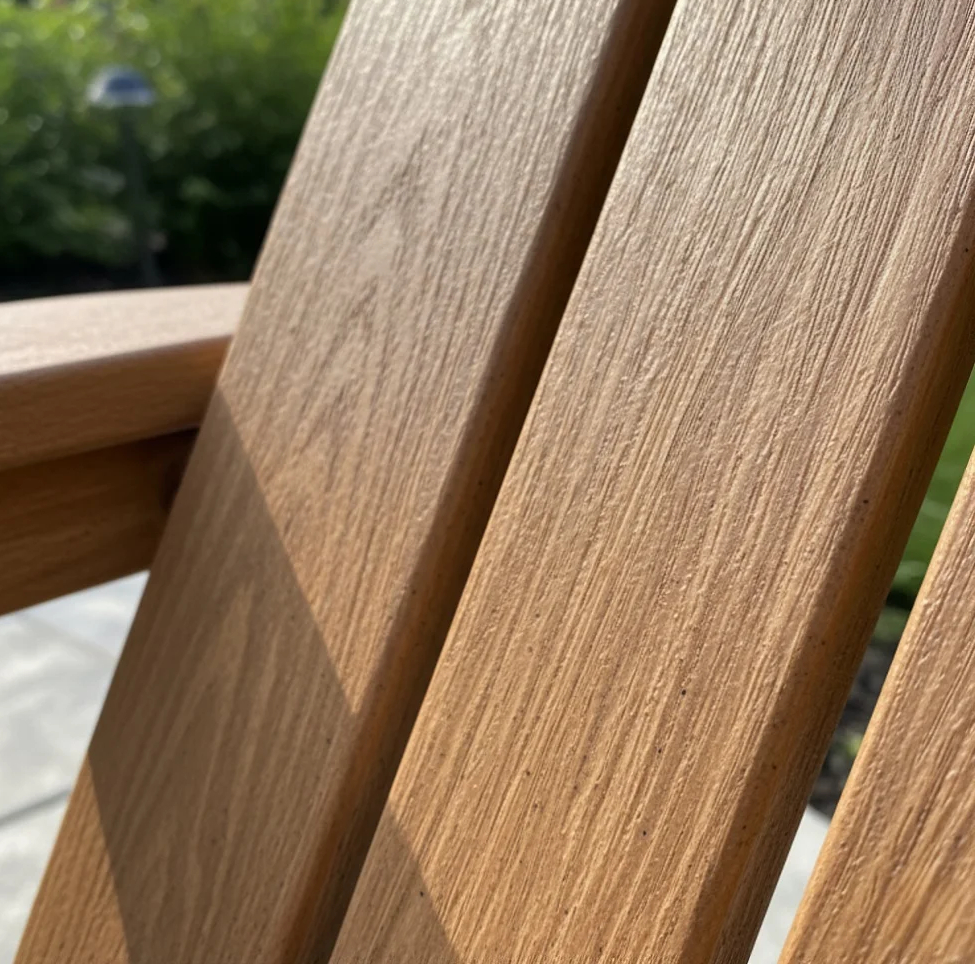
Advantages of Wooden Adirondack Chairs
- Aesthetic appeal: Wood blends seamlessly into natural outdoor settings, offering a rustic, authentic look.
- Strength and stability: High-quality woods like teak and cedar resist warping and provide a solid feel.
- Longevity: With proper care, wooden chairs can last decades.
Disadvantages
- Maintenance required: Annual sealing, staining, or oiling is recommended.
- Price point: Premium hardwoods like teak or mahogany can be expensive.
- Weight: Solid wood chairs are heavier and less portable.
Expert Notes on Wood Types
- Cedar Adirondack Chairs: Lightweight, naturally insect-resistant, and aromatic. However, cedar requires sealing to prevent graying.
- Teak: Extremely durable and weather-resistant; often considered the gold standard, but also among the most expensive.
- Redwood/Mahogany: Offers stunning colors and durability, but requires more maintenance and a higher investment.
💡 User insight: Many homeowners note that cedar chairs “weather gracefully” into a silver patina, but only if maintained regularly.
This is why consistent Adirondack chair maintenance—sealing, staining, or oiling—is worth the time if you prefer the natural look.
For detailed care instructions, see [Adirondack Chair Maintenance Guide].
The Modern Practicality of Plastic & Composite Chairs
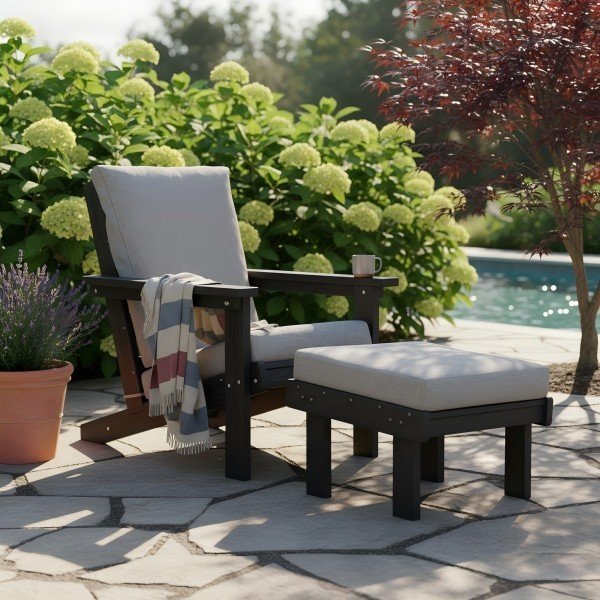
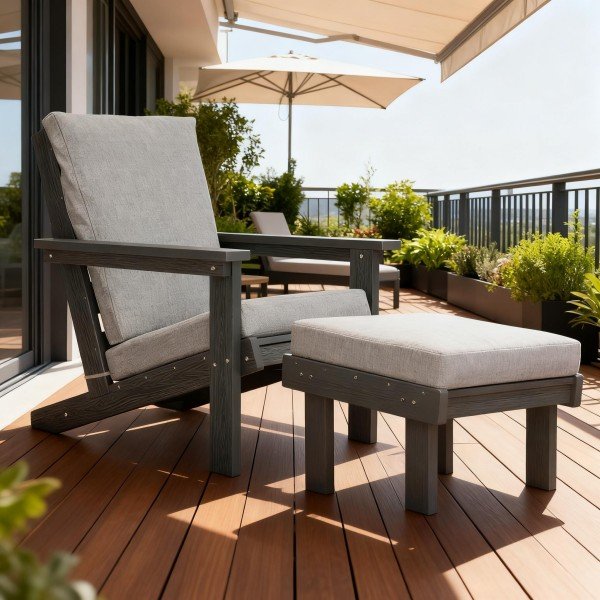
In recent years, wood-plastic composites (WPCs) and high-quality recycled plastics have become viable alternatives. These materials deliver convenience without sacrificing style.
Advantages of Plastic & Composite Chairs
- Low maintenance: No sealing or staining required; simply wash with soap and water.
- Color variety: Available in dozens of shades, from bright coastal blues to muted earth tones.
- Weather resistance: Resistant to fading, cracking, and moisture. Perfect for humid or coastal climates.
- Eco-friendly options: Many are made from recycled plastics or include wood byproducts, contributing to material reuse.
Disadvantages
- Texture & feel: Lacks the natural grain and warmth of real wood.
- Perception: Some consumers still associate plastic with “cheaper” furniture.
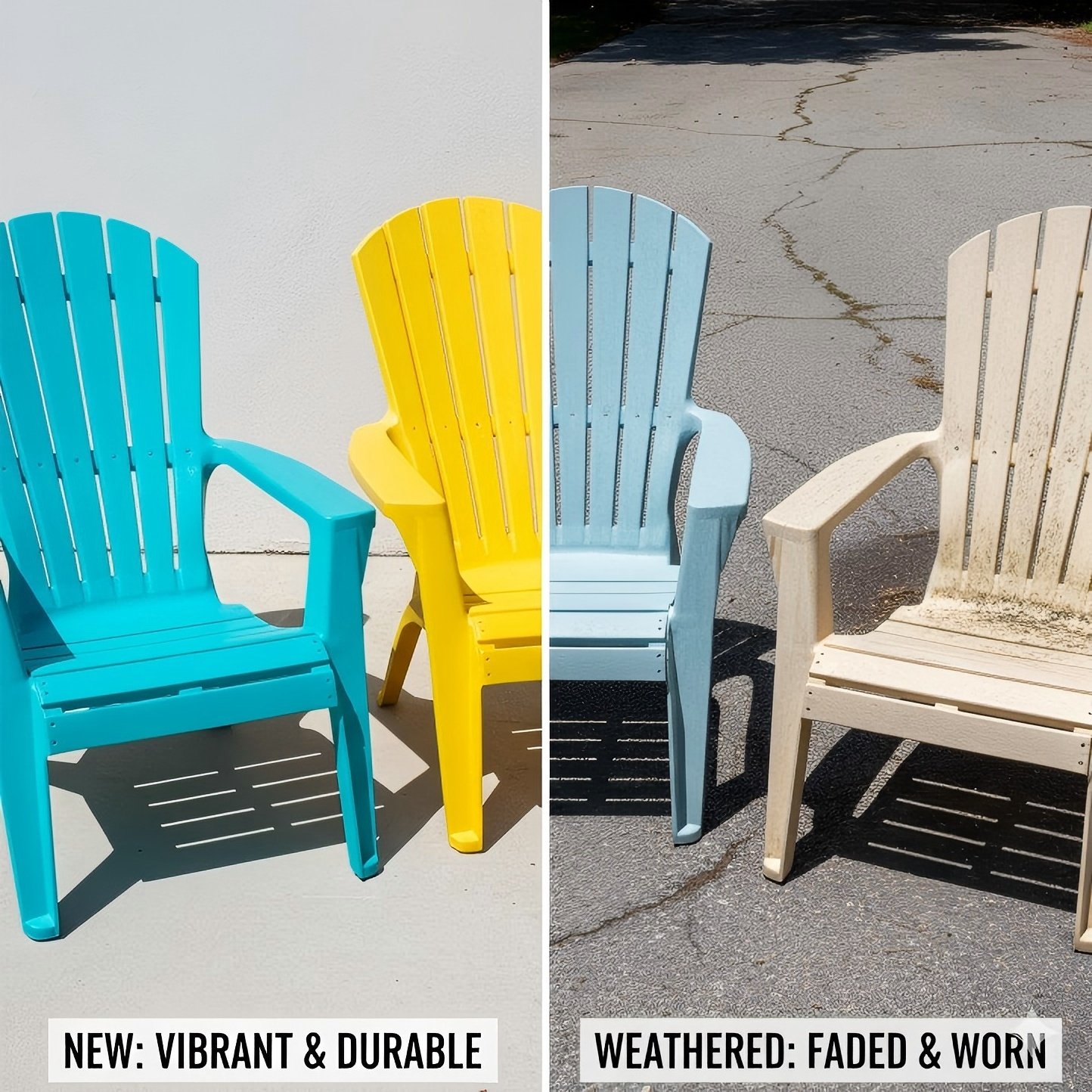
- Long-term aesthetic changes: Without UV stabilizers or proper additives, surfaces may discolor, microcracks may appear, or wood fibers within composites may become exposed.
Data Insight & Research
HDPE Adirondack chairs are known for their exceptional longevity and durability: they maintain vibrant color and resist fading even under prolonged sun exposure thanks to UV stabilizers. (HDPE Adirondack chairs longevity & UV resistance report)
According to What materials are best for Adirondack chairs: wood, plastic, or composite?, HDPE is often the best choice for those prioritizing weather resistance and low maintenance, while wood appeals to those who value traditional aesthetics. (WoodworkingWorld materials comparison)
Market Size & Industry Trends
The global outdoor furniture market is large and growing, making material choice particularly consequential.
According to Grand View Research’s industry report, the market was valued at USD 50.89 billion in 2024 and is projected to reach USD 86.65 billion by 2033, growing at a CAGR of 6.3%. By material type, the wood segment held the highest market share of 65.70% in 2024. (Grand View Research)
Another forecast by Straits Research / Fortune Business Insights places the market at USD 53.27 billion in 2024, projecting growth to USD 81.44 billion by 2033 (CAGR approx. 5.5%) under demand for durable, aesthetic, and eco-friendly furniture materials. (Straits Research)
Also, Future Market Insights reports that the wood material segment leads in share, around 28.7% of the material segmentation in outdoor furniture for 2025, as wood remains a preferred material type for its natural appeal and durability. (Future Market Insights)

Making Your Decision: A Side-by-Side Comparison
Here’s a quick Adirondack chair materials pros and cons comparison across key factors:
| Factor | Wood Adirondack Chairs | Plastic/Composite Adirondack Chairs |
|---|---|---|
| Aesthetics | Natural, warm, classic beauty | Wide range of colors & modern options |
| Durability | It can last decades with care | Highly weather-resistant; fewer issues with rot, splitting, and fading |
| Maintenance | Annual sealing, oiling, and occasional refinishing | Minimal; wash with mild soap |
| Weight & Portability | Heavy, solid, less mobile | Lighter; easier to move |
| Environmental Impact | Renewable wood is from certified sources; biodegradable | Often recycled plastic/WPC; watch for UV damage & limited recyclability |
| Cost Range | High upfront for teak/redwood; mid-range for cedar/pine | Mid to upper mid, depending on quality and additives |
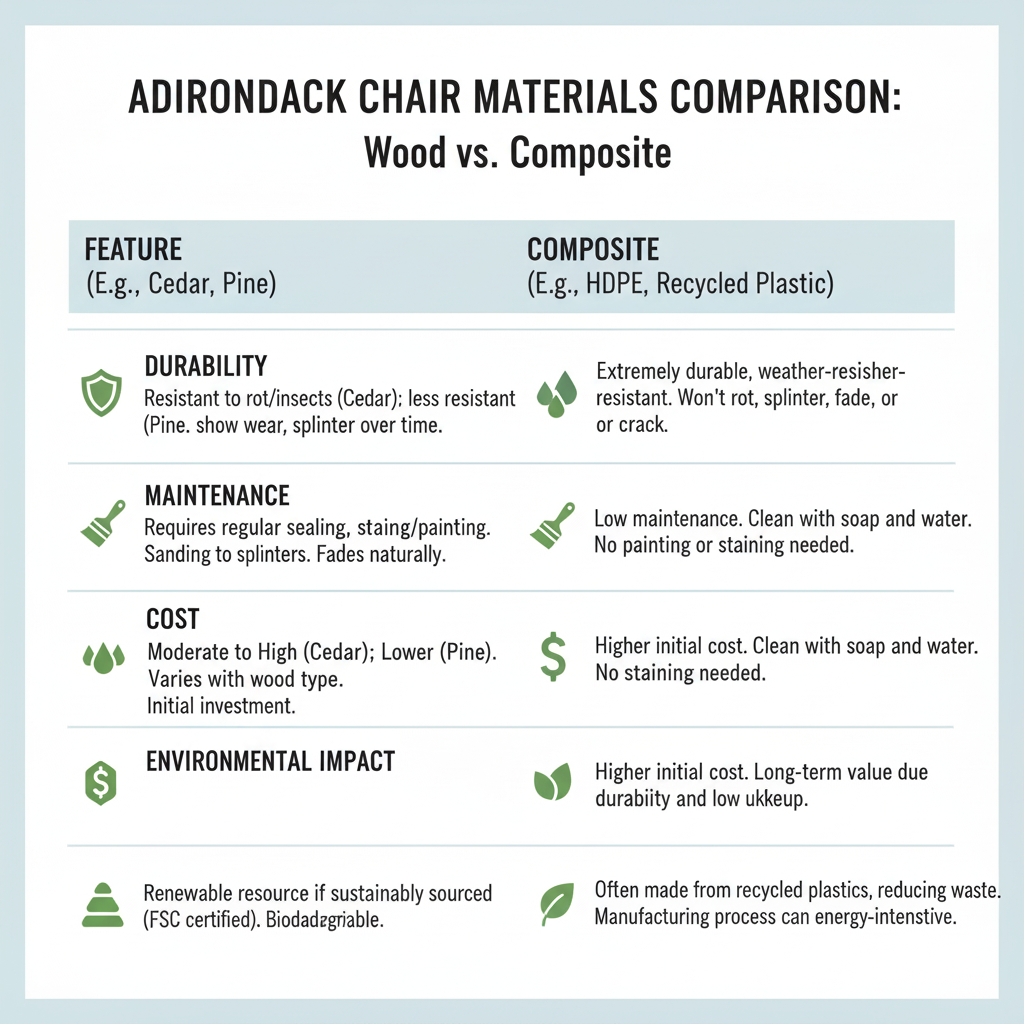
Visual & Video Aid
The Final Verdict: Your Choice Depends on Your Lifestyle
There is no single “best” Adirondack chair material. Instead, the right choice depends on your priorities:
- Choose wood if you value natural beauty, traditional charm, and you’re okay with regular maintenance and treatment.
- Opt for plastic/composite if you want low-maintenance ease, consistent color, and resistance to moisture or coastal weather.
Lifestyle sample: If you use the chair poolside or near salt air, a high-quality HDPE or WPC with UV stabilizers may offer better long-term value. If placed in a garden or forested region, wood like cedar or teak may enhance the ambiance and feel.
Match the Adirondack chair material to your climate (coastal, humid, high-sun), care routine, and budget for the best long-term value.
For next steps, explore [Adirondack chair Buying Guide].
Common Questions About Chair Materials
Do composite Adirondack chairs fade or degrade in color?
Yes—if untreated or with low-quality additives. High-quality HDPE/WPCs include UV stabilizers and pigment throughout the material. Without that, studies and user reports show color change and surface erosion. (HDPE Adirondack chairs longevity & UV resistance report)
If you want to learn more about UV stabilizers, you can read this article[Color That Lasts: The Importance of UV Stabilizers and Key Points in Anti-Fading Technology]
How often do wooden Adirondack chairs need maintenance?
Typically, once a year for sealing or staining. In harsher climates (high sun, humidity), biannual care helps maintain wood integrity and appearance.
Are plastic/composite chairs eco-friendly?
They can be: many composites use recycled plastic or wood waste. But caution: UV treatments, long-term recyclability, and potential microplastic leaching are considered. (WoodworkingWorld materials comparison)
Which Adirondack chair material lasts longer for the same price?
Over time, high-quality plastic/composite may outlast untreated or low-grade wood because of less maintenance and greater resistance to moisture. But premium hardwoods like teak still lead in longevity if properly maintained.
Is wood more comfortable than plastic?
Both use the same ergonomic design. Comfort differences tend to come from surface feel—wood may stay cooler under shade; plastic can retain heat unless colored with heat-reflective pigments. Cushions or contrast finishes can help.
Is HDPE safe for outdoor furniture?
HDPE is known for being UV-stable, moisture-resistant, insect-resistant, and low-maintenance. Several brands guarantee colorfastness and use weatherproof hardware. (HDPE durability and design considerations)
Can I repaint or refinish poly lumber?
Most color-through HDPE/WPC products are not meant to be painted; doing so may void warranties or reduce UV performance. Always follow manufacturer guidance.
Which material suits coastal climates best?
HDPE or capped WPC with UV stabilizers tends to perform best in salt air and high humidity, reducing warping, cracking, and color loss compared with untreated wood.
References
- Grand View Research: Outdoor Furniture Market Report (USD 50.89B in 2024; wood segment ~65.70%) (Grand View Research)
- Straits Research / Fortune Business Insights: Outdoor Furniture Market Forecast 2025-2033 (USD 53.27B → USD 81.44B; CAGR ~5.5%) (Straits Research)
- Future Market Insights: Market Size & Wood Material Share (~28.7%) (Future Market Insights)
- HDPE Adirondack chairs longevity & UV resistance report (YifengMaterial)
- WoodworkingWorld materials comparison