
Introduction
Decorating an outdoor area — whether for a hotel terrace, resort patio, or commercial rooftop lounge — demands strategic choices. Among these, color and material are foundational: they affect aesthetic appeal, durability under weather, customer satisfaction, and long-term cost.
Drawing on industry reports and on Happy Rattan’s real-world practices, this article will guide B2B professionals in selecting color palettes and materials that deliver beauty, longevity, and commercial value. You’ll gain technical insight, design guidelines, case examples, and awareness of common pitfalls.
Core Content
The Power of Color in Outdoor Areas
Color Psychology & Mood
- Warm colors (reds, oranges, yellows) tend to energize and encourage social interaction; cool colors (blues, greens, grays) bring calm and relaxation. Earth tones bridge these extremes and often work well for large outdoor surfaces or when harmonizing with natural surroundings.
- In commercial settings, aligning color strategy with brand identity is critical. For example, a luxury resort may prefer muted greens and teals to match landscaping, while a café chain might use contrast and accent colors to draw attention.
- Happy Rattan offers custom color options with low minimum order quantities, enabling clients to match furniture frame or cushion tones to branding or property color schemes. They also document standard earth tones and neutrals that hold up under UV exposure.
- According to Outdoor Furniture Market Size, Growth & Trends [2025-2032], global demand is being driven in part by requirements that the furniture “resist corrosion, fading, water exposure, and wear and tear … lead to an overall increase in demand for such products for residential and commercial spaces.” (See: Fortune Business Insights)

Color and Function: Practical Considerations
| Factor | Effect on the Outdoor Area | What to Look For / Mitigation Strategies |
|---|---|---|
| Light reflectance & heat | Dark surfaces absorb more heat; unpleasant touch/temperature in the strong sun | Use light-colored frames or surfaces for topmost exposed parts; install shade; ensure materials/coatings have high solar reflectance |
| Fading and UV damage | UV degrades pigments in fabrics, wood, natural rattan, and even some paints | Use UV-stable pigments/coatings; choose synthetic materials with UV inhibitors; add overhangs or covers for protection |
| Visibility of wear/stains | Dirt, stains, and water marks show more on certain colors/patterns | Mid-tones or patterned cushions; select fabrics that are easy to clean; plan maintenance access |
- Industry evidence suggests that PE (polyethylene) synthetic rattan with UV stabilizers and high-quality coatings shows strong resistance to color fade, cracking, and weather damage.
Color Trends & Tone Selection
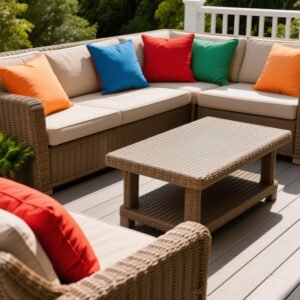
- Neutrals and earth tones (beige, taupe, sandstone, warm grays) are increasingly preferred in both residential and commercial outdoor furniture lines. Accent colors like muted teal, olive, and terracotta provide a periodic visual refresh without overhauling major structural pieces.
- In Outdoor Furniture Market Analysis by Mordor Intelligence, the premium collections segment has “emphasized [d] weather-proof fabrics and extended warranties, with color stability a key differentiator.” (See: Mordor Intelligence)
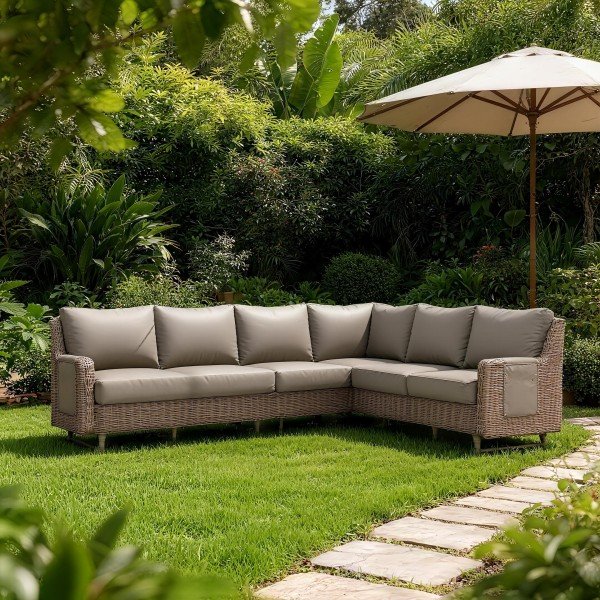
- Happy Rattan’s practice reflects this: frames in neutral rattan tones, paired with removable accent cushions so clients can change accent color as trends shift or for seasonal updates. Many of the Outdoor Sofa styles illustrate this balance. (Happy Rattan Outdoor Sofa collection)
Selecting and Pairing Materials
Material Types & Trade-Offs
| Material | Strengths | Weaknesses | Best Used For |
|---|---|---|---|
| Synthetic Rattan (e.g., PE / HDPE) | High weather resistance, color flexibility, and low maintenance | Can retain heat, some cheaper synthetics crack, and may fade if UV protection is poor | Loungers, commercial seating, and areas where frequent maintenance is costly |
| Wood (teak, cedar, treated woods) | Natural warmth, long lifespan, premium aesthetic | Requires sealing/oiling; vulnerable to rot / insects in some climates; cost & weight higher | Accent pieces, tables, decks, and spaces where luxury is emphasized |
| Metal (aluminum, powder-coated steel, stainless) | Strength, slim profiles, structural durability; aluminum resists rust | Can get hot, potential corrosion in coastal settings; coating issues if surface is damaged | Furniture frames, supporting components, and architectural elements |
| Fabric & Cushions | Opportunity for color accents, pattern, comfort, greatly impacts user experience | Fading, mildew, water saturation, and replacement costs over time | Cushions, umbrellas, soft furnishings |
- Happy Rattan’s standard builds include high-quality aluminum or rattan frames, weather-resistant & UV-protected finishes, and high-density waterproof cushions. For examples of these features in action, check out their Outdoor collection.
How Material Affects Perceived Color & Texture
- Surface texture (glossy vs matte, tight weave vs open weave) changes how color appears under different light conditions. Matte or textured surfaces tend to diffuse light, softening hue perception; glossy surfaces reflect more light but may highlight imperfections.
- Surface treatments (powder-coating, sealing, embedded UV inhibitors) both protect materials and influence color fidelity over time.
Durability, Sustainability, and Total Cost of Ownership
- Durability metrics include UV stability, moisture resistance, mold/mildew resistance, performance under temperature swings, and resistance to environmental factors like salt air in coastal locations.
- Sustainability: use of recycled plastics/composites; woods from certified sources (e.g., FSC); low-VOC finishes; designing for disassembly and parts replacement to reduce waste.
- Market data indicates that the material segment of wood, synthetic rattan, and metal is competing not only on price but increasingly on durability and sustainability. (See: Fortune Business Insights)
Color-Material Pairing Guidelines & Sample Combinations
| Pairing | Why It Works | Things to Watch |
|---|---|---|
| Neutral synthetic rattan frame + bold accent cushions | Mainframe stays durable & understated; cushions are easier/cheaper to refresh | Ensure cushions are UV & mildew resistant; store or cover when not in use |
| Warm wood tabletops + cooler metal frames | Good contrast; wood adds warmth, metal gives structure & modern lines | Wood maintenance; joints and fasteners integrity; corrosion potential where wood meets metal |
| Light-colored metal with shaded zones | Reflects heat; lighter tones stay cooler; shading protects against harsh light | Light surfaces still need a good finish; maintenance for coatings; avoid direct exposure if possible |
| Earth-tone fabric patterns with natural bases | Blends well with the environment; hides dirt; more forgiving visually | Fabric fade; replacement cycle; base material durability under moisture |
Practical Design Strategies (with Happy Rattan Case Study)
Defining Zones & Creating Focal Points
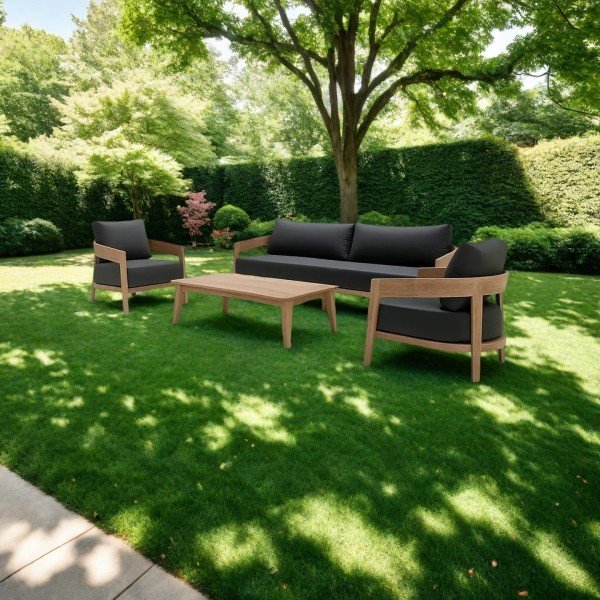
- Use different materials and color treatments to define functional zones (lounge seating vs dining vs bar area). For example, Happy Rattan offers modular outdoor sofa sets (see their Outdoor Sofa collection) that clients use to create “conversation zones” by using darker frames + lighter cushions + accent pillows to delineate space visually and functionally.
- Use focal points: a statement furniture piece, bold accent cushion set, or feature wall in complementary material or color.
Climate & Environmental Factors
- In high UV / hot climates: prioritize UV-protected synthetic rattan or powder-coated metals; lighter colors for large surfaces; ventilated weave for airflow.
- In humid/coastal/damp environments: avoid woods susceptible to rot unless treated; use rust-resistant metals; waterproof / quick-dry cushion fabrics.
- Happy Rattan products are designed with weather-resistant & UV-protected materials to perform well in diverse outdoor climates. For specific model styles showing these features, refer to their Outdoor Chaise Lounge collection.
Maintenance & Cost Planning
- Estimate not only the purchase cost, but also the replacement of cushions, cleaning, sealing, repair of frames, etc. These recurring costs often exceed the initial price for poorly protected materials.
- Establish regular maintenance rhythm: clean, store, or cover soft components; reseal wood annually; inspect metal joints/coatings.
- Happy Rattan simplifies maintenance via easy-clean surfaces and waterproof cushions, lowering the operational overhead for commercial clients. Their Rattan Outdoor collection demonstrates products designed for lower maintenance.
Case Studies & Expert Insights
- Happy Rattan Project Example: A boutique hotel in a tropical region specifies Happy Rattan’s PE rattan sofas with aluminum frames in “stone gray” + olive green cushions. Over two years, clients report minimal heat retention (thanks to ventilated weave and light frame color), negligible color fade (due to UV protectants), and low maintenance cost — consistent with feedback patterns in Happy Rattan’s customer base and visible in various models in their Outdoor Sofa lineup.
- Expert Insight: Materials testing labs show that synthetic rattan embedded with UV inhibitors (such as HALS, benzotriazole) and pigments like titanium dioxide or zinc oxide exhibit reduced degradation under UV exposure. These specifications align with what discerning commercial purchasers demand.
Conclusion
For B2B specifiers and purchasers, designing outdoor areas that are both striking and durable comes down to two interlinked decisions: which materials you use and how you apply color. A high-quality synthetic rattan or powder-coated aluminum frame with well-chosen neutral colors and accent pieces often offers the best balance of durability, aesthetics, and cost control.
Happy Rattan demonstrates a model: custom color/size options, UV/waterproof materials, environmental / standards compliance, and modular designs that simplify both installation and upkeep. Many of these features are visible in their Outdoor Sofa collection.
If you’re defining requirements for a new project, map out:
- Your climate exposure and environment.
- Your branding / visual identity goals.
- Material durability + warranty + maintenance budget.
- Sample pieces or trial installations to verify color under real light.
These steps help ensure that your outdoor areas delight customers, last longer, and deliver strong ROI.
FAQ (Frequently Asked Questions about Color & Material in Outdoor Areas)
Q1: Will synthetic rattan furniture from Happy Rattan fade quickly under strong sun?
A: While all outdoor materials soften over time, Happy Rattan’s synthetic rattan and finishes are formulated with UV-protected components. Combined with proper pigment quality and protective coatings, color retention is much improved compared to untreated natural rattan. Regular cleaning, use of protective covers, or placing pieces under partial shade will further preserve vibrancy. The designs shown in the Rattan Outdoor collection represent these features.
Q2: What materials are best for humid or coastal environments?
A: Rust-resistant metals (aluminum, marine-grade stainless steel), high-density synthetic rattan with UV inhibitors, waterproof fabrics for cushions, treated woods (if used). Avoid woods that are not rot-resistant; ensure any metal parts are properly coated. Happy Rattan’s Outdoor Sofa line includes such variants to address these environmental challenges. (HR Outdoor Furniture)
Q3: How should color choices be handled to align with brand identity?
A: Begin by selecting core brand colors; match frames or weave to neutral versions of those, and use accent fabrics or accessories to introduce bold colors. Sample approvals are important (seeing color in daylight, in situ). Happy Rattan’s custom color offerings in their Outdoor Furniture help with these alignment steps.
Q4: In B2B / contract purchasing, how do we compare total cost vs first cost?
A: First cost includes purchase, shipping, and installation. Total cost includes cleaning, repairs, replacement parts, and downtime or appearance issues. Durable materials like UV-protected synthetic rattan or powder-coated metals reduce long-term costs; also, warranties and supplier transparency matter. Products in the Outdoor Sofa range often show stronger warranties and weather-resistance specs.
Q5: Are there industry standards or test protocols for the durability of outdoor furniture materials?
A: Yes. Examples include ASTM G154 (UV exposure tests), ASTM B117 (salt spray/corrosion testing), fabric fade and mildew resistance per AATCC standards, among many others. Suppliers should provide test reports or certification. Happy Rattan, for example, in their product specs (see Outdoor Sofa collection), claims compliance with environmental/CE standards. (HR Outdoor Furniture)